Natural Pulp-Based Wet Wipes, Lunchbox Containers, and Packaging Materials: A Critical Focus on Developing Diverse Materials
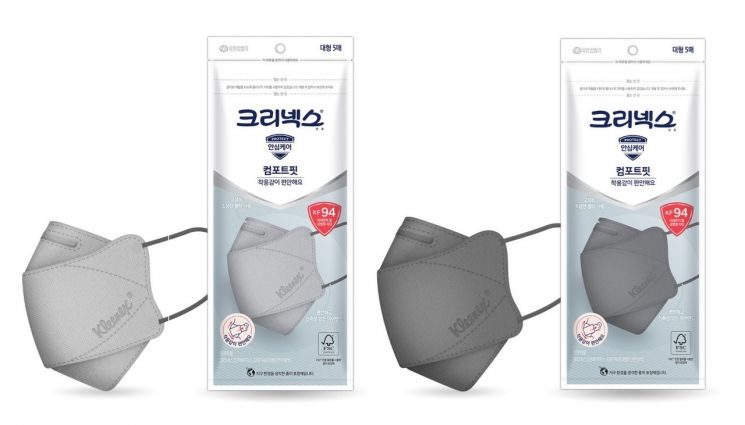 Hansol Paper applied the eco-friendly paper packaging material 'Protego' to Yuhan-Kimberly's mask packaging. The photo shows the packaging and mask of the Kleenex KF94-Comfort Fit Mask.
 [Photo by Hansol Paper]
[Asia Economy Reporter Kim Jong-hwa] The paper industry is actively pioneering future food markets based on 'eco-friendliness.' Recently, the paper industry has been fiercely competing by continuously launching eco-friendly products such as wet wipes, sanitary pads, and paper containers.
According to the paper industry on the 10th, the industry is putting all its efforts into developing eco-friendly paper materials that can replace non-biodegradable plastics. Under the Act on the Promotion of Saving and Recycling of Resources (Resource Recycling Act), the use of disposable items containing plastic has been banned in restaurants and cafes since the 1st of last month. From next year, the use of wet wipes containing plastic materials (polyester 40-50%) will be completely restricted. On the other hand, the use of packaging and delivery containers is exceptionally allowed, expanding the previously niche markets of wet wipes and paper containers.
Hansol Paper, Yuhan-Kimberly, and Kkeutganhanara have entered the wet wipe market. Hansol Paper launched the baby wet wipe 'Whale-Saving Wet Wipes' in February, which uses a blend of natural pulp and rayon fabric derived from plants, free from microplastic concerns. Yuhan-Kimberly also released the 'Scott Eco Paper Wet Wipes' for food service establishments in the same month, applying 100% pulp fabric.
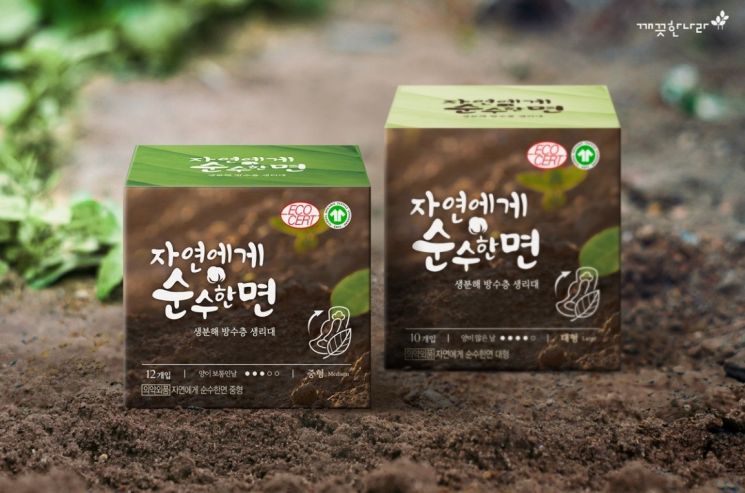
Kkeutganhanara entered the sanitary pad market with the eco-friendly sanitary pad 'Pure Cotton to Nature,' which uses biodegradable materials, following the baby wet wipe 'Bosomi Natural Wet Wipes' certified as natural cosmetics and the 'All Green Wet Wipes' made from 100% rayon fabric. This sanitary pad is made entirely from organic cotton materials for the top sheet, wings, and absorbent core. A Hansol Paper official said, "Wet wipes that dissolve in the toilet bowl mark the beginning of the eco-friendly pulp market," adding, "More eco-friendly products that can replace plastics will be launched one after another."
Intense competition is also unfolding in the eco-friendly packaging and container market. Hansol Paper recently applied its eco-friendly paper packaging material 'Protego' to Yuhan-Kimberly's 'Kleenex KF94 Comfort Fit Mask.' Protego, which allows paper materials to be separated and recycled instead of vinyl packaging, excludes plastic zippers to enhance recyclability. Protego, meaning 'to protect' in Latin, is an eco-friendly packaging material that combines specially manufactured base paper with Hansol Paper's unique coating technology.
Murim, in collaboration with Kolmar Korea, developed the eco-friendly packaging paper 'NeoCCP R30' and is applying it to cosmetic packaging. NeoCCP R30 is an upgraded eco-friendly product that combines recycled materials with Murim's premium packaging paper 'NeoCCP.' It is made by mixing recycled pulp made from discarded paper, increasing resource recyclability during production and minimizing unnecessary waste.
Kkeutganhanara is also on the verge of developing eco-friendly packaging materials. In July last year, it signed a memorandum of understanding (MOU) with SPC Pack and SK General Chemical to develop eco-friendly packaging materials and is preparing to launch products. Kkeutganhanara plans to use the developed eco-friendly packaging materials for outer packaging of products such as toilet paper rolls and beauty tissues.
In the disposable paper container market, Hansol and Murim are leading. Hansol Paper entered the paper container market with 'Terabas,' meaning 'container that holds nature.' Since last year, it has been supplying Terabas products, including paper straws and other disposables, to coffee specialty brand Paul Bassett stores.
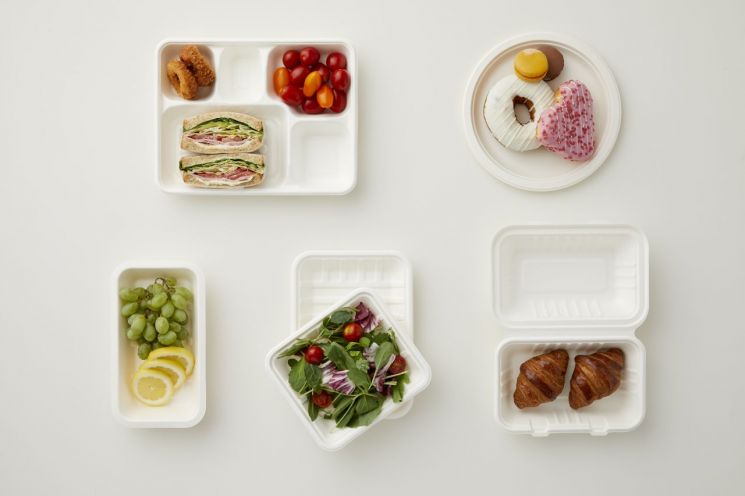 Paper container made by Murim using 'Pulp Mold'. It has superior strength and durability compared to existing products, but is an eco-friendly product that naturally decomposes when disposed of.
 [Photo by Murim]
Murim plans to launch eco-friendly 'pulp mold' products using natural pulp raw materials, the main ingredient of paper, in the second half of the year. Pulp mold is gaining attention as an eco-friendly packaging material that replaces plastic in bakery boxes, lunch delivery containers, and more. It can be applied to various industries, including food containers, cosmetics, pharmaceuticals, home appliances, and cushioning materials for various daily necessities.
Murim produces pulp molds with 99% natural pulp in slurry form, adding FDA-approved auxiliary materials to achieve outstanding strength and durability. After use and disposal in daily life, it naturally decomposes within a certain period and can be composted, earning international recognition for its eco-friendliness, including the European 'Biodegradable Certification (OK compost HOME).' A Murim official said, "We are receiving continuous inquiries about pulp molds from food container distributors, large food manufacturers, and daily necessities packaging companies," adding, "Although the pulp mold market is still in its early stages domestically, it is continuously growing, so the market potential is sufficient."
A paper industry official said, "Recently, the release of eco-friendly paper products such as paper packaging materials and paper containers that can replace plastics has increased significantly, intensifying competition to secure the eco-friendly product market," adding, "It should be seen as a stage where the industry is maintaining the market share of traditional portfolios such as industrial paper, printing paper, and specialty paper while exploring new markets."
© The Asia Business Daily(www.asiae.co.kr). All rights reserved.
![From Bar Hostess to Organ Seller to High Society... The Grotesque Con of a "Human Counterfeit" [Slate]](https://cwcontent.asiae.co.kr/asiaresize/183/2026021902243444107_1771435474.jpg)


















