Promoting Region-Specific Measures Considering Characteristics Such as Dense Food Establishments in Gwanak and Concentrated Dojang Facilities in Seongdong
Establishment of 39 Indoor Gardens with Air Purification Effects in Daycare Centers and Elderly Facilities
[Asia Economy Reporter Lim Cheol-young] Seoul City announced on the 8th that it will promote intensive fine dust management reflecting regional characteristics for the three areas of Gwanak, Gwangjin, and Seongdong, designated as the 3rd intensive fine dust management zones in July last year.
For the three customized intensive fine dust management zones?Gwanak, Gwangjin, and Seongdong?Seoul City will provide 300 million KRW per district, totaling 900 million KRW in project funds, and will implement detailed projects starting in May.
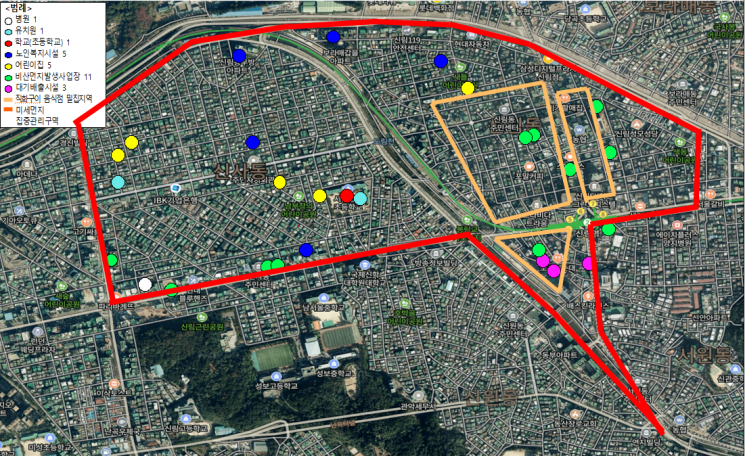
The area around Sillim Intersection in Gwanak-gu, characterized by a concentration of direct-fire grilled restaurants and heavy traffic, will focus on customized emission reduction projects. To reduce fine dust and odors in the direct-fire grilled restaurant cluster, the city will additionally support the budget for the ‘Living Odor Reduction Facility Maintenance Support Project,’ minimizing the burden on participating business owners.
In response to traffic-congested areas, dust suction vehicles will operate mainly on side roads with heavy traffic and in areas dense with direct-fire grilled restaurants. During emergency reduction measures or when air quality is poor or worse, emission facilities, dust-generating workplaces, indoor air quality, and vehicle idling will be inspected. Additionally, the city will support the conversion of children’s school vehicles to LPG vehicles and purchase dust removal spraying devices for construction sites, renting mobile wide-area sprinklers to construction sites within the zones.
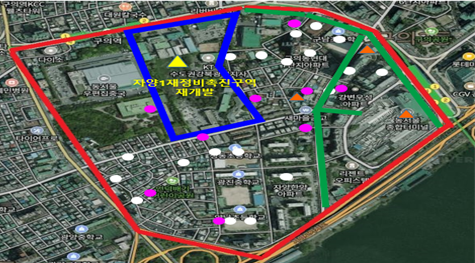
Gwangjin-gu includes the Jayang 1 redevelopment construction site and Dong Seoul Terminal area, where responses to construction dust and fine dust around the terminal will be strengthened. To reduce dust around large construction sites, sprinkling and dust suction vehicles will operate not only on main roads but also on side roads including construction sites and Dong Seoul Terminal. The city will purchase dust removal spraying devices and rent mobile wide-area sprinklers to construction sites within the zone. In response to traffic-congested areas, enforcement against vehicle emissions and idling will be strengthened, and warning signs prohibiting sudden starts, rapid acceleration, and sudden braking will be installed around Dong Seoul Terminal and elementary schools. The city will also support the conversion of children’s school vehicles to LPG vehicles.
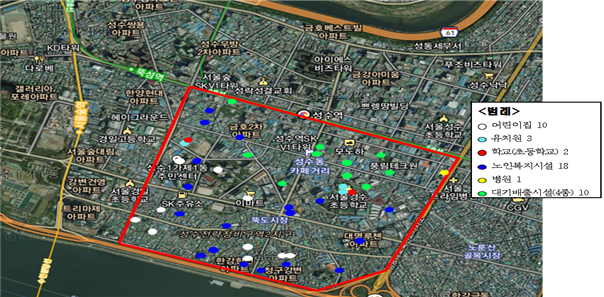
Seongdong-gu plans to implement customized measures to reduce emissions from air discharge facilities, considering the area's characteristic concentration of painting facilities. To address this, a small-scale project to fill gaps in prevention facilities will be promoted by installing protective nets on activated carbon filters to prevent air pollutant leakage. Inspections will be conducted on air discharge facilities, VOCs emission facilities, and dust-generating workplaces. Additionally, sprinkling and dust suction vehicles will operate in areas including Achasan-ro, Dongil-ro, and Ttukseom-ro, and enforcement against vehicle emissions and idling will be strengthened.
Yoo Yeon-sik, Head of Seoul City’s Climate and Environment Headquarters, said, “We will prepare response measures focused on reducing air pollutants by reflecting the characteristics of major emission sources and continuously strive to ensure that citizens can feel the effects.”
© The Asia Business Daily(www.asiae.co.kr). All rights reserved.

![Clutching a Stolen Dior Bag, Saying "I Hate Being Poor but Real"... The Grotesque Con of a "Human Knockoff" [Slate]](https://cwcontent.asiae.co.kr/asiaresize/183/2026021902243444107_1771435474.jpg)

















