7080s Japanese Music 'City Pop' Followed by 'Gyaru' Photo Poses Trending Among Youth
"Nowadays Insiders Must Do the 'Gyarupisu' Pose"
Popularity of 'City Pop' Reflecting Urban Prosperity and Loneliness Continues
"Reflects Newtro Popularity... Not Because It's 'Japanese Culture'"
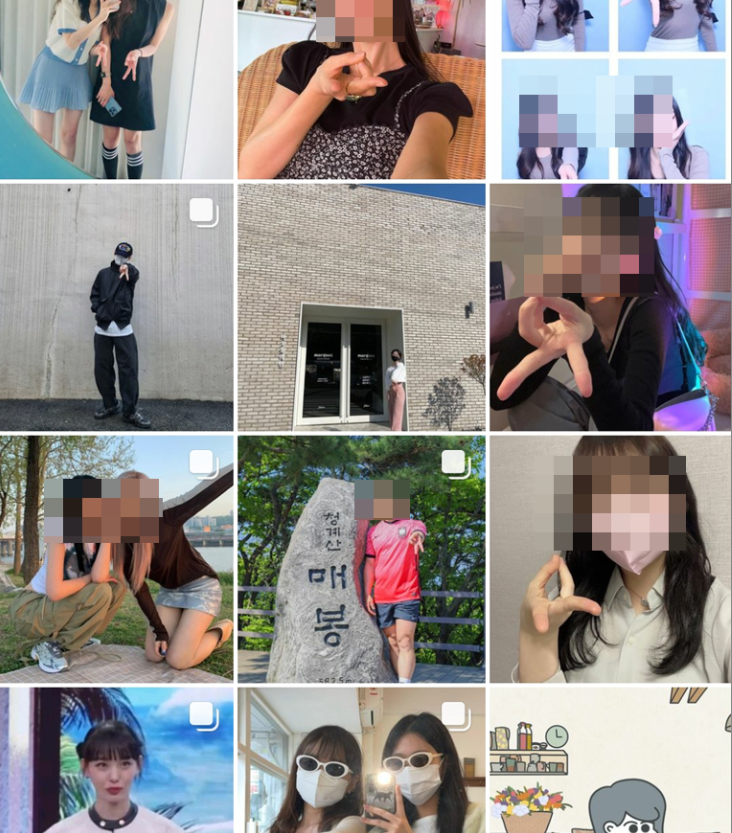 Taking photos with the 'Gyarupis' pose has become popular among young people recently.
 Photo by Instagram capture.
[Asia Economy Reporter Yoon Seul-gi] "These days, instead of the plain V sign, it's all about the 'Gyarupisu'."
Riding the wave of the 'new retro' (New+Retro) trend, following the 'City pop' that was popular during Japan's economic boom in the late 1970s, the so-called 'Gyaru tribe's' signature sign, 'Gyarupisu,' is catching the attention of the 20s and 30s generation.
Recently, among young people, it has become trendy to take photos striking the 'Gyarupisu' pose and upload them on social networking services (SNS). 'Gyaru' (the Japanese pronunciation of Gal, a slang term for Girl) refers to lively female students who were born in Japan in the early 1980s and attended middle and high school during the 1990s amid economic prosperity.
They once led Japanese fashion culture with their distinctive and flashy makeup, hairstyles, and clothing. Their features include tanned, dark skin resembling a sun-kissed look, heavily emphasized eye makeup, and blonde hair. The 'Gyaru tribe' also has a unique signature sign called 'Gyarupisu' (Gyaru + peace sign meaning V pose). It is a pose where the arm is stretched forward and the V sign is flipped upside down. Recently, Rei from the group IVE gained attention for a photo taken with the 'Gyarupisu' pose.
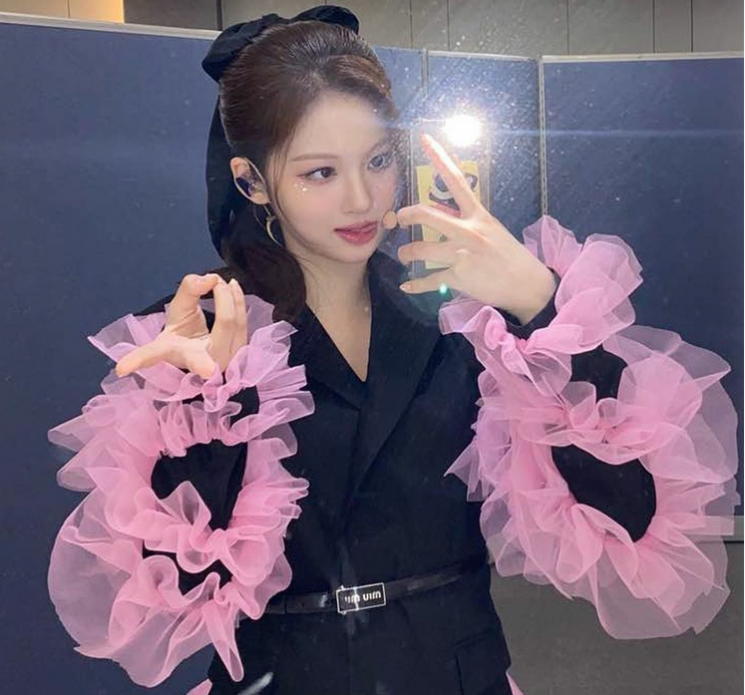 Group NMIXX's Seolyun is taking a photo with the signature 'Gyaru Peace' pose unique to the 'Gyaru tribe.' Photo by NMIXX Instagram capture.
Following that, the 'Gyarupisu' pose gained popularity among idols such as Giselle from aespa, Joy from Red Velvet, and Seol Yoon from NMIXX, spreading the trend among young people. Although the pose, which involves making a V sign with the fingers and having the wrist face upwards, looks somewhat uncomfortable, nowadays, if you are an 'insider' (popular person), taking photos with the 'Gyarupisu' pose instead of the plain V sign and sharing them on SNS has become a kind of trend among youth.
A 20-year-old university student A said, "Taking photos with the Gyarupisu pose feels 'hip.' After Gyarupisu, just taking photos with the regular V pose feels boring."
Japan's retro culture has attracted the attention of the 20s and 30s generation not only through Gyarupisu. The new retro wave that started after COVID-19 brought about a City pop craze. City pop is a music style that captures the lonely atmosphere of prosperous cities during Japan's economic boom in the 1970s and 1980s. With abundant capital from the economic boom, the Japanese music industry built a solid infrastructure and produced technically sophisticated songs that led trends.
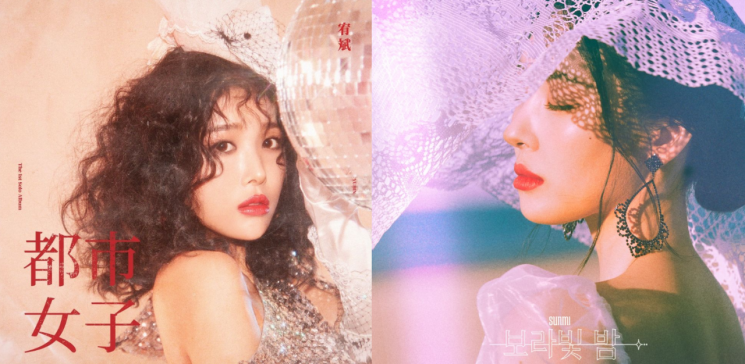 Yubin 'Lady' album cover (left), Sunmi 'Purple Night' album cover (right) Photo by Melon album information capture.
Since the late 2010s, as 'new retro' became popular in Korea, City pop has been reappraised. In the domestic music scene, songs reinterpreting City pop with a modern sensibility have been released one after another. From Yubin, who rose as a 'City pop icon' with the song 'Lady,' to Sunmi's 'Purple Night' and Brave Girls' 'Just Drive,' these songs have gained great popularity in Korea.
In fact, as the global status of K-pop, K-drama, and other K-content has risen, the influence of Japanese culture within Korea had been declining. Popular culture critic Kim Heon-sik said, "According to the Reporters Without Borders (RSF) '2022 World Press Freedom Index,' Korea ranks 43rd out of 180 countries, while Japan ranks 71st. Japan's Liberal Democratic Party's dominance has led to a rigid society," adding, "As a result, the cultural sector has been stagnant for a long time." In the past, Japan led Asian popular culture, but due to the rigid social atmosphere, it has failed to produce new cultural content, naturally diminishing its cultural hegemony.
In this atmosphere, the phenomenon of Japanese culture such as City pop and Gyarupisu entering Korea and gaining popularity seems to be influenced by young people interpreting retro styles in new ways.
Critic Kim analyzed, "The popularity of Gyarupisu is not because it is 'Japanese culture,' but simply because young people respond to the charm of Gyarupisu. It is part of the new retro trend. The younger generation tends to follow culture not based on nationality but simply because they want to try it. Japanese youth show similar behavior, and if they like Korean culture, they actively accept it. This shows a 'pragmatic perspective' between Korean and Japanese youth."
Popular culture critic Ha Jae-geun explained the 'Japanese style' trend, saying, "Koreans have strong antipathy toward Japan, making it difficult to fully embrace Japanese culture," but added, "Korea and Japan are geographically close, and Japanese culture still exerts influence globally. It seems to be gradually affecting Korean youth in their 20s and 30s as well."
© The Asia Business Daily(www.asiae.co.kr). All rights reserved.



















