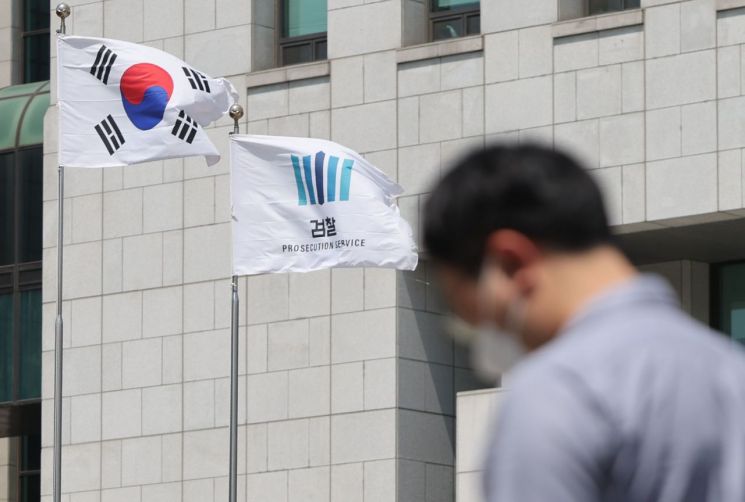
[Asia Economy Reporter Kim Hyung-min] The Judicial Center of the Lawyers for a Democratic Society (Minbyun) commented on the 'Complete Removal of Prosecutorial Investigation Rights' (Geomsu Wanbak) bill, which was approved at the Cabinet meeting on the 3rd, stating that everyone must respect the legislative intent and work together for the institutional stabilization.
Minbyun emphasized on the day, "Prosecutorial reform and police reform should no longer be subjects of political strife, and all state institutions including the National Assembly, the executive branch, the prosecution, the police, the Corruption Investigation Office for High-ranking Officials (Gongso), and the Serious Crime Investigation Office (Jungsucheong) must cooperate to advance toward the completion of a criminal justice system for the people."
They continued, "The most important factor to minimize confusion is bipartisan cooperation," adding, "The People Power Party must promptly cooperate in forming the Special Committee on Judicial Reform (Sage Special Committee)." They also cited the launch of Jungsucheong, adjustment of investigative agencies' authorities, and cooperation among stakeholders such as the prosecution and police as conditions for institutional stabilization.
However, they noted, "We cannot overlook the confusion caused during the amendment process," pointing out that "The Democratic Party of Korea hastily pushed the bill during the regime change period and was not free from procedural controversies such as disguised party withdrawal."
They further stated, "The People Power Party agreed to the parliamentary speaker's mediation plan but then reversed it, intensifying political strife, and the prosecution, as a stakeholder, challenged legislative authority and public opinion through collective action," evaluating that "Even the passed amendment was a compromise form, leaving seeds of future discord."
Meanwhile, the People's Solidarity for Participatory Democracy (PSPD) argued that the Geomsu Wanbak bill "only partially reduced the prosecution's direct investigation scope and requires follow-up legislation."
In their commentary on the day, PSPD said, "The final passed bill only partially reduced the prosecution's direct investigation scope, and without follow-up legislation, it is still insufficient to organizationally realize the separation of investigation and prosecution."
"Legislation to completely separate the prosecution's investigation and prosecution was concluded after twists and turns by partially reducing the prosecution's direct investigation scope from six major crimes to corruption and economic crimes," they said, emphasizing, "A Special Committee on Judicial Reform (Sage Special Committee) in the National Assembly should be formed to discuss the establishment of the Serious Crime Investigation Office (Jungsucheong), abolition of the prosecution's direct investigation rights, and adjustment of authorities with other investigative agencies based on the mediation plan originally agreed upon by both parties."
Regarding the police, whose authority will be expanded by this bill, they stated, "Police reform is absolutely necessary to decentralize and control the bloated police power," adding, "This should include strengthening the authority of the Police Commission, separating the administrative police and judicial police organizations, and forming a practical autonomous police organization."
© The Asia Business Daily(www.asiae.co.kr). All rights reserved.

















