Promotion of Nuclear Industry, Establishment of Space Aviation Agency, Early Construction of Jinhae New Port, etc.
Chairman Ahn Cheol-soo: "The Way to Revive Gyeongnam is the Way to Revive Korea"
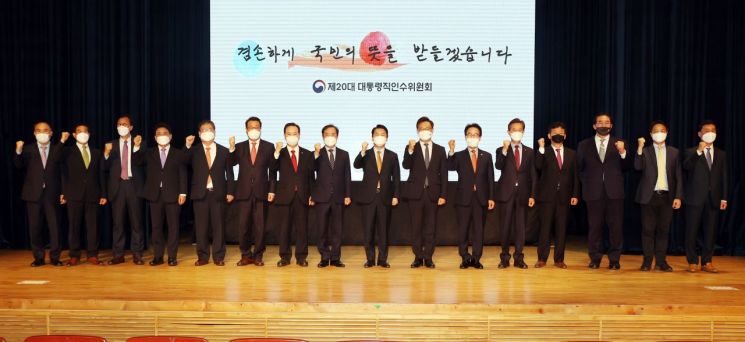 The 20th Presidential Transition Committee held a public briefing on regional policy tasks for Gyeongnam Province on the 3rd.
[Asia Economy Yeongnam Reporting Headquarters Reporter Lee Seryeong] The 20th Presidential Transition Committee visited the Gyeongsangnam-do Provincial Government Office on the 3rd and held a public briefing on regional policy tasks for Gyeongnam Province.
The briefing was attended by Transition Committee Chairman Ahn Cheol-soo, Special Committee Chairman for Regional Balanced Development Kim Byung-joon, special committee members, Acting Governor of Gyeongnam Province Ha Byung-pil, heads of departments and bureaus, and about 300 residents.
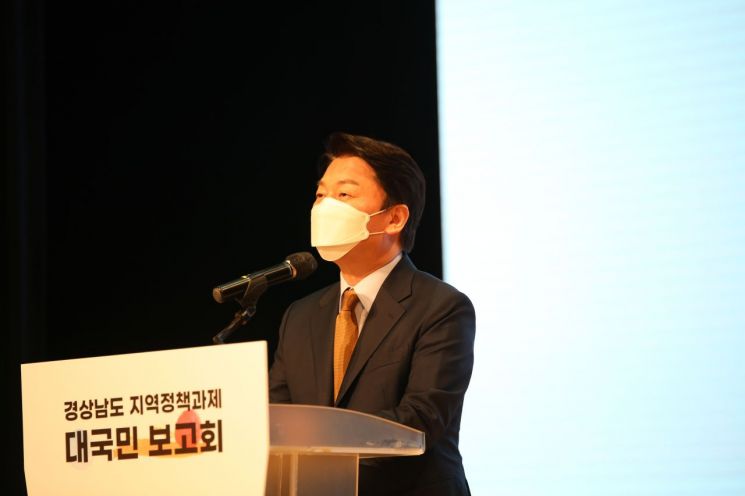 Ahn Cheol-soo, the chairman of the transition committee, delivering a greeting at the Gyeongsangnam-do regional policy task report meeting. / Photo by Ryeong Lee ryeong@
In his greeting, Transition Committee Chairman Ahn Cheol-soo said, "Without Gyeongnam, the development and advancement of the Republic of Korea would not have been possible," adding, "I believe that revitalizing Gyeongnam is the way to revitalize Korea, and I intend to fulfill this through pledges and actions."
He added, "We will do our best to ensure the smooth progress of the next-generation small modular reactor (SMR) technology development support, the establishment of the Aerospace Administration, the advancement of Gyeongnam's key industries, the early commencement of the Jinhae New Port, and the expansion of the metropolitan transportation network, which I advocated during my presidential candidacy."
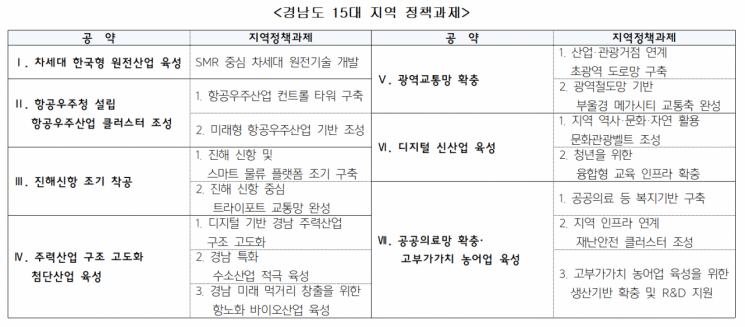
The regional policy tasks for Gyeongnam Province announced by the Transition Committee's Special Committee on Regional Balanced Development include: ▲ fostering the next-generation Korean nuclear power industry centered on small modular reactors (SMR) ▲ establishing the Aerospace Administration and creating an aerospace industry cluster ▲ early commencement of Jinhae New Port and building a smart logistics platform ▲ advancement of key industries and fostering of advanced industries ▲ expansion of metropolitan transportation networks ▲ fostering digital new industries ▲ expansion of public medical networks and fostering high value-added agriculture and fisheries, totaling seven tasks.
These policy tasks align with the 15 national policy tasks of the Yoon Suk-yeol administration, which aims to create a "local era of fairness, autonomy, and hope where equal opportunities are enjoyed regardless of where one lives."
The Transition Committee adopted the development of next-generation nuclear power technology centered on SMRs as a regional policy task to enable Gyeongnam to capture the global SMR market.
Regarding the pledge to establish the Aerospace Administration, two policy tasks were identified: building a control tower for the aerospace industry and establishing a foundation for a future-oriented aerospace industry.
The plan is to establish the Aerospace Administration, which will oversee aerospace industry policies and industries, and to create a space industry cluster to foster a concentrated industrial base for satellite and core materials and parts technology development.
The Transition Committee also announced plans to promote a demonstration center and support for prototype development for flying mobility commercialization, such as Urban Air Mobility (UAM), a future-oriented eco-friendly urban air transportation means.
Additionally, the early commencement of Jinhae New Port will proceed alongside the early construction of the smart logistics platform and the completion of the Tri-port transportation network centered on Jinhae New Port.
Jinhae New Port, to be built as a smart large-scale port with 21 container berths, is expected to become Asia's representative logistics hub with legal and institutional support.
The plan also includes the early opening of the Southern Inland Railway, extension to Gadeokdo New Airport, and the establishment of logistics transport railway networks such as the Changwon Industrial Line and Jinhae New Port Line.
To foster Gyeongnam's key industries and future growth industries, proposals include digital-based advancement of Gyeongnam's key industry structure, fostering Gyeongnam's specialized hydrogen industry, and promoting anti-aging and bio industries.
Plans include developing core shipbuilding technology for the Korean-style smart yard, establishing a future automobile cluster, building a 5G-based machinery manufacturing industry metaverse, attracting a defense MRO education center, creating a Gyeongnam-type hydrogen specialized complex, and establishing a Gyeongnam biomedical industry innovation belt.
Regarding the pledge to expand metropolitan transportation networks to guarantee a one-hour living zone and convenient mobility in the Busan-Ulsan-Gyeongnam (Bu-Ul-Gyeong) area, the plan includes building a super-regional road network linking industrial and tourism hubs and completing the Bu-Ul-Gyeong mega-city transportation axis based on metropolitan railway networks.
Projects include the early completion of the Namhae-Yeosu underwater tunnel, construction of the Changwon-Ulsan expressway, operation of metropolitan railway networks for a one-hour living zone between Jinju and Ulsan, national support for toll reduction on Geoga-daero and Machang Bridge, and the establishment of a high-speed train on the Gyeongjeon Line to Suseo.
In the field of fostering digital new industries, commitments include creating a cultural tourism belt utilizing local history, culture, and nature, and expanding convergent educational infrastructure for youth.
For the expansion of public medical networks and fostering high value-added agriculture and fisheries, policy tasks include building welfare infrastructure such as public medical services, creating disaster safety clusters linked to regional infrastructure, expanding production bases, and supporting R&D.
Special Committee Chairman Kim Byung-joon said, "The phenomenon of the metropolitan area losing competitiveness due to overcrowding and non-metropolitan areas losing competitiveness due to underdevelopment and undevelopment is worsening," adding, "Regardless of political affiliation or ideology, let's open a new era where everyone achieves regional and national development together."
Acting Governor of Gyeongnam Province Ha Byung-pil said, "Regional balanced development is no longer a choice but a necessity," and added, "Super-regional cooperation will be a turning point for regional balanced development, and we will work with the new government to realize a local era where it is good to live anywhere."
The Transition Committee completed the fourth regional policy task briefing in Ulsan in the morning and then visited Gyeongnam, with plans to visit Jeonju, Gwangju, and other Jeolla regions thereafter.
© The Asia Business Daily(www.asiae.co.kr). All rights reserved.
![From Bar Hostess to Organ Seller to High Society... The Grotesque Con of a "Human Counterfeit" [Slate]](https://cwcontent.asiae.co.kr/asiaresize/183/2026021902243444107_1771435474.jpg)


















