Global Edible Oil Shortage... UK Supermarkets Limit '2 Bottles Per Person'
Indonesia Halts Palm Oil Exports... Cosmetic Prices Soar
Ministry of Agriculture and Food, "Preparing for Prolonged Indonesia Palm Oil Export Ban"
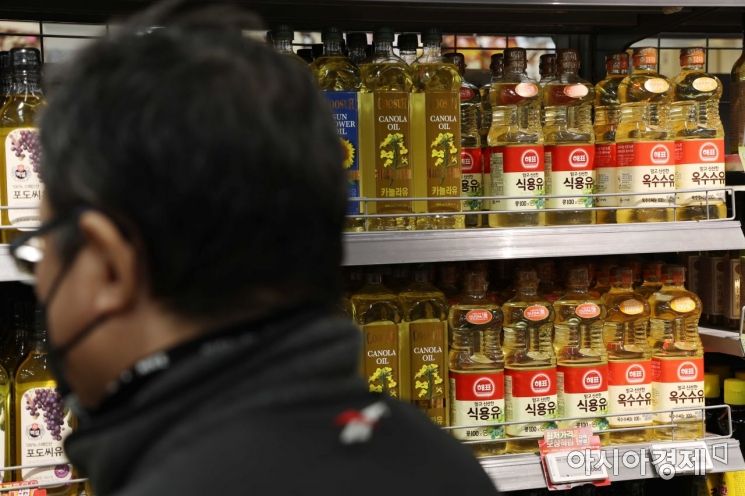
[Asia Economy Reporter Heo Midam] As the war between Ukraine and Russia prolongs, a crisis has emerged in the supply of cooking oil. Ukraine, which supplies half of the world's sunflower oil, has had its production and export routes blocked, and on top of that, Indonesia, the world's largest palm oil exporter, has banned palm oil exports citing domestic stability, causing a global shortage of cooking oil. In particular, South Korea's high dependence on palm oil imports from Indonesia means that if the export ban is prolonged, the impact will be inevitable.
Recently, as the cooking oil supply shortage continues, distribution industries in various countries, including the UK, have taken measures such as limiting the purchase of cooking oil per person.
According to a report by the New York Times (NYT), the UK supermarket chain Tesco has limited customers to purchasing a maximum of three bottles of cooking oil each. Other supermarket chains, Morrisons and Waitrose, have limited purchases to a maximum of two bottles.
Ukraine and Russia together have supplied 75% of the sunflower oil used for cooking oil. However, due to the prolonged war between Ukraine and Russia, the top two exporters of sunflower oil, disruptions in sunflower harvesting have continued the cooking oil supply shortage.
Kate Halliwell, Chief Scientific Officer of the UK Food and Drink Federation (FDF), pointed out, "It is uncertain how many sunflower seeds have been planted in Ukraine and how much harvest can come to the market."
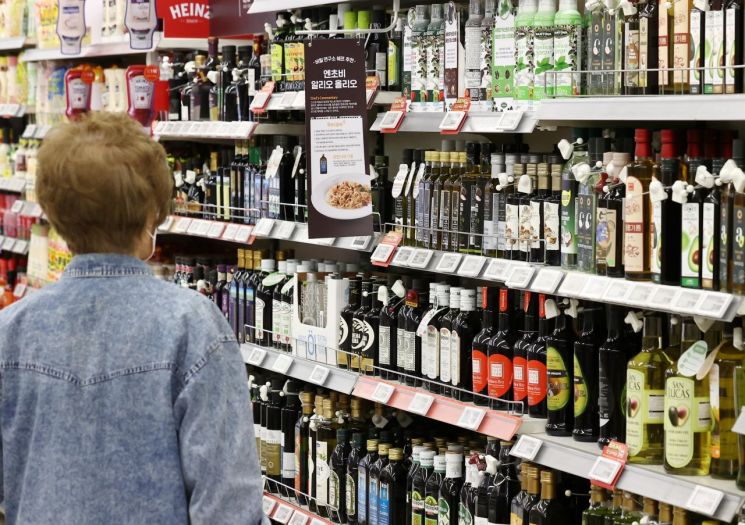
To make matters worse, Indonesia, which supplies 60% of the world's palm oil, banned palm oil exports on the 28th of last month citing domestic stability, intensifying the cooking oil crisis. Palm oil is a vegetable oil used in the manufacture of various processed foods such as ramen and snacks, and is also used as a raw material for detergents, cosmetics, and biodiesel.
In particular, South Korea's dependence on palm oil imports from Indonesia is absolute. According to Korea Customs Service import-export statistics, the volume of Indonesian palm oil imported by South Korea last year was 341,802 tons (371.01 million USD), accounting for 56.4% of the total import volume.
Accordingly, the domestic food industry and cosmetics companies that use palm oil as a raw material are on high alert. Some cosmetics companies have already raised prices. Amorepacific raised prices by an average of 10% for 83 items across 9 brands including Hera and Sulwhasoo starting from the 25th of last month. Sulwhasoo's flagship product, Yunjo Essence (120ml), increased from 160,000 won to 170,000 won, about a 6% rise.
The food industry is also closely watching whether Indonesia's palm oil export restrictions will be prolonged. Domestic food companies typically stockpile 3 to 4 months' worth of supply, so processed food prices are not expected to rise in the short term, but if supply chain issues persist, price increases for food products are expected to be inevitable.
Meanwhile, the Ministry of Agriculture, Food and Rural Affairs stated regarding Indonesia's palm oil export ban, "We plan to closely monitor the situation and communicate with the food industry in preparation for the possibility of a prolonged ban."
In a press reference released on the 29th of last month, the ministry said, "Currently, major food companies hold about 2 to 4 months' worth of (palm oil) inventory, and all also import Malaysian palm oil. The food industry expects the impact of this measure to be limited, but if prolonged, there are concerns about supply instability due to rising international palm oil prices."
It added, "We will closely communicate with related industries to prevent supply chain instability in preparation for the possibility that Indonesia's export ban may be prolonged."
© The Asia Business Daily(www.asiae.co.kr). All rights reserved.


















