"I want to think about what I can do while fulfilling my mandatory military service"
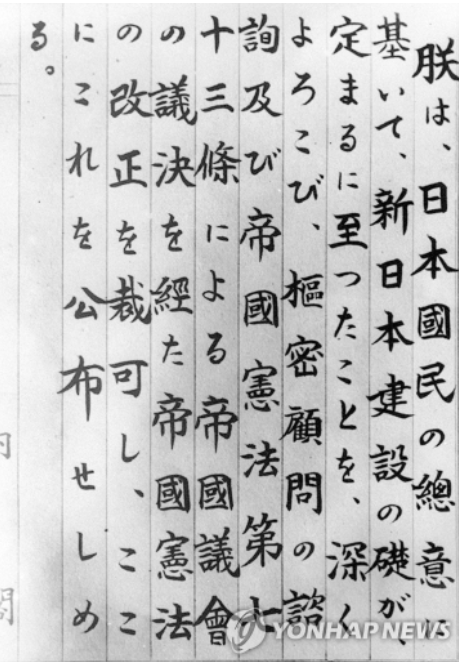 On November 3, 1946, the current Japanese Constitution was promulgated, containing a message from Emperor Hirohito (Y?hito, 1901?1989) at the time. In his imperial rescript (a statement by the emperor when promulgating a constitution or law), he approved the revision of the Imperial Constitution and announced the promulgation of the new constitution (the current constitution).
 [Image source=Yonhap News]
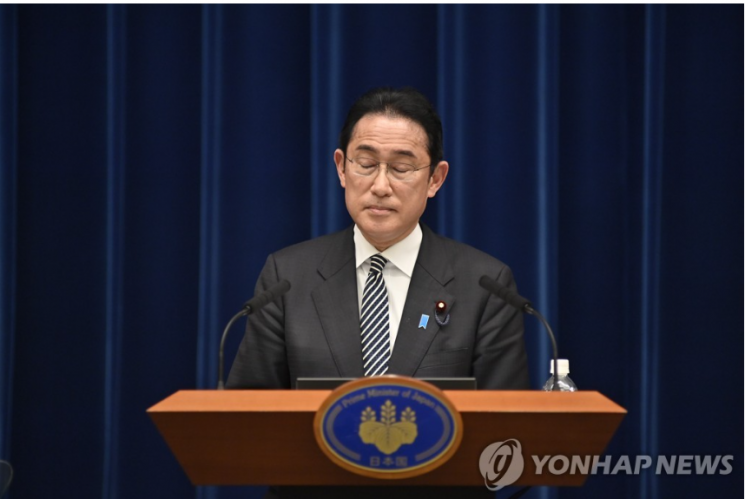
[Asia Economy Intern Reporter Kim Nayeon] Japanese Prime Minister Fumio Kishida stated that the current Japanese Constitution, which has been in effect for 75 years, has "parts that are outdated and insufficient."
According to local Japanese media on the 1st, Prime Minister Kishida made this remark during an NHK debate program aired ahead of Constitution Memorial Day (May 3), saying, "We need to create a flow that can gain the understanding of the people."
The Japanese Constitution, enacted on May 3, 1947, marks its 75th anniversary this year but has never been amended since its establishment.
Kyodo News reported that Prime Minister Kishida attributed "modern important issues" to four constitutional amendment proposals previously put forward by the Liberal Democratic Party, including explicitly stating the existence of the Self-Defense Forces in Article 9 and establishing emergency provisions.
The explicit mention of the Self-Defense Forces is a proposal made with the awareness that there have often been claims that having the Self-Defense Forces, an organization similar to a military, is unconstitutional.
Article 9, Paragraph 2 of the Japanese Constitution stipulates, "Land, sea, and air forces, as well as other war potential, will not be maintained."
To propose a constitutional amendment, at least two-thirds of the members in both the House of Representatives and the House of Councillors must approve it. Then, a majority must approve it in a national referendum for the amendment to be enacted.
Former Prime Minister Shinzo Abe also regarded constitutional revision as a lifelong task, but even when the pro-amendment forces held more than two-thirds of the Diet seats, they could not even propose an amendment, showing how difficult constitutional revision has been considered.
However, with the recent rapid changes in the international situation due to Russia's invasion of Ukraine and growing security concerns, the Japanese political sphere, centered on the Liberal Democratic Party, is showing enthusiasm for constitutional revision discussions.
On the broadcast that day, Prime Minister Kishida said, "I want to think about what is possible within the framework while properly adhering to our country's policies of the Constitution, peace and security legislation, and exclusive defense."
© The Asia Business Daily(www.asiae.co.kr). All rights reserved.


















