[Seoul District News] Dedicated Staff Assigned at Each Jungnang-gu Community Center for Vaccination Guidance, Shuttle Bus Operation for Convenience, Visiting Vaccinations and Text/Phone Reminders for Unregistered Individuals to Encourage Vaccination; Over-60 COVID-19 Vaccination Rate at 95%, Highest Among Seoul Districts... Seongdong-gu 'COVID-19 Aftereffect Clinic'... Dongjak-gu Implements 'Safe Village Security Guards' for Night Safety of Single-Person Households... Gangdong-gu Publishes '2022 Core Labor Handbook'... Jung-gu Operates Rehabilitation Exercise Program for Disabled
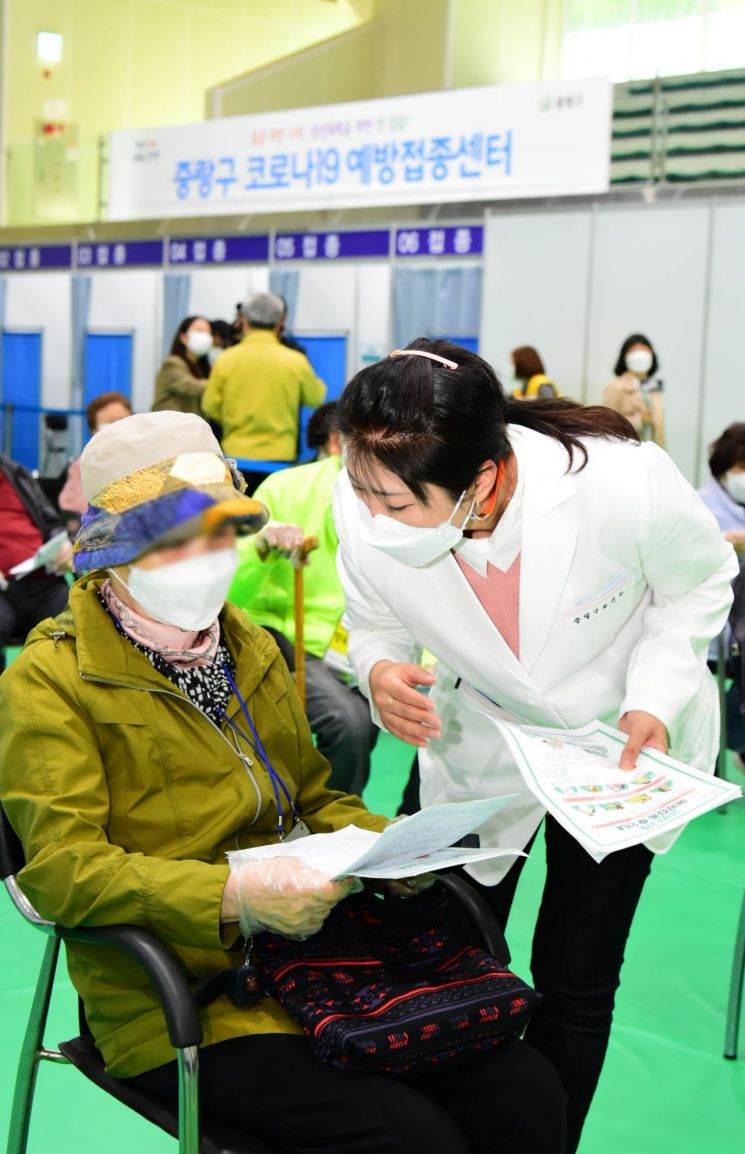
[Asia Economy Reporter Park Jong-il] Jungnang-gu has been found to have the highest basic COVID-19 vaccination rate among residents aged 60 and over among the 25 autonomous districts in Seoul.
According to data from the Korea Disease Control and Prevention Agency, as of the 7th, out of 113,727 residents aged 60 and above in Jungnang-gu, 108,023 have completed their basic vaccinations. The vaccination rate stands at 95%, higher than other districts.
The district attributes the high vaccination rate to the fruits of various projects implemented with the view of vaccination as an important quarantine measure to protect the safety and health of local seniors.
At the early stage of vaccination, the district operated vaccination centers and assigned dedicated personnel to all 16 community centers. For seniors who had difficulty making online reservations, detailed guidance on vaccination center information, scheduling, and shuttle bus usage was provided via phone. In particular, shuttle buses were operated to assist seniors with mobility difficulties in traveling to and from vaccination centers.
Additionally, a dedicated COVID-19 vaccination call center was operated to individually notify unvaccinated residents via text messages and phone calls, supporting reservations at public health centers and entrusted medical institutions.
To ensure fast and proactive vaccination, a visiting vaccination team was formed to directly visit 59 elderly care facilities with high infection and severe risk to administer vaccines. For continuous promotion, 7,393 facilities including senior centers and welfare centers received promotional posters, and banners were posted at 40 major intersections in the district.
A district official said, “COVID-19 vaccination remains important for preventing severe illness and death among the elderly and those with underlying conditions,” and added, “We ask for active participation in the 4th vaccination for the health of individuals and their families.”
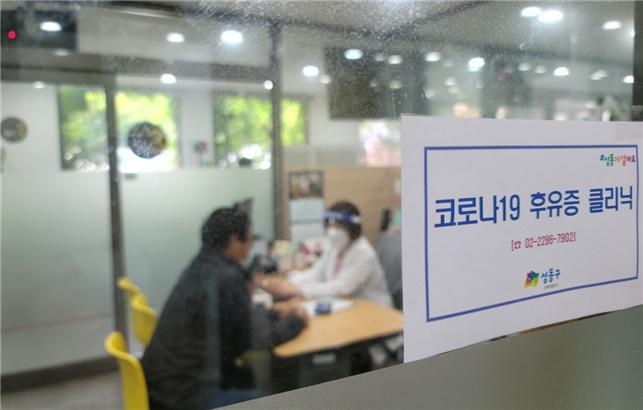
Seongdong-gu (Mayor Jung Won-oh) began operating a ‘COVID-19 Aftereffects Clinic’ (hereafter Clinic) from the 25th to support the daily recovery of long COVID patients.
Long COVID refers to the prolonged aftereffects following COVID-19 infection, presenting a variety of symptoms ranging from respiratory and cardiac issues such as cough, sputum, and shortness of breath to fatigue and lethargy. Neurological symptoms like headaches, dizziness, and sleep disorders are also reported, with these symptoms sometimes lasting for more than two months.
If left untreated, it can lead to pulmonary fibrosis, heart disease, and other complications, necessitating active treatment. Accordingly, the district operates a dedicated clinic to support residents’ health recovery.
The clinic, located on the first floor of Seongdong-gu Public Health Center, is staffed by two doctors and one nurse. Medical consultations are provided to residents who have passed 30 days since their COVID-19 diagnosis, with chest X-rays conducted as needed. Psychological counseling is also available for those experiencing depression, and cognitive screening tests (CIST) are performed for those reporting cognitive decline, with referrals to related institutions for ongoing management.
The clinic operates Monday through Friday from 9 a.m. to 6 p.m. Residents wishing to use the service must make a reservation in advance through Seongdong-gu’s dedicated call center before visiting.
Over the three years since the onset of COVID-19, Seongdong-gu has led proactive policies including operating a 24-hour disaster safety headquarters, introducing the world’s first mobile electronic logbook, drive-through book lending services, and operating Seoul’s first vaccination center in cooperation with Seoul National University Hospital.
To prepare for the surge in cases amid the prolonged pandemic, the district expanded ‘Living Treatment Centers’ and established ‘Seongdong Safe Lodging’ for infection prevention among cohabiting families. It also significantly expanded ‘quarantine taxi fare support,’ the first such program among Seoul’s districts, to actively prevent COVID-19 infections.
With the shift to home treatment for confirmed cases, a ‘24-hour call center exclusively for general management groups’ was operated, and an online ‘quarantine confirmation certificate’ service was provided. A ‘field response team’ was also formed to support single-person households by delivering daily necessities and medicines, minimizing inconvenience for residents. The district also provided ‘supply packages’ containing masks, disinfectants, and essentials to support recovery. Seongdong-gu is committed to supporting residents struggling with long COVID and doing its utmost to help them overcome COVID-19 and return to normal life.
Mayor Jung Won-oh said, “We hope residents actively seek psychological counseling and support for various aftereffects through the ‘COVID-19 Aftereffects Clinic’ established to prepare for healthier daily recovery,” and added, “We will continue to do our best for the happy and healthy recovery of all residents.”
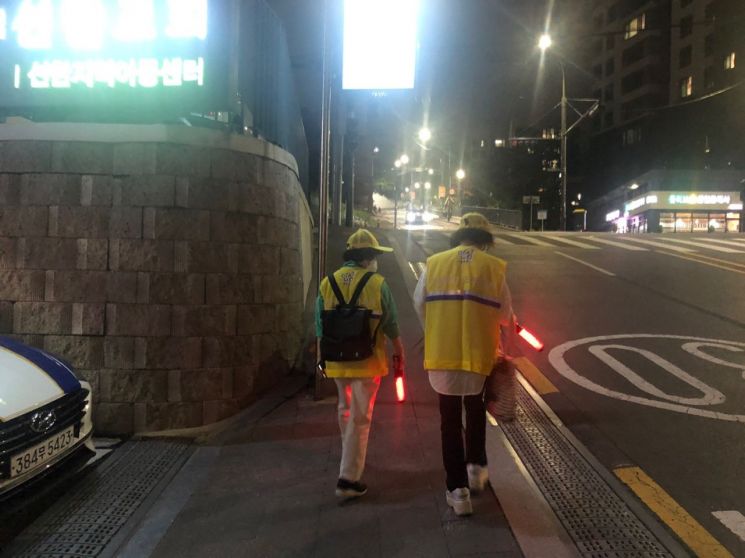
Dongjak-gu (Mayor Lee Chang-woo) announced on the 27th that it will officially launch the ‘Safe Village Security Guard’ project to protect single-person households walking at night, a time vulnerable to crime.
The Safe Village Security Guards, working in pairs, patrol alleys in areas densely populated by single-person households during late-night hours (weekdays from 9 p.m. to 2:30 a.m. the next day). They also inspect potential hazards during patrols to prevent risks in residents’ daily lives.
During the 70-day pilot project last year, the guards carried out safety activities such as reporting hazardous materials, handing over intoxicated individuals to police stations, and accompanying residents on their way home at night, earning positive responses from the community.
The district completed the selection and deployment of highly skilled personnel, including those with crime prevention experience and former police officers, on the 21st of this month. The Safe Village Security Guards will mainly operate around Sadang Station, designated as a residential safety zone by Seoul City.
Considering the nature of the guards’ late-night patrols through alleys, measures have been put in place to ensure their safety and rest. Residents familiar with local conditions were prioritized during recruitment, and dedicated uniforms, safety equipment, and rest areas within patrol zones have been provided to promote safe and effective activities.
Park Mi-young, Director of Welfare Policy, said, “We expect this project to play a significant role in alleviating crime-related anxiety among single-person households and other residents,” and added, “We will continue to strive to develop policies that meet the practical needs of single-person households.”
The district also provides policy support for the safety and stability of single-person households through projects such as ▲support for preventing solitary deaths ▲customized public housing supply ▲‘IoT Smart Plug Distribution’ project ▲operation of a single-person household support center.
Since 2013, the district has also been running the ‘Safe Return Scout’ program, where volunteers meet women and youth returning home late at agreed locations and accompany them home for safety.
Residents wishing to use the Safe Return Scout service for women and youth can apply by calling the district office situation room or Dasan Call Center 30 to 40 minutes before arrival at subway stations or bus stops, or through the ‘Seoul Safe’ app.
There are many workers around us who suffer disadvantages due to a lack of knowledge about labor laws and labor standards.
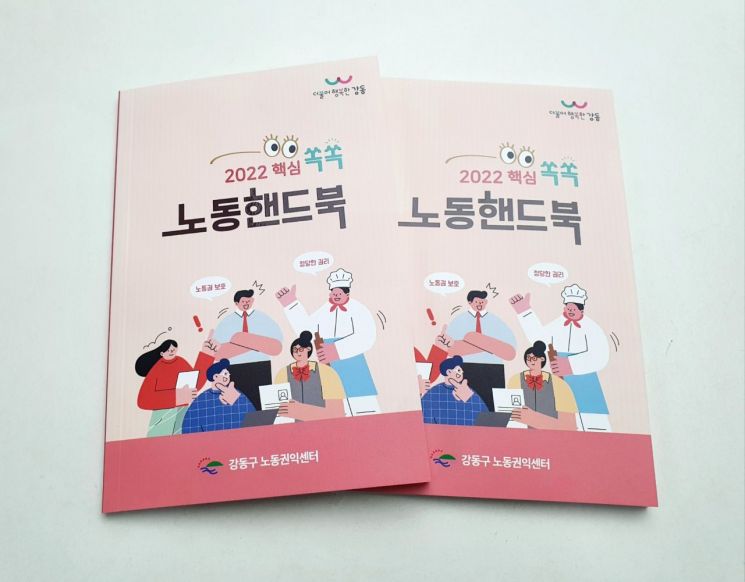
Gangdong-gu (Mayor Lee Jung-hoon) has published an easy-to-understand and convenient labor law guidebook in handbook form.
Named ‘2022 Essential Labor Handbook,’ this guidebook contains only the essential information such as minimum labor conditions and remedies for workers’ rights violations, all compiled into a portable handbook size.
It includes basic instructions on drafting employment contracts, wages, working hours, leave, disciplinary actions, dismissal, severance pay, unemployment benefits, and industrial accidents. It also covers labor-related laws and precedents that both workers and employers should know, along with information on labor-related institutions that can provide assistance in cases of unfair treatment.
Notably, the handbook categorizes labor laws by specific groups such as youth, women, and non-regular workers, allowing users to quickly and easily find the information they need.
The ‘2022 Essential Labor Handbook’ can be obtained by visiting the Gangdong-gu Labor Rights Center or nearby community service centers. It is also available as a PDF file on the Gangdong-gu Labor Rights Center website for anyone to access without visiting in person.
Mayor Lee Jung-hoon said, “We hope this labor handbook, which organizes essential labor laws in an easy-to-understand way, will help protect the rights and interests of both workers and employers,” and added, “We will continue to strive to develop innovative policies to enhance the labor rights of all workers in Gangdong-gu.”
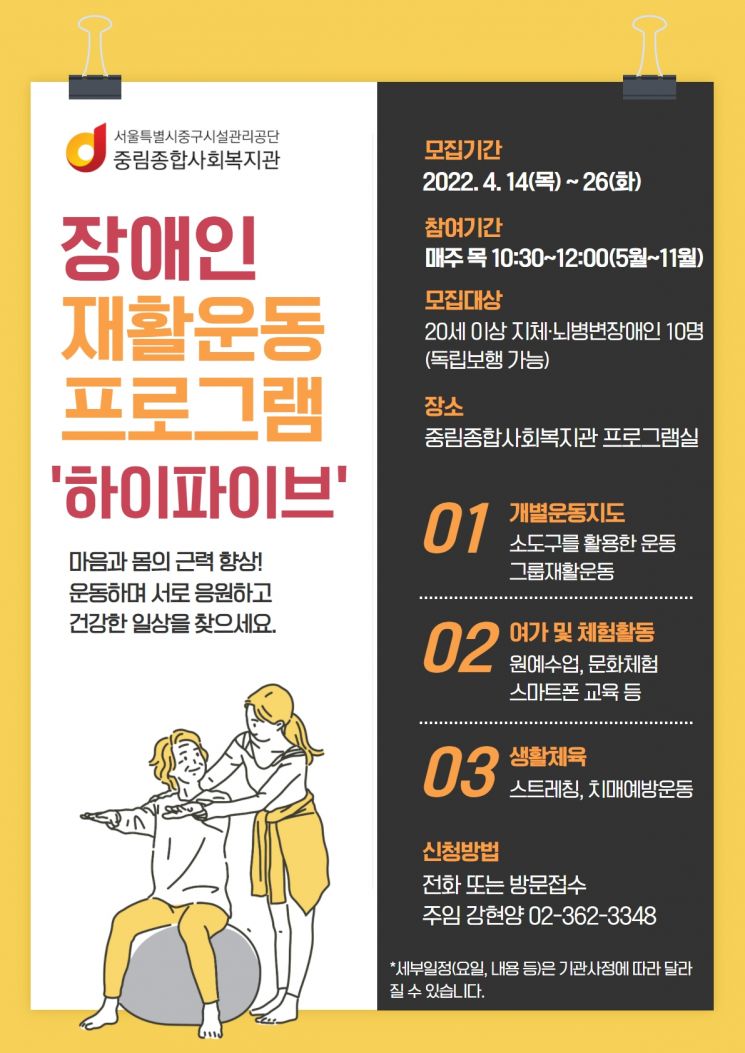
Jung-gu, Seoul, will operate a rehabilitation exercise program called ‘High Five’ starting in May to promote health and improve the quality of life for people with disabilities.
‘High Five’ is an integrated rehabilitation program planned by Jung-gu Public Health Center in collaboration with Jungnim Comprehensive Social Welfare Center to help people with disabilities who have experienced reduced physical function due to prolonged COVID-19 inactivity recover a healthy daily life.
The program targets individuals aged 20 and over with physical disabilities or brain lesions who can walk independently. Recruitment for 10 participants will be on a first-come, first-served basis until the end of this month. The program will run every Thursday from May to November at Jungnim Comprehensive Social Welfare Center in Jung-gu.
Participants will receive individualized exercise guidance from physical therapists according to their disability type and severity, and learn strength training exercises using small equipment such as resistance bands and foam rollers. A Jung-gu Public Health Center official stated, “We plan to produce videos demonstrating the use of small equipment and various exercises so participants can manage their health independently.”
The program also includes various cognitive rehabilitation games to improve concentration and cognitive abilities, as well as functional enhancement and psychological support programs. Additionally, leisure and experiential activities such as horticulture classes and cultural experiences will help participants develop interpersonal skills and opportunities for social participation.
Participants can also access health management services operated by Jung-gu Public Health Center, including oral health education, nutrition education, and medication information education. Health checkups linked with the health center, such as oriental medicine treatment and metabolic syndrome screening, are available twice a year.
Jung-gu Public Health Center continuously operates a ‘Community-Based Rehabilitation Project’ for people with disabilities and their families, providing free customized rehabilitation services such as ▲home rehabilitation for people with disabilities ▲health promotion programs for (prospective) disabled persons ▲support and mentoring for families of people with disabilities ▲management of residual symptoms in COVID-19 recovered disabled persons ▲education on preventing acquired disabilities in non-disabled persons ▲and case management for people with disabilities.
© The Asia Business Daily(www.asiae.co.kr). All rights reserved.



















