Indonesia to Halt Edible Palm Oil Exports from 28th
Palm Oil, Key Ingredient in Cooking Oil and Processed Foods
Immediate Supply Disruptions Unlikely but Long-Term Cost Concerns Remain
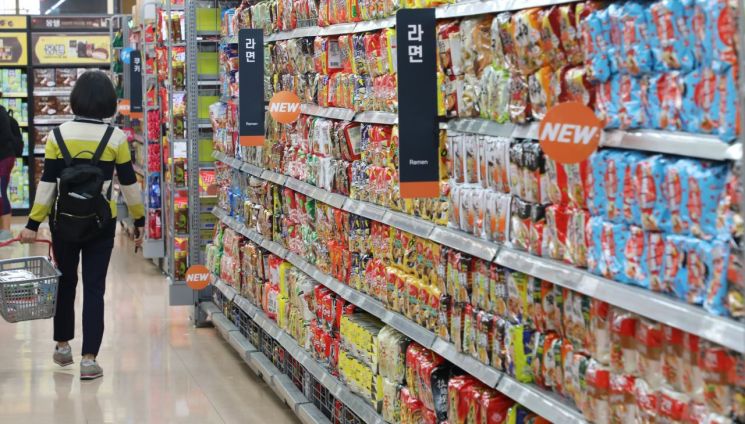
[Asia Economy Reporters Seungyun Song and Eunmo Koo] Indonesia, the world's largest palm oil producer, has announced a suspension of palm oil exports, causing tension in the domestic food industry. Since palm oil is widely used in processed foods such as snacks and bread, a prolonged supply instability is expected to inevitably impact many food manufacturing companies.
According to industry sources on the 25th, Indonesia has decided to halt exports of cooking oil and raw materials for cooking oil starting from the 28th until further notice. This decision came after palm oil prices surged, leading Indonesia to prioritize exports, which caused a sharp rise in cooking oil prices in the domestic market and triggered supply instability.
Domestic food manufacturers are also viewing the situation seriously. Most companies stockpile 3 to 4 months’ worth of inventory, so they can manage for now, but if the situation prolongs, supply disruptions may occur once inventory runs out. A Nongshim official stated, "There is no immediate supply disruption, but we are carefully monitoring the situation."
If international grain prices rise sharply along with palm oil supply instability, the cost burden will increase, which could lead to price hikes. Especially, the confectionery and ramen industries, where palm oil accounts for a relatively large portion of the manufacturing process, are expected to be most affected. A confectionery industry official said, "Prices of oils and fats have risen significantly over the past 1-2 years, and this export suspension adds fuel to the fire. I think it is inevitable that this will lead to product price increases in the future."
Companies not using Indonesian palm oil are also feeling the pressure. Ottogi, which uses Malaysian palm oil, says there is no immediate production problem. However, an Ottogi official said, "If Indonesia’s export suspension continues for a long time, there may be demand to substitute with Malaysian palm oil. In that case, we are closely watching concerns about price increases for Malaysian palm oil."
The cost burden on food manufacturers is increasing. Besides palm oil, international grain prices have also been rising steadily since Russia’s invasion of Ukraine. Last month, the import price of wheat reached about $402 per ton, a 41.4% increase compared to the same month last year.
The same applies to feed grains. According to the Korea Rural Economic Institute, the import price index for feed grains rose by an estimated 5.8% in the first quarter compared to a month ago, and is expected to increase by 13.6% in the second quarter. Egg prices are also on the rise. As of the 22nd of this month, the average consumer price for a carton of 30 eggs was 7,010 won, reaching the 7,000 won level for the first time in about eight months. This is a 10.3% increase from 6,358 won a month ago.
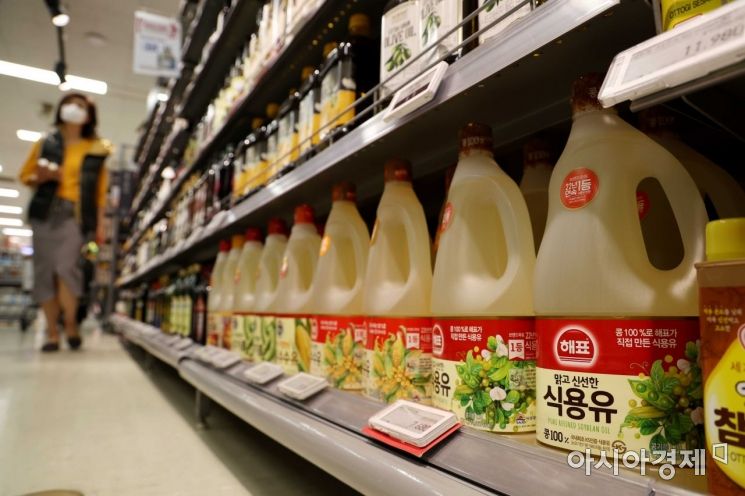
Domestic cooking oil prices continue to rise, causing ongoing difficulties for small business owners. The price of the 18L cooking oil, mainly used in restaurants, has already surged to the 60,000 won range and is expected to rise further by the end of the year.
© The Asia Business Daily(www.asiae.co.kr). All rights reserved.
![Clutching a Stolen Dior Bag, Saying "I Hate Being Poor but Real"... The Grotesque Con of a "Human Knockoff" [Slate]](https://cwcontent.asiae.co.kr/asiaresize/183/2026021902243444107_1771435474.jpg)












