Avoiding Blue-Collar Labor, Preferring Gray-Collar
Delivery Workers Favor Platform Service-Based Jobs Over Manufacturing
Labor Shortages Spread in China's Low- to Mid-Wage Labor Market Despite Being the 'World's Factory'
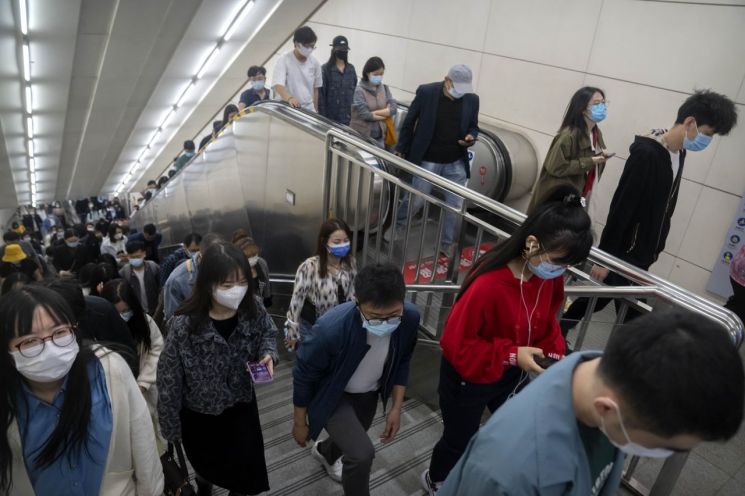
[Asia Economy Reporter Kim Hyunjung] Liao Yong, a 19-year-old living in Beijing, China, earns about 15,000 yuan (approximately 2.85 million KRW) per month working as a delivery driver. He said, "Factory work, which involves repeating simple tasks for 7 to 8 hours a day, seems to have no room for growth," adding, "Delivery work allows me to see various things and meet different people, making the job enjoyable."
According to a report by the Hong Kong South China Morning Post (SCMP) on the 22nd, young Chinese workers who have migrated from rural areas to cities are rejecting blue-collar labor such as factory work in manufacturing and are joining the delivery workforce, attracted by flexible working hours and better pay conditions.
SCMP pointed out, "Factory work is unattractive to young migrant workers in China," and noted, "Even without considering new opportunities and the boom in urban delivery services, the traditional form of labor demands too much."
Another delivery driver living in Beijing, Wang Juncheng, explained, "Delivery work offers more time, and the more you work, the more money you can earn."
According to Chinese economist Professor Zhuang Bo, the reluctance to work in factories is becoming more common among Chinese migrant groups. Professor Zhuang explained, "Recently, young migrant workers want to stay in cities, and they consider working as restaurant waiters better and more attractive than factory labor."
As China, known as the 'World's Factory,' finds it increasingly difficult to find blue-collar workers, concerns are rising that this could disrupt China's plans to strengthen its high-tech industrial sector.
In the United States, the shortage of blue-collar workers is already intensifying. It is projected that by 2025, nearly 30 million manufacturing jobs will be unfilled in the U.S. According to the U.S. National Statistics Bureau, about 44% of industrial companies reported last year that employment was the biggest challenge in business operations.
Larry Hu, Chief Economist at Macquarie Group, sees that with the expansion of the service sector and rising average wages in China, Chinese workers have more choices. Economist Hu stated, "China became the world's factory and took over more overseas factories from developed countries because young people in those countries no longer wanted low-wage assembly work," adding, "China has now reached this stage, which is a result of economic development."
This phenomenon may also act as a headwind against China's manufacturing automation plans. China aims to digitalize 70% of local manufacturers by 2025.
Experts have long debated whether China should reduce the proportion of low-cost manufacturing or relocate overseas to restructure its industrial sector. Some believe this would help raise blue-collar wages and solve labor shortages. Professor Zhuang explained, "Labor shortages are a relative issue," adding, "Factories face difficulties in hiring because they want to maintain current low wages." He further noted, "Factories that provide housing allowances to some long-term employees, support local residency, and offer tuition assistance are currently not experiencing hiring problems."
© The Asia Business Daily(www.asiae.co.kr). All rights reserved.

















