[Asia Economy Reporter Choi Seok-jin, Legal Affairs Specialist] The innocence of the SBS current affairs program "Unanswered Questions" production team, who entered a detention center by impersonating an acquaintance of an inmate while carrying equipment capable of secretly recording to cover 'voice phishing' crimes, has been confirmed.
While it is possible to impose penalties for violating prohibition regulations when an outsider brings prohibited items into a correctional facility by evading the supervision or inspection of correctional officers, such acts cannot be punished as obstruction of official duties by deception. Furthermore, the circumstance that "if the purpose of the coverage had been known, entry would not have been permitted" is merely a mistake in the motive for consent and does not establish the crime of trespassing on a building.
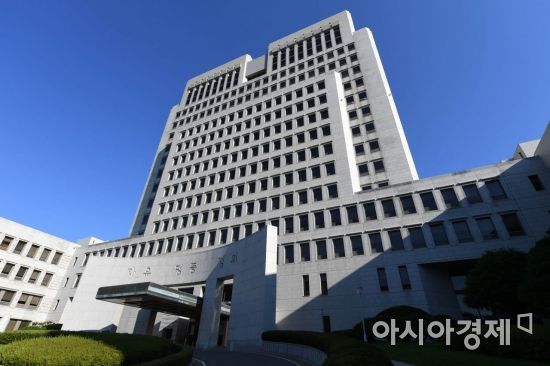
According to the legal community on the 24th, the Supreme Court's 3rd Division (Presiding Justice Kim Jae-hyung) recently upheld the lower court's ruling that acquitted SBS PD A and cinematographer B, who were indicted for obstruction of official duties by deception and trespassing on a shared residence (building) under the Act on the Punishment of Violent Crimes.
The court stated, "The lower court's ruling did not err in the legal principles regarding the establishment of the crime of obstruction of official duties by deception. Although there are parts of the lower court's reasoning regarding the establishment of trespassing on a building that are inappropriate, there is no error that affected the judgment by misunderstanding the legal principles as claimed in the grounds for appeal."
A and B visited the Seoul Detention Center in Uiwang-si, Gyeonggi-do, around 2 p.m. on August 14, 2015, to cover inmate C, who was incarcerated on charges related to voice phishing, after receiving a tip.
The two concealed their purpose of coverage, impersonated acquaintances of C, filled out and submitted a visitation application form, obtained visitation permission, then entered the visitation room carrying a business card wallet-shaped recording and filming device, which was prohibited from being brought in. They met with C for about 10 minutes, filming the scene and recording the conversation.
The prosecutor indicted A and B on charges of jointly trespassing on a building managed by the Seoul Detention Center director (trespassing on shared residence under the Act on the Punishment of Violent Crimes) and conspiring to obstruct the legitimate execution of duties by correctional officers in charge of visitation through deception (obstruction of official duties by deception).
However, both the first and second trial courts acquitted them of all charges.
The first trial court examined three acts separately regarding the establishment of obstruction of official duties by deception: impersonating acquaintances to obtain visitation permission, secretly bringing in recording and filming equipment, and filming and recording inside the detention center.
Regarding the visitation permission, the court stated, "The Supreme Court holds that obstruction of official duties by deception is established when the deception causes the other party to misunderstand, be mistaken, or be unaware, leading them to perform wrongful acts or dispositions, thereby obstructing the concrete and actual execution of official duties by a public official." It then judged, "Although the defendants only wrote 'acquaintance' on the visitation application form and the correctional officers did not further verify the specific relationship, and there were no circumstances suggesting that the visitation violated any restrictions under Article 41 of the Act on the Execution of Sentences concerning visitation restrictions, it is difficult to see that the correctional officers in charge of visitation were obstructed in their concrete and actual execution of duties."
Article 41 of the Act on the Execution of Sentences lists visitation restriction reasons such as ▲ when there is a risk of acts violating criminal laws ▲ when visitation prohibition decisions exist under the Criminal Procedure Act or other laws ▲ when there is a risk of harming the inmate's reform or sound social reintegration ▲ when there is a risk of harming the facility's safety or order.
Regarding the bringing in of recording and filming equipment, the court pointed out, "The Act on the Execution of Sentences stipulates prohibited items and punishes inmates who bring in, produce, possess, use, receive, exchange, or conceal prohibited items under Article 107. However, if an outsider brings in or exchanges prohibited items such as 'alcohol, cigarettes, cash, or checks' without permission for delivery to inmates, Article 132 punishes them with up to six months of penal servitude or a fine of up to 2 million won. There is no criminal penalty provision for outsiders bringing in other prohibited items."
It continued, "Therefore, if carrying recording and filming equipment into the detention center is considered obstruction of official duties by deception, it would expand criminal punishment contrary to the explicit intention of the legislature, so such an interpretation should not be made," concluding, "The defendants' act of bringing recording and filming equipment into the detention center does not constitute obstruction of official duties by deception."
Regarding filming and recording inside the detention center, the court stated, "The defendants filmed and recorded while meeting C to verify the credibility of a tip related to a voice phishing organization during the broadcasting production process. At that time, C was unaware of the filming and recording. Only part of the visitation room among the detention center facilities was filmed, and the defendants planned to broadcast with C's face and inmate number mosaicked and voice altered to be unidentifiable."
It added, "Considering that the defendants' acts did not involve delivering prohibited items to C or facilitating communication with the outside to cause disciplinary violations, and that the security of the detention center or the inmate's personal information was not threatened by the disclosure, it cannot be seen that the defendants obstructed the concrete and actual execution of duties by the correctional officers in charge of visitation," acquitting them of obstruction of official duties by deception.
Meanwhile, regarding whether entering the detention center through the main gate while hiding the purpose of coverage constitutes trespassing on a building, the first trial court cited past Supreme Court rulings, stating, "Even if a building is open to the public, trespassing is established if entry is against the explicit or presumed will of the manager (although there has been a recent change in precedent through a plenary session ruling). However, since monitoring, criticism, and checks on state institutions are essential missions of the press, journalists' entry into state institutions for coverage should be permitted unless the need for restriction is clearly recognized. This should be sufficiently considered when interpreting the presumed will of the building manager affiliated with a state institution rather than a simple private space."
It judged, "Therefore, considering that the defendants did not enter the detention center for criminal purposes, that the Seoul Detention Center has permitted inmate visitation and filming for coverage purposes before, and that the planned broadcast content does not appear to threaten the detention center's security, it is difficult to conclude that the defendants entered against the presumed will of the Seoul Detention Center director."
For these reasons, the court ruled, "The charges in this case do not constitute a crime or lack proof of crime, so the defendants are acquitted."
The second trial court and the Supreme Court also found no problem with the first trial's judgment.
Regarding obstruction of official duties by deception, the Supreme Court stated, "If the act merely violates prohibition regulations by evading the monitoring and inspection of public officials, applying penalties for that is another matter, but such an act cannot be considered obstruction of official duties by deception. If the defendants violated the prohibition regulations and evaded monitoring and inspection without being caught by public officials, it is only a result of the officials neglecting their duties, not obstruction of official duties by deception."
It added, "If electronic devices capable of recording and filming are considered prohibited items that may threaten the safety or order of correctional facilities and thus need to be banned, correctional officers have the general authority and duty to inspect and control entrants and items brought in or out. However, if a non-inmate brings such prohibited items into the correctional facility, it is merely a violation of prohibition regulations by evading inspection and control by correctional officers, and this does not constitute obstruction of official duties by deception," reaching the same conclusion as the lower courts.
Regarding trespassing on a building, the court pointed out, "The defendants, as visitation applicants, entered the Seoul Detention Center's civil affairs office and visitation room through normal entry methods with the actual consent of correctional officers entrusted by the Seoul Detention Center director, the manager of the detention center. Therefore, it cannot be seen that they entered the detention center in a manner that disturbed the actual peaceful state against the manager's will."
It continued, "If the Seoul Detention Center director or correctional officers had known that the defendants secretly carried recording and filming equipment shaped like a business card wallet for the purpose of filming and recording the visitation, they would not have permitted entry into the detention center. However, this circumstance is merely a mistake in the motive for consent, so the defendants cannot be regarded as having entered against the will of the Seoul Detention Center director or correctional officers or having trespassed on the civil affairs office or visitation room in a manner that disturbed the actual peaceful state."
© The Asia Business Daily(www.asiae.co.kr). All rights reserved.

















