[Asia Economy Reporter Kang Nahum] The "taxi crisis" has resumed following the full lifting of social distancing measures. Mobility platforms have stepped up efforts to increase peak-time operations and improve dispatch success rates, but these measures have proven insufficient.
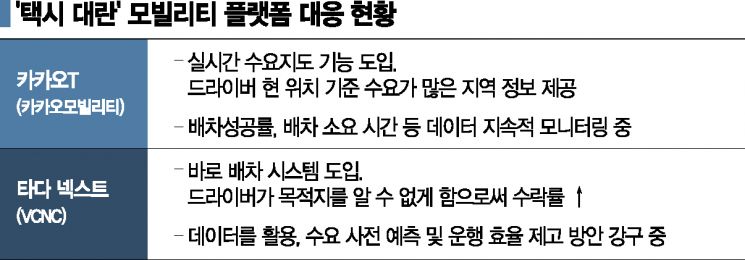
◆ KakaoT and Tada Respond to Surge in Demand = According to the platform industry on the 20th, Kakao Mobility, the operator of Kakao T, has provided a "Driving Guide for Surge in Demand" through the Kakao T application (app) notifications targeting drivers in the Seoul area, where the taxi crisis mainly occurs, to cope with the explosion of passenger calls following the easing of social distancing measures that began earlier this month.
This aims to enhance user convenience through efficient driving by drivers and to provide information on areas with high demand during peak hours (10 PM to 2 AM the next day), thereby contributing to resolving the supply-demand imbalance.
For drivers using T Blue, Black, Venti, and Pro Membership services, a "Real-Time Demand Map" feature is also being introduced. The real-time demand map provides information on areas with high demand based on the driver's current location. Additionally, data such as dispatch success rates and dispatch times are continuously monitored to optimize supply-demand matching.
VCNC, the operator of Tada Next, is also making every effort to improve operational efficiency during peak hours. By introducing the "Immediate Dispatch" system, which prevents drivers from knowing the destination in advance, they are working to increase acceptance rates. They are also considering accelerating plans to increase the number of Tada Next vehicles from the current 400 to 1,500 by the end of the year.
◆ Taxi Passengers Double, Taxi Numbers Down 35% = According to Seoul City, the number of taxi trips in the city between midnight and 2 AM on the 19th totaled 69,362, nearly double the average of 35,346 trips on the same days during the second and third weeks of February this year, when there was a "post-9 PM operation restriction." Especially after subway and bus services end, major entertainment districts are crowded with citizens trying to catch taxis, causing congestion.
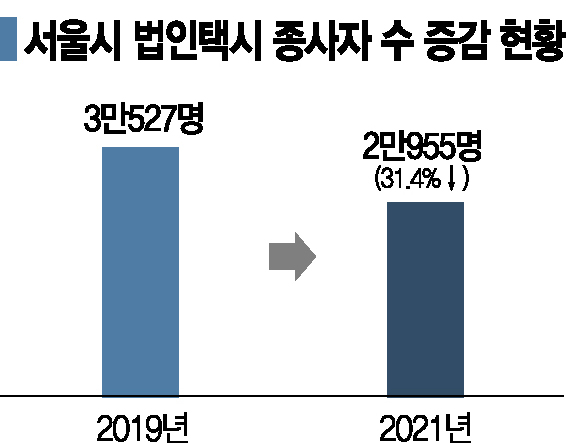
This situation stems from an absolute shortage of taxi workers. As of October last year, the number of corporate taxi drivers in Seoul was 20,955, a 31.4% decrease compared to 30,527 in 2019 before COVID-19. The corporate taxi utilization rate from January to September last year was about 34.47%.
Citizens' frustrations sometimes target the platform apps unfairly. A platform industry insider lamented, "Many people are still unaware of the driver shortage situation, so they mistakenly believe that the platform apps are deliberately not dispatching taxis."
The industry consensus is that the fundamental resolution of the taxi crisis is difficult through platform companies' efforts alone. A Kakao Mobility representative stated, "To solve the absolute supply shortage, society, the government, and the industry must continue discussions together to address the root causes of the decrease in taxi drivers and promote industrial development."
© The Asia Business Daily(www.asiae.co.kr). All rights reserved.
![A Woman Who Jumps Holding a Stolen Dior Bag... The Mind-Shaking, Bizarre Con of a "Human Knockoff" [Slate]](https://cwcontent.asiae.co.kr/asiaresize/183/2026021902243444107_1771435474.jpg)

















