Subway Secures 93.6% of 'One Station, One Route', Elevator Installation in Stations 99.4% Complete... Aiming for 100% by 2024
Low-Floor Buses Increase from 74.8% to 100%... Visual Impairment Bus Boarding Support System Established, Two Lines to be Piloted at Gyeongbokgung Station Within the Year
[Asia Economy Reporter Lim Cheol-young] Seoul City announced on the 19th that it will promote improvements in the usage environment of public transportation and walking to enhance mobility convenience for transportation-vulnerable groups such as persons with disabilities. Since transportation policies are closely linked to citizens' daily lives, the city plans to devise measures at the transportation sector level to improve citizens' mobility convenience.
Seoul City will first secure a ‘one station, one route’ system by installing boarding convenience facilities in subway stations. Although elevator installation in Seoul subways is 99.4% complete, the city will not stop there and aims to increase the ‘one station, one route’ securing rate from the current 93.6% to 100% by 2024 to enhance practical accessibility for transportation-vulnerable groups such as persons with disabilities.
For 21 stations where the ‘one station, one route’ system was not secured due to factors such as construction 30 to 40 years ago, phased construction will be promoted. This year alone, boarding facilities at five stations including Cheongnyangni, Yongdap, Gyodae, Myeongdong, and Macheon will be completed, and construction will begin within the year at 11 stations including Jongno 3-ga, Gangdong, Saejeol, Cheongdam, and Bokjeong. For three stations under alternative review, completion is planned by 2024 through measures such as size reduction, connection to adjacent buildings, and installation of underground tunnel sections.
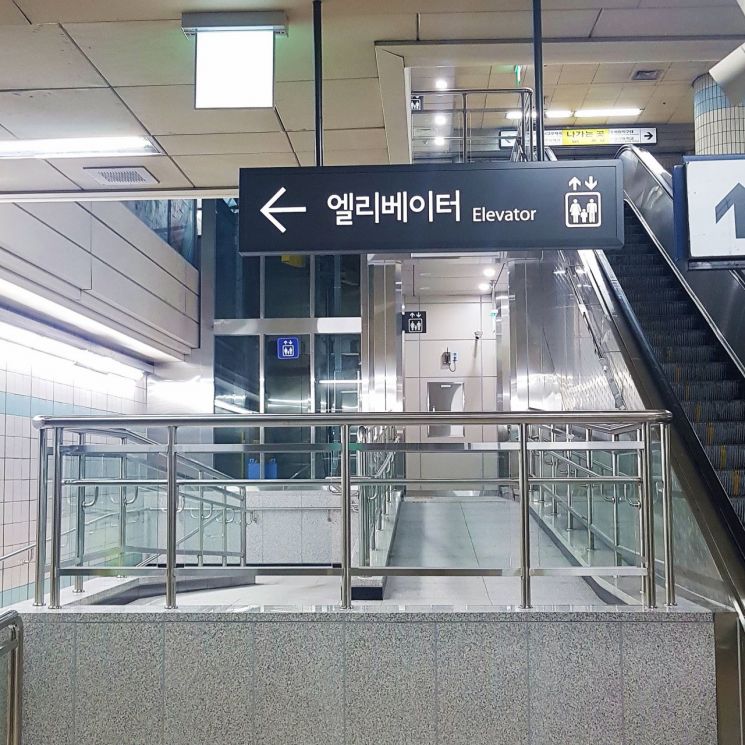
Elevator installation inside stations is 99.4% complete except for two locations, but the focus will be on securing the ‘one station, one route’ system and facility maintenance so that anyone can conveniently use the subway at all stations in Seoul.
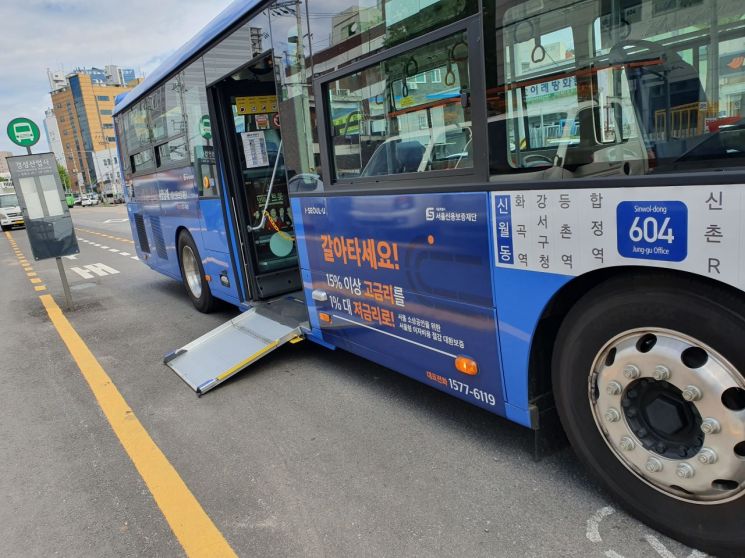
For city buses, the introduction rate of low-floor buses will be raised to 100% by 2025, with a phased introduction of 6,564 buses on all routes. This year alone, the number of low-floor buses will increase to 511, raising the rate to 74.8%, and support will be provided to introduce 71 village buses this year and 235 buses on 73 routes by 2025.
Additionally, to enable transportation-vulnerable groups such as the visually impaired to use buses more conveniently, the city will promote the establishment of a ‘bus boarding and alighting support system.’ This system will allow convenient bus reservations via a smartphone app, provide automatic voice service when boarding, and support alighting bells through a portable common remote control for the visually impaired when getting off. A pilot operation will be conducted within the year at six stops on two routes, 1711 and 7212, passing through Gyeongbokgung Station where a school for the blind is located.
For wheelchair users, the waiting time for disability call taxis will be drastically reduced from the current 32 minutes to about 25 minutes. By increasing the number of drivers, the operation rate will improve by more than 10%, and the number of vehicles will also increase, raising the existing compliance rate of the legal number of vehicles to 114%. Furthermore, to shorten waiting times during peak demand periods, private taxis will be utilized to improve accessibility.
Projects to improve walking mobility convenience for transportation-vulnerable groups will continue. Braille blocks at sidewalk entrances adjacent to crosswalks will be maintained to help visually impaired persons easily recognize crosswalks, and curb ramps will be installed to improve the walking environment so that wheelchair users and other transportation-vulnerable groups can move on sidewalks without obstacles.
To strengthen walking safety for the visually impaired, additional installation of audible traffic signals will be expanded. Approximately 600 units will be newly installed this year, focusing on areas with dense visually impaired residents and around facilities such as social welfare centers. In the future, audible traffic signals will be mandated when new traffic lights are installed to enable visually impaired persons to cross crosswalks more safely.
Baek Ho, Director of Urban Transportation at Seoul City, said, “We will broadly improve everything from public transportation to walking environments so that all citizens, including transportation-vulnerable groups such as persons with disabilities, can enjoy more convenient and safe mobility. We will do our best to implement policies that citizens need.”
© The Asia Business Daily(www.asiae.co.kr). All rights reserved.
![Clutching a Stolen Dior Bag, Saying "I Hate Being Poor but Real"... The Grotesque Con of a "Human Knockoff" [Slate]](https://cwcontent.asiae.co.kr/asiaresize/183/2026021902243444107_1771435474.jpg)

















