Press Association Issues Statement Actively Welcoming
Demands Strengthening Investigation Capabilities
Leadership Plans Senior Personnel Changes
Cautious Mode Without Clear Remarks
Nam Gujun Director Also Shows Lukewarm Stance
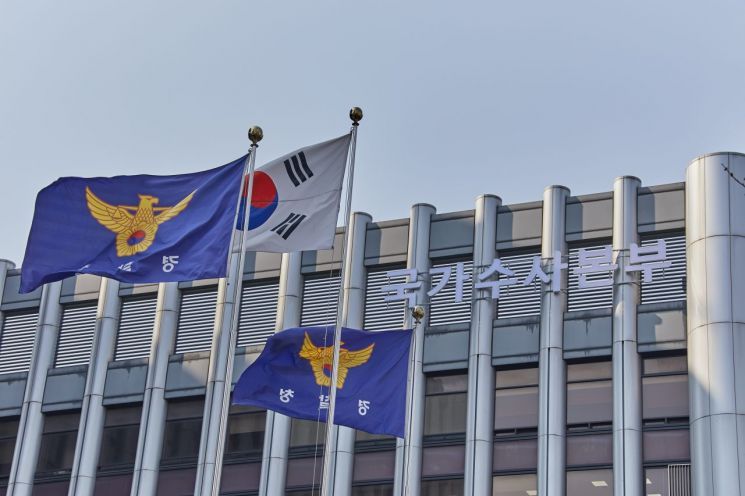
[Asia Economy Reporter Seongpil Cho] The police ranks are divided over the Democratic Party's push for the 'Complete Removal of Prosecutorial Investigation Rights' (Geomsu Wanbak) bill. While frontline police officers actively support Geomsu Wanbak and demand practical measures from the leadership to strengthen investigative capabilities, the police command remains lukewarm.
Police Union Publicly Supports "Geomsu Wanbak"
On the afternoon of the 17th, the National Police Workplace Council issued a statement saying, "The 53,000 members of the council support the complete separation of investigation and prosecution for a fair and just criminal justice system." The council argued, "The combination of investigative and prosecutorial powers creates a structure that is unchecked and unmonitored by anyone," adding, "No single authority should monopolize all powers, and the system should be designed to filter out errors at each stage." They further stated, "Police investigations should be controlled by prosecutors' prosecutorial rights, and prosecutors' exercise of prosecutorial rights should be controlled through court rulings."
The council emphasized, "The 0.6% of investigations handled by the prosecution have so far been free from any control," and "If the prosecutors' direct investigative rights are abolished, the 'uncontrolled 0.6% investigations' will become 'controlled investigations'." They added, "Prosecutors will still be able to control police investigations through warrant requests and prosecutorial rights," and "Investigations will be conducted by the police, while prosecutors will function as neutral controllers and objective prosecutorial authorities."
Unified Call for "Investigation Police Improvement Plan"
In the statement, the council also demanded improvements in working conditions for investigative police from the National Police Agency and the National Investigation Headquarters. They urged, "Since the revised Criminal Procedure Act implemented last year has increased the workload of investigative police, manpower reinforcement is necessary," and "Improvements in the performance evaluation system, promotion system, and expansion of operational departments for investigative police are needed to create conditions where they can work with pride and fulfillment."
The council's statement aligns with posts on the police internal network 'Polnet.' Previously, several posts demanding improvements for investigative police were published on Polnet. One officer pointed out, "Police cannot even freely issue warrants," and questioned, "They talk about police investigative capabilities, but what capabilities exist without the means?" Another officer said, "There has been no effort or action within the police to develop investigative police," adding, "If efforts had been made to address internal issues of investigative police in the past, the police's voice on Geomsu Wanbak would have received public support."
Voices calling for the independence of the National Investigation Headquarters to strengthen investigative police also emerged. One officer said, "Investigative police have only tried to overcome external forces with external help, not by building internal strength," and "Even now, the National Police Agency should make the National Investigation Headquarters independent to build internal strength." Another post stated, "To properly protect the rights and interests of crime victims, investigative police must stand firm," and "The independence of the National Investigation Headquarters is the only answer for investigative police to stand firm."
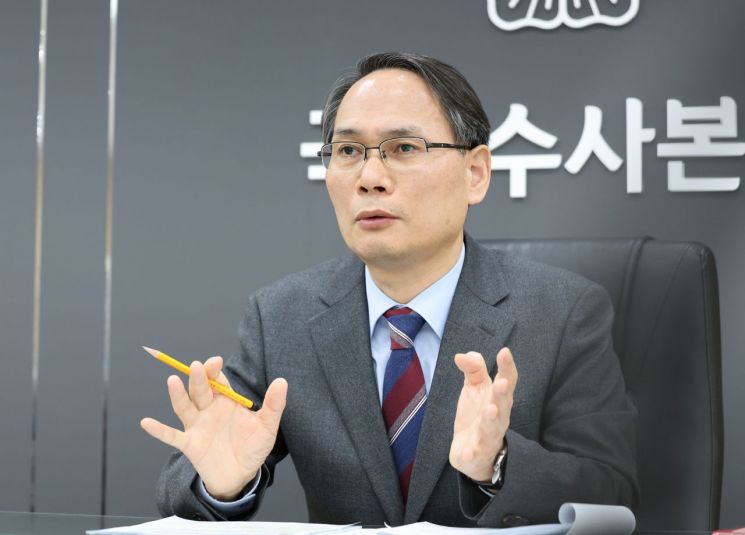 Nam Gu-jun, Chief of the National Investigation Headquarters, National Police Agency
 [Photo by Yonhap News]
Investigation Regresses, Command Remains Silent
Following the adjustment of investigative authority between the police and prosecution in January last year, the police expanded their role by securing so-called 'primary investigation closure rights.' However, there are criticisms that they have regressed in their core investigative duties. According to the National Investigation Headquarters' report marking its first anniversary earlier this year on case handling status and operational directions, the time taken to process cases increased from 55.6 days per case in 2020 to 64.2 days last year after the investigative authority adjustment, an increase of 8.6 days. This is attributed on the ground to more complicated case processing procedures and additional tasks. This background also explains the current calls for improving conditions for investigative police.
The police command is cautious about directly addressing this issue. Especially with high-level personnel changes scheduled from the National Police Agency Commissioner down to senior officials in July, it is difficult to publicly express opinions. Nam Gu-joon, head of the National Investigation Headquarters, said at a press briefing on the morning of the 18th, "Regarding the separation of investigation and prosecution, the National Assembly is currently discussing it, so we will observe the parliamentary discussions," adding, "Regardless of that, we will prioritize public safety and focus on our core roles." Regarding a separate investigative body, Nam said, "No concrete details have been released yet, so it is not appropriate to comment specifically."
© The Asia Business Daily(www.asiae.co.kr). All rights reserved.
![Clutching a Stolen Dior Bag, Saying "I Hate Being Poor but Real"... The Grotesque Con of a "Human Knockoff" [Slate]](https://cwcontent.asiae.co.kr/asiaresize/183/2026021902243444107_1771435474.jpg)

















