Emphasis on Communication for Policy Coordination to Boost Economic Recovery and Price Stability
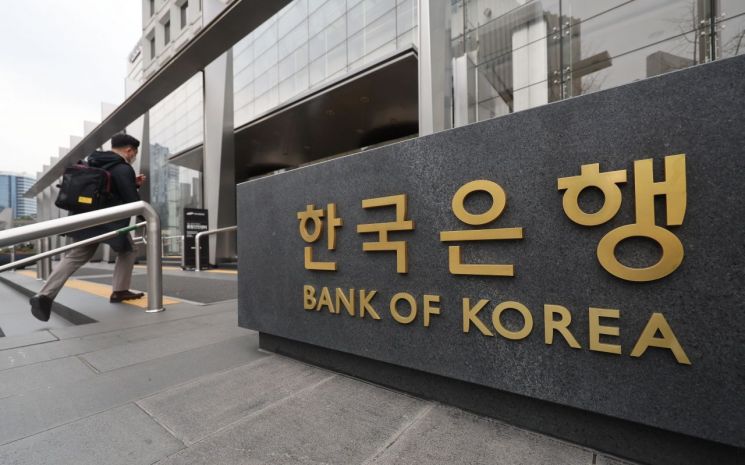
[Asia Economy Reporter Seo So-jung] On the 15th, the Presidential Transition Committee held a closed-door meeting with the Bank of Korea to review the economic impact of the high inflation situation and interest rate hikes. The fact that the Transition Committee hurriedly held the meeting immediately after the Monetary Policy Committee of the Bank of Korea decided to raise the base interest rate by 0.25 percentage points the day before reflects the judgment that the recent inflation situation is serious.
The Transition Committee held a closed-door meeting with the Bank of Korea at 4 p.m. at the Transition Committee office in Tongui-dong, Jongno-gu, Seoul, to assess the economic impact of rising prices and interest rate hikes. The meeting was attended by Choi Sang-mok, secretary of the Transition Committee’s Economic Division 1, transition committee members Kim So-young and Shin Sung-hwan, Bank of Korea Deputy Governor Lee Seung-heon, Deputy Governors Lee Hwan-seok and Lee Sang-hyung, and relevant department heads.
The topic at the meeting table was also 'inflation.' On the day, President-elect Yoon Suk-yeol instructed the Transition Committee to "prepare comprehensive measures to improve the economic structure, including price stabilization, in preparation for prolonged inflation." Participants in the meeting shared the view that inflationary pressures have significantly increased due to the Ukraine war and global inflation, and that domestic and international downside risks to the economy are expanding, indicating that the macroeconomic conditions the new government will face are challenging.
The day before, the Bank of Korea’s Monetary Policy Committee cited the high inflation situation as the main reason for the interest rate hike. Monetary Policy Committee member Joo Sang-young, acting chair in the absence of the governor, said, "Due to the Ukraine crisis, we judged that inflationary pressures might last longer than expected, and despite the vacancy in the governor position, we could not avoid responding."
As a result of the Ukraine crisis, international oil prices surged, causing the consumer price index in March to jump 4.1% compared to the same month last year. The increase rate in the 4% range is the first in 10 years and 3 months since December 2011 (4.2%). The problem lies in the expectation that prices will rise further. The consumer price inflation rate rose sharply to the low 4% range due to a significant increase in petroleum prices and rising prices of industrial products and personal services.
The core inflation rate (excluding food and energy) and general public inflation expectations both rose to the high 2% range. Committee member Joo predicted, "Consumer prices are expected to continue a high increase in the 4% range for the time being, and the inflation rate this year will significantly exceed the February forecast (3.1%)." It is also expected that the core inflation rate will remain around 3% for a considerable period.
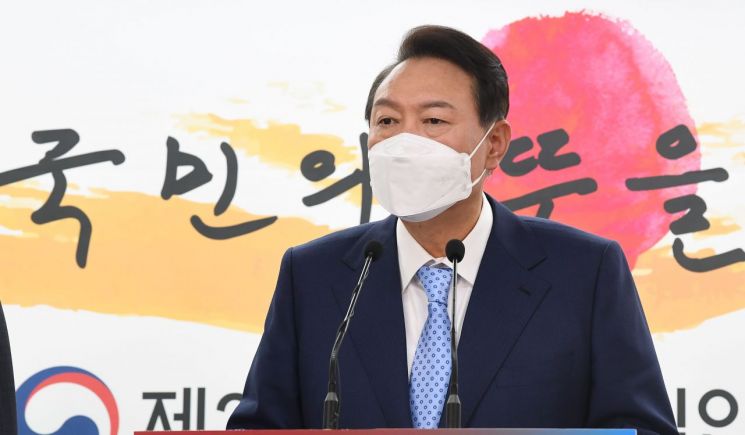
Accordingly, 'controlling inflation' has emerged as an urgent task for the new government. President-elect Yoon said on the day, "Signs of a complex crisis in our economy are clear, and especially inflation is serious," adding, "The living conditions felt by the people seem very difficult." On the 6th, President-elect Yoon also instructed the Transition Committee to "make stabilization measures for people’s livelihoods, including inflation, the top priority of the new government."
A Transition Committee official said, "Since inflation and interest rates are directly connected, a sense of crisis regarding the recent high inflation situation was shared at the meeting," adding, "The need to prepare measures to address the increased interest burden due to the base interest rate hike was also emphasized." Discussions were also held on risks such as household debt, supply chain disruptions, and the Chinese economy. The Transition Committee urged more communication, stating that the Bank of Korea and the government must find the optimal policy mix together.
The recently soaring inflation is a burden for the new government. Concerns about the size of the supplementary budget to be implemented after the new government’s launch are inevitably deepening. This is also why the Transition Committee hastened to hold a closed-door meeting with the Bank of Korea, the monetary policy authority, and emphasized communication with the government.
The meeting also covered various current issues and mid- to long-term tasks facing the Korean economy. A Bank of Korea official said, "Most of the Bank of Korea’s major issues were mentioned, and about 7 to 8 related department heads attended," adding, "We also discussed Bank of Korea-related issues such as preparations for the introduction of CBDC (Central Bank Digital Currency) in response to the digital economy transition and the Bank of Korea’s role in addressing climate change."
Meanwhile, before the Bank of Korea meeting, the Transition Committee held consecutive meetings with the Financial Services Commission and the Financial Supervisory Service around 1:30 p.m. on the same day, urging the preparation of measures to reduce the burden on ordinary citizens and vulnerable groups amid the recent trend of rising interest rates.
© The Asia Business Daily(www.asiae.co.kr). All rights reserved.
![Clutching a Stolen Dior Bag, Saying "I Hate Being Poor but Real"... The Grotesque Con of a "Human Knockoff" [Slate]](https://cwcontent.asiae.co.kr/asiaresize/183/2026021902243444107_1771435474.jpg)

















