Democratic Party Adopts 'Geom Su Wan Bak' Bill as Party Policy... People Power Party and Others Oppose
Prosecutor General Kim Osu: "Direct Violation of Constitution" · Han Donghun: "Must Be Prevented"
Experts: "Seems to Push Geom Su Wan Bak Bill to Block Investigation of Power-Related Corruption"
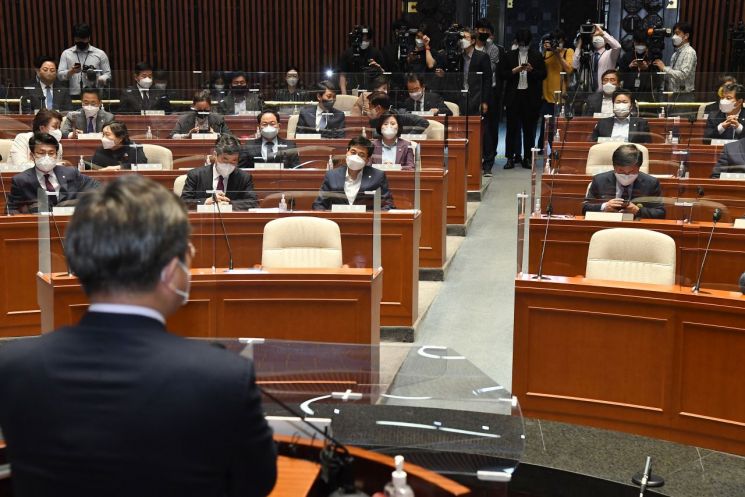 Yun Ho-jung, Co-Chairman of the Democratic Party of Korea's Emergency Committee, is speaking at the Policy Members' General Meeting held at the National Assembly on the afternoon of the 12th. [Image source=Yonhap News]
[Asia Economy Reporter Heo Midam] The Democratic Party of Korea's adoption of the so-called 'complete removal of prosecution's investigative authority' (Geomsu Wanbak) bill as a party resolution has sparked controversy both inside and outside the political sphere. The Geomsu Wanbak bill aims to fundamentally abolish the prosecutor's direct investigative authority. If the bill passes the plenary session, it will effectively realize the abolition of the prosecution's investigative authority, transferring investigative power to the police. Ultimately, the prosecution will only be able to decide on indictment or non-indictment based on records sent by the police.
In response, the People Power Party and others oppose Geomsu Wanbak and plan to block it through a filibuster (unlimited debate) in alliance with the Justice Party. Some suggest that the Democratic Party's push to pass the bill is linked to rallying its hardline supporters. However, there are also calls for slowing down the process, warning that it could backfire in the upcoming June local elections.
Prosecutor General Kim Oh-soo stated on the 13th that the Geomsu Wanbak bill adopted as a party resolution by the Democratic Party is "a direct violation of the Constitution," and vowed to block the bill with a do-or-die determination.
On the morning of the same day, Kim told reporters on his way to the Supreme Prosecutors' Office, "The essence of the Democratic Party's bill is to monopolize criminal investigations by the police, but since the April 19 Revolution, the Constitution has stipulated that the investigation subject is only the prosecutor." He added, "If such a bill is pushed forward, criminals will rejoice, and crime victims and the public will have nowhere to appeal."
He said, "With a do-or-die determination, I will do my best to appeal at every stage, including the National Assembly where the legislation is proceeding, the President who appointed me and holds the authority to promulgate laws and request reconsideration, and the Constitutional Court which judges constitutional violations."
Justice Minister nominee Han Dong-hoon also stated at a press conference at the transition committee in Tongui-dong, Seoul, in the afternoon, "If the bill passes, the public will suffer greatly, so attempts to pass the bill must be blocked."
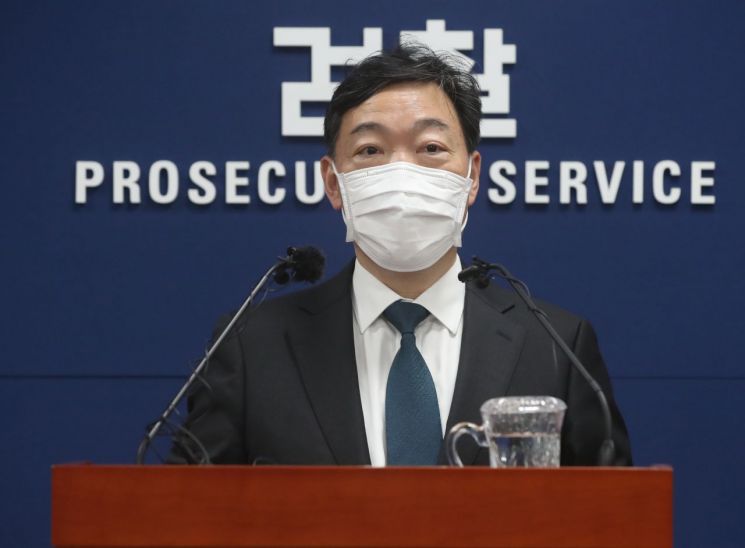 Prosecutor General Kim Oh-soo is holding a press conference on the afternoon of the 13th at the Supreme Prosecutors' Office in Seocho-gu, Seoul, regarding the bill for the complete removal of prosecutorial investigation rights.
 [Image source=Yonhap News]
Earlier, on the 12th, the Democratic Party held a party meeting and unanimously decided to process the Geomsu Wanbak-related bill during the April National Assembly session. The bill aims to amend the Criminal Procedure Act and the Prosecutors' Office Act to abolish the prosecution's investigative authority over six major crimes (corruption, economic crimes, public officials, elections, defense industry crimes, and major disasters) that remained after the adjustment of investigative authority between the police and prosecution.
However, the Democratic Party plans to delay the enforcement of the law by at least three months and discuss measures to prevent the excessive expansion of police authority and the establishment of alternative investigative agencies such as the Serious Crime Investigation Office during this period.
Meanwhile, the People Power Party opposed the Democratic Party's Geomsu Wanbak bill, calling it a 'bulletproof bill,' and the Justice Party also expressed regret. The People Power Party plans to block the bill through a filibuster if it is submitted to the plenary session of the National Assembly.
To end a filibuster, at least three-fifths of the total members, or 180 seats, must vote in favor. Currently, the Democratic Party holds 172 seats. Even combining all independent lawmakers sympathetic to the Democratic Party, including Speaker Park Byeong-seok, the total is 179 seats, one short of the required votes to end the filibuster. Without the help of the Justice Party, which holds six seats, it will be difficult to end the filibuster.
The Justice Party previously stated that it finds it difficult to agree with the timing, method, and content of the Democratic Party's push for Geomsu Wanbak. However, the Justice Party has not yet decided whether to join the People Power Party's filibuster against the bill's passage.
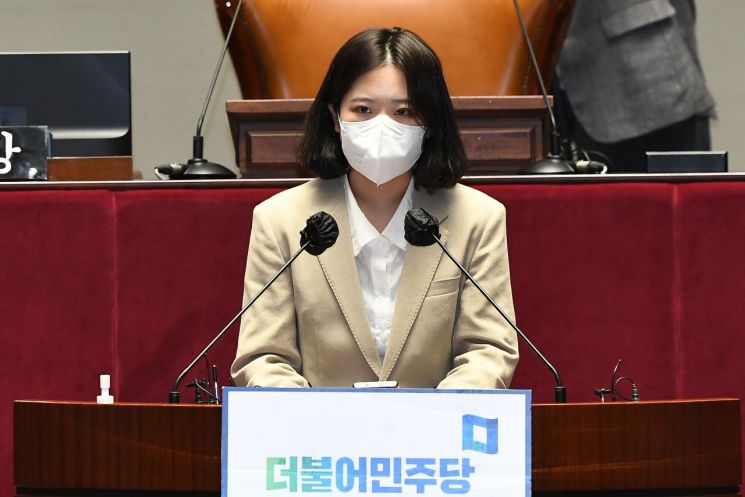 Park Ji-hyun, Co-Chair of the Democratic Party's Emergency Committee, is speaking at the Policy Members' General Assembly held at the National Assembly on the afternoon of the 12th. [Image source=Yonhap News]
Analysts suggest that the Democratic Party is pushing Geomsu Wanbak to rally its hardline supporters ahead of the local elections. It is also interpreted as an effort to block politically motivated investigations by the prosecution. Some hardline party members reportedly conducted a signature campaign demanding prosecution and media reform from the Democratic Party, threatening to boycott the party in the June local elections if the related bill is not passed within this month.
There are concerns that if the Democratic Party pushes the bill despite criticism from inside and outside the political sphere, it could backfire. On the 12th, Democratic Party co-chair Park Ji-hyun said at a party meeting, "Prosecution reform must be done, but the method and timing need more discussion," adding, "Today, I will present a minority opinion rather than the majority. I gathered courage because someone had to speak."
Experts say the Democratic Party's push for Geomsu Wanbak is related to blocking investigations into allegations of power-related corruption. Political commentator Lee Jong-hoon analyzed, "The reason for pushing Geomsu Wanbak is less about rallying supporters and more about preventing investigations into power-related corruption during the Moon Jae-in administration. This is likely the biggest reason."
© The Asia Business Daily(www.asiae.co.kr). All rights reserved.



















