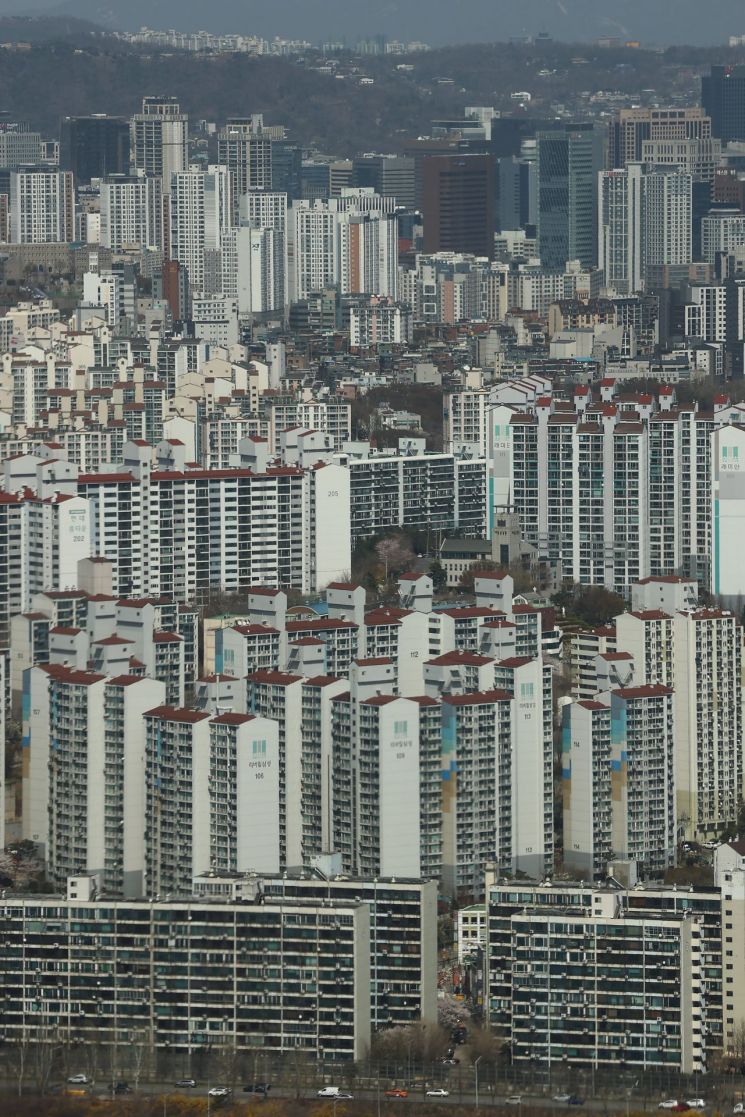
Since the launch of the new government, the issue of 'regulatory reverse discrimination between domestic and foreign nationals' has begun to be raised as one of the newly formulated real estate policies. Foreigners' 'K-real estate shopping' maintained a record high number of transactions last year, and the number of 'foreign landlords' is also increasing. However, there have been continuous criticisms that foreigners are effectively excluded from various regulations and receive special privileges. This issue was included in the campaign promises of President-elect Yoon Seok-yeol, and recently, ahead of the Gyeonggi Province governor election, the ruling party candidate has raised related issues again, drawing renewed attention.
The most controversial point is the issue of acquisition tax surcharges. Under current law, if one household acquires two or more houses, an acquisition tax rate of 8.0?12.0% is applied with a surcharge. There is no distinction between domestic and foreign nationals in this regard. However, in practice, it is applied differently. The Korea Local Tax Research Institute pointed out in a report published on the 13th that "identification of foreign households is done through the Registered Foreigner Record or Foreign Registration Card, but omissions often occur due to family members residing abroad." Furthermore, in the case of the Foreign Registration Card, only the registrant and the head of household are recorded, making it difficult to identify other household members, which often leads to omissions in counting the total number of houses.
While difficulties in grasping the current situation persist, foreign purchases of domestic real estate continue to increase steadily. According to the Korea Real Estate Board, the number of foreign transactions of buildings last year was 21,033, the second highest since statistics began in 2006. This is similar to the record high of the previous year (21,048). According to data from the Court Registry Information Plaza’s ‘Confirmed Date Landlord Status,’ the number of real estate properties with confirmed dates where foreigners were landlords reached a record high of 12,233 last year.
Both President-elect Yoon and the Democratic Party have pledged to resolve this issue, so rapid progress is expected after the new government takes office. However, the law firm Yulchon pointed out in a report published last month that there are matters to consider under international law. Yulchon analyzed, "The full introduction of a permit system for foreign nationals’ housing and land transactions may violate the principle of reciprocity under international law, so careful review is necessary." There are also calls to strengthen the taxation infrastructure before improving the system. Dr. Heo Won-je of the Local Tax Research Institute said, "Building fundamental and effective basic data and source data that facilitate the identification of household members is the fundamental and effective approach."
© The Asia Business Daily(www.asiae.co.kr). All rights reserved.

















