Wheat Futures Prices Rise 75.8%
Russia and Ukraine Account for 29% of Global Wheat Exports
Naengmyeon Average Price 9,962 Won, Up 9.7%
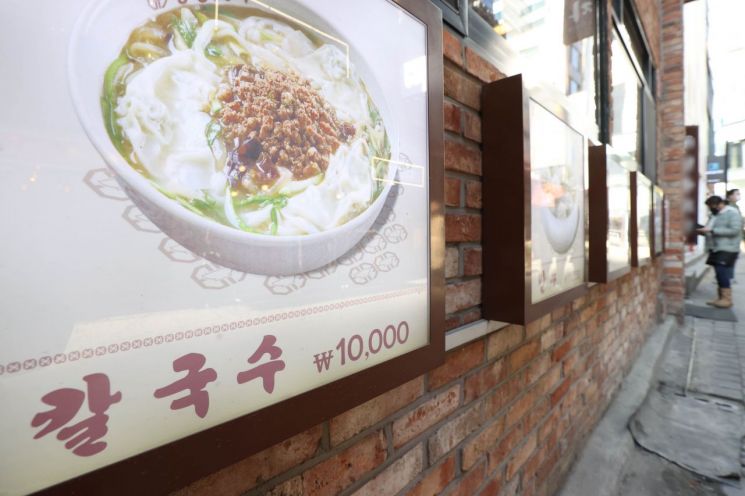
[Asia Economy Reporter Lim Chun-han] Due to the impact of Russia's invasion of Ukraine and rising maritime freight rates, wheat prices have surged, causing the average price of Kalguksu in Seoul to exceed 8,000 won.
According to overseas grain market information from the Korea Rural Economic Institute on the 14th, as of the 12th, the wheat futures price on the Chicago Mercantile Exchange was $405.55 per ton, a 75.8% increase compared to one year ago ($230.75). On the 7th of last month, it recorded $475.46, nearly doubling. The reason for this sharp rise in wheat prices is that Russia and Ukraine account for about 29% of the world's wheat exports.
As wheat prices rise, the burden of dining-out prices is also increasing. According to the comprehensive price information portal Chamgagyeok of the Korea Consumer Agency, the average price of Kalguksu in Seoul last month was 8,113 won, up 8.7% from a year earlier. In February, it was 7,962 won, and this is the first time it has exceeded 8,000 won.
The prices of Naengmyeon and Jajangmyeon also increased. Last month, the average price of Naengmyeon in Seoul rose 9.7% to 9,962 won, and the average price of Jajangmyeon increased 9.4% to 5,846 won. This upward trend is expected to continue, and Naengmyeon prices are anticipated to exceed 10,000 won soon.
In a report published at the end of last month, the Korea Rural Economic Institute stated, "Due to the rise in international grain prices caused by the Ukraine situation, there will be significant pressure on the prices of domestic processed foods, compound feed and livestock products, and dining-out prices. In the short term, it is necessary to strengthen financial and tax support to develop alternative sources and minimize the impact on domestic prices, and in the medium to long term, it is necessary to expand the domestic supply base through stockpiling and establish an international grain procurement system by entering the international grain distribution sector."
© The Asia Business Daily(www.asiae.co.kr). All rights reserved.

















