Hai·Daegu Education Office and Others Announce Pilot Project Results
ADHD Digital Therapeutic 'Ppomi' Improves Behavior and Enhances Concentration
[Asia Economy Reporter Lee Gwan-joo] A pilot project showed that digital therapeutics were effective in cultivating students' 'self-regulation skills,' which can be overlooked during prolonged non-face-to-face classes due to COVID-19.
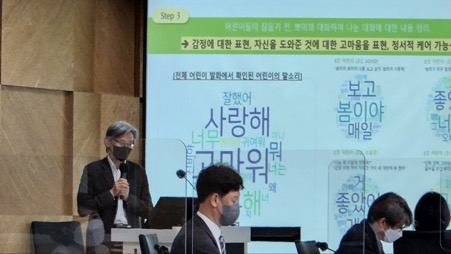
HAII, a digital therapeutics specialist company, announced on the 13th that it held a presentation of the pilot project results for the "Making Children Plan by Themselves: Self-Regulation Skill Improvement Habit Program," conducted jointly with the Daegu Metropolitan Office of Education from May last year to March this year.
HAII and the Daegu Office of Education agreed on the issue that students are missing the period to internalize rules due to non-face-to-face classes, and planned this pilot project to solve the problem through digital healthcare. The pilot project was carried out together by HAII, Daegu Office of Education, Yonsei University, Kyungpook National University, and SEA Seoul branch.
The pilot project involved 233 first and second graders from six elementary schools in the Daegu area. First, a detailed assessment of the children's mental health status revealed that about 13% of all participating children showed tendencies of Attention Deficit Hyperactivity Disorder (ADHD), and 2.1% exhibited cognitive decline symptoms. Experts analyzed this as a result of normal education not being conducted properly due to COVID-19.
Next, 31 children were selected to improve their self-regulation skills using digital healthcare devices. In this phase, HAII's ADHD digital therapeutic 'ForMe' was utilized. After installing ForMe in each home, parents and children set weekly commitments to practice, and by fulfilling these commitments with ForMe, the program was designed to naturally form the children's habits.
As a result, all participating children developed the expected habits. In the main survey conducted over eight weeks, the average rate of keeping the commitment three times a week was 77%, and the average rate of using ForMe at least once daily was 94%. About 60% of the students using ForMe reported increased confidence compared to before. Additionally, 65% of participating students showed improvement in inattentive behavior, and 80% experienced enhanced concentration.
Reduction in parental stress was also confirmed. About 77% of the parents of children participating in the pilot project reported reduced parenting stress related to their relationship with their child compared to before using the device. Furthermore, 65% responded that their personal stress levels also decreased.
Professor Shin Eui-jin of the Department of Child Psychiatry at Yonsei University Severance Hospital, who planned the overall program of the pilot project, said, "Self-regulation skills necessary for forming children's lifestyle and study habits must be developed in early elementary grades, and this pilot project confirmed that digital healthcare devices can greatly contribute to this."
A representative from the Daegu Office of Education stated, "Based on the results of this pilot project, we plan to supplement the shortcomings and expand to a second pilot project involving 2,000 participants in the second semester, and in 2023, to a Digital Friend-Making Project involving all first graders under the Daegu Office of Education."
© The Asia Business Daily(www.asiae.co.kr). All rights reserved.
![User Who Sold Erroneously Deposited Bitcoins to Repay Debt and Fund Entertainment... What Did the Supreme Court Decide in 2021? [Legal Issue Check]](https://cwcontent.asiae.co.kr/asiaresize/183/2026020910431234020_1770601391.png)















