[Seoul Autonomous Districts ㅠseu] Seongdong-gu to Reduce Greenhouse Gas Emissions by 40% from 2018 Levels, Establishing 24 Strategies and 76 Projects Across 5 Sectors · Leading ESG Administration with Coffee Grounds Recycling and Triple Cooperation Among Public, Businesses, and Residents to Cut Carbon Emissions... Jongno-gu to Create Safe Indoor Environments... Nowon-gu to Operate 'Major Accident Monitoring Team' for Disaster-Free Safe City... Songpa-gu to Double Late Fees for Vehicle Inspections from April 14
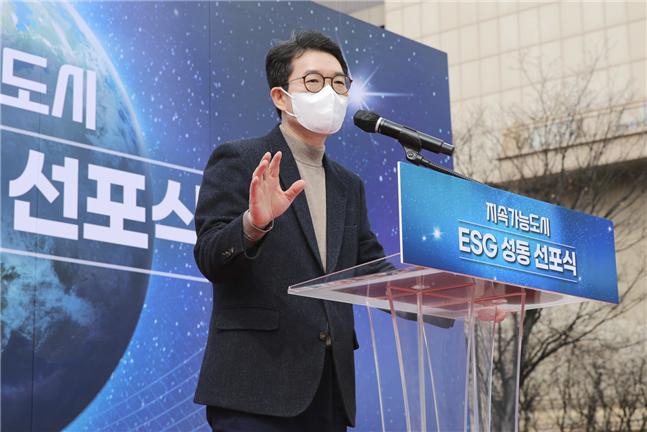 Jung Won-oh, Mayor of Seongdong-gu, is delivering a greeting at the Sustainable City ESG Seongdong Declaration Ceremony held on the 31st of last month.
[Asia Economy Reporter Park Jong-il] Seongdong-gu (Mayor Jung Won-oh) announced that it has established a climate change response plan and will reduce greenhouse gas emissions by 660,000 tons by 2030.
Based on 2018 data, Seongdong-gu set a reduction target of 740,000 tons CO2eq, which is 40% of the district's total greenhouse gas emissions of 1.85 million tons CO2eq. Excluding nationally managed sectors such as manufacturing and construction, the final reduction target was set at 660,000 tons CO2eq.
CO2eq refers to the amount of greenhouse gas emissions converted into carbon dioxide, the representative greenhouse gas.
At the final report meeting of the 'Climate Change Response Plan Establishment Study' held on the 4th, the district prepared a Seongdong-type climate crisis response strategy, establishing a vision and greenhouse gas reduction goals, and developed 24 implementation strategies and 76 detailed projects across five sectors including buildings, roads, and waste.
Representative projects include the expansion of renewable energy supply in buildings such as rooftop parking lot solar power and thermal energy utilization, support for elevator self-power generation devices, and the creation of the Seongdong Eco Government Building to improve building energy efficiency.
Energy self-sufficient villages that enable carbon neutrality in daily life and ECO-Home energy-saving practice projects are also being promoted, along with wall and rooftop greening projects to expand carbon sinks in public buildings. The district plans to promote carbon neutrality in the water resource sector by distributing water-saving devices in public institutions and expand the supply and infrastructure of electric and hydrogen vehicles to encourage the use of eco-friendly cars.
Additionally, the Seongdong-type coffee grounds (coffee residue) recycling project practices zero waste in daily life, strengthens resident participation for carbon neutrality through the creation of Green Apartments, and expands car-sharing infrastructure.
The district is actively promoting the coffee grounds recycling project, recognized as a 'circular resource' by the Ministry of Environment, which can be used for recycled plastics, lighting, and eco-friendly energy. Within about six months of implementation, about one-third of coffee shops in the district participated, and the 'Waste Recycling Resource Circulation Model Establishment Project' based on this project was also selected as an excellent 'Resident-led Regional Balanced New Deal Project' by the Ministry of the Interior and Safety (December 2021), becoming a leading ESG administrative case.
Furthermore, with a total budget of 300 million KRW, the largest purchase subsidy budget among Seoul's autonomous districts, in addition to national and city subsidies, the district is actively leading the promotion of environmentally friendly vehicle use.
At last month's 'Sustainable City ESG Seongdong Declaration Ceremony,' the district pledged to protect the environment and reduce carbon emissions. It plans to solidify the climate change response foundation by enacting basic ordinances related to carbon neutrality and green growth in the first half of the year. Also, by forming the 2050 Carbon Neutral Green Growth Committee, it will accelerate project promotion through in-depth discussions with expert appointed members and related department heads to discover new projects.
Jung Won-oh, Mayor of Seongdong-gu, said, "Responding to the climate crisis is an essential issue of our time, requiring various efforts such as reducing carbon emissions and minimizing waste. We will create a sustainable and livable Seongdong-gu through leading ESG policies achieved by public, corporate, and resident tripartite cooperation."
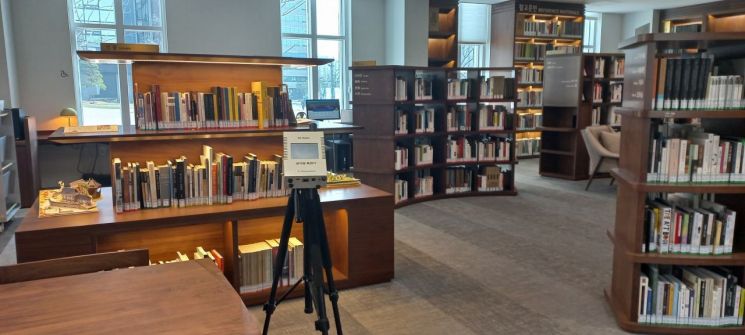
With the prolonged COVID-19 pandemic and the addition of spring yellow dust and fine dust issues, the need for a comfortable indoor and outdoor environment is increasing.
Jongno-gu is implementing 'indoor air quality management' targeting multi-use facilities in the area to create a healthy city where residents can breathe safely and comfortably.
The target includes 224 multi-use facilities in the area subject to the 'Indoor Air Quality Management Act.' The district will check whether indoor air quality managers have completed training and whether self-measurement of pollutants has been conducted. If violations occur due to negligence in management, improvement orders will be issued and results disclosed.
Additionally, to carefully manage facilities not subject to the act, the district plans to visit small vulnerable facilities frequently used by health-sensitive groups such as daycare centers and senior centers, as well as small theaters and indoor sports facilities. This is to measure indoor air quality with portable measuring devices and provide consulting on appropriate management methods for each location.
Moreover, to encourage voluntary management, the district plans to select 'Excellent Indoor Air Quality Management Facilities' and provide incentives.
Jongno-gu conducts road washing and operates fine dust forecasting and warning systems to protect residents' health and create a sustainable community based on fine dust reduction.
Last year, to help residents quickly and easily understand air quality conditions, fine dust traffic lights displaying fine dust concentration were installed at Jongno Community Center and Jongno Culture and Sports Center, attracting attention. This year, the district plans to expand the installation of traffic lights to all 17 neighborhoods.
A district official said, "We will implement more detailed and customized policies to maintain comfortable indoor air quality not only in facilities subject to the Indoor Air Quality Management Act but also in small vulnerable facilities. We ask residents to take an interest in the importance of indoor air quality and participate by ventilating naturally and operating air purifiers."
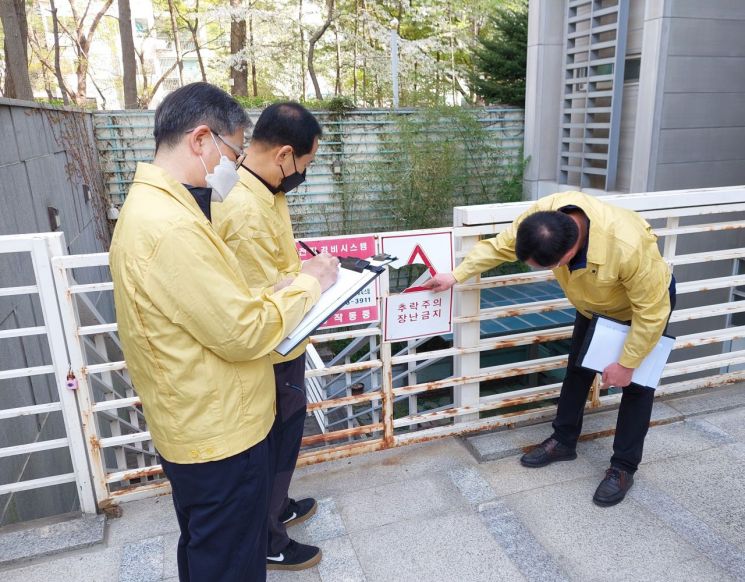
Nowon-gu (Mayor Oh Seung-rok) announced that it will form and operate a 'Major Accident Monitoring Team' to build a safe city free from disasters.
Amid increasing anxiety due to frequent safety accidents at construction sites and multi-use facilities, the Serious Accidents Punishment Act (Serious Accident Punishment Act) has been enforced since January 27.
Accordingly, the district will operate the monitoring team to continuously monitor hazardous and dangerous factors at sites to fundamentally prevent safety accidents. The monitoring team will conduct facility inspections for major accident prevention and inspect sites of outsourced projects with high risk factors to identify improvement points.
The monitoring team consists of six specially hired members centered on the newly established Major Accident Safety Team this year. It is composed of safety field workers in civil engineering, architecture, disaster prevention, and individuals with over 20 years of practical experience in public institutions to ensure expertise. They will be divided into three teams of two people each until the end of this year to closely examine factors threatening local safety.
The inspection targets are broadly two categories: 26 public-use facilities closely related to residents' lives such as sports centers, art halls, and libraries, and 36 ongoing outsourced project sites in the district. For outsourced projects, priority inspections will be conducted at places with frequent worker fall accidents and where high-risk construction machinery and equipment are used.
Additionally, facilities such as bridges, underground passages, and river embankments, which are periodically inspected by technical departments, will be included later to expand the scope.
Key inspection items for public-use facilities include checking ▲structural damage to building safety facilities ▲damage to interior and exterior finishing materials and cracks caused by damage ▲hazardous elements such as sharp metal or protruding glass. For outsourced projects, inspections include ▲hazardous and dangerous factors in the work environment and safety of the work environment ▲worker personal protective equipment usage ▲attachment status of safety devices on machinery.
With the formation of this monitoring team, the district has established a continuous inspection and management system for scattered workplaces. Minor issues that can be immediately addressed on-site will be handled and reported, while pointed out deficiencies will be notified to related departments to confirm compliance with safety and health obligations.
Furthermore, facilities with identified issues must complete corrective actions within three days after notification and report the results, establishing a management system.
In addition to operating the monitoring team, the district is conducting a 'Risk Assessment Outsourcing' for major accident prevention. This involves participation by professional consulting agencies, facility management staff, and on-site workers to enhance the expertise of risk assessments and the effectiveness of related departments' participation.
A district official said, "Although laws related to major accidents have been strengthened, practical departments may feel uncertain about how to prepare. The activities of the specialized outsourcing agencies and monitoring team are expected to be of great help."
Oh Seung-rok, Mayor of Nowon-gu, said, "Most disasters are man-made accidents caused by missing early detection and prevention opportunities. We will establish a system to proactively monitor and manage for residents' safety."
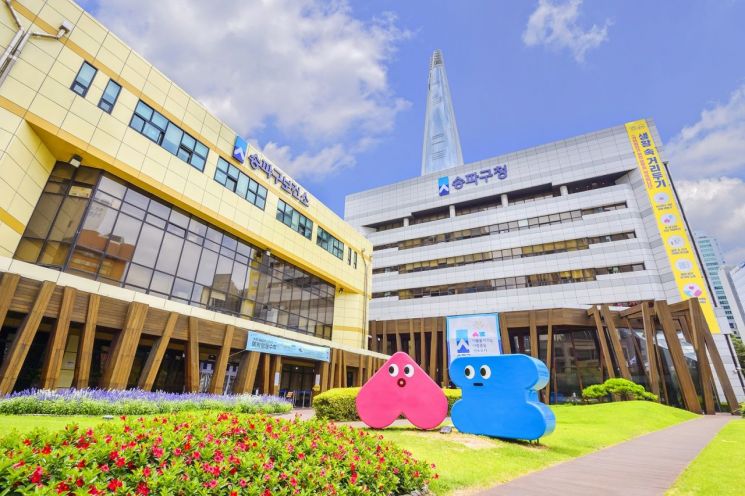
Songpa-gu (Mayor Park Sung-soo) announced that, in accordance with the revision of the Automobile Management Act, the penalty for delayed vehicle inspections will be doubled starting April 14.
Regular (comprehensive) vehicle inspections check the safety suitability of the vehicle body and levels of exhaust gas and noise emissions. All vehicle owners must undergo inspections conducted by vehicle inspection agents (Korea Transportation Safety Authority) or designated maintenance businesses at intervals depending on the vehicle type and age, starting four years after new vehicle registration.
Inspections must be completed within 31 days before or after the expiration date. Failure to comply results in progressively increasing fines based on the number of days delayed. Inspection validity can be checked via the vehicle registration certificate or the Korea Transportation Safety Authority website.
According to the revised Automobile Management Act penalty standards, ▲for delays within 30 days, the fine increases from 20,000 KRW to 40,000 KRW ▲from day 31 onward, the fine increases from 10,000 KRW every 3 days to 20,000 KRW every 3 days ▲for delays exceeding 115 days, the maximum fine doubles from 300,000 KRW to 600,000 KRW.
Applying for inspection reminder services via the Korea Transportation Safety Authority website or call center in advance can help owners remember the expiration date and complete inspections on time.
Mayor Park Sung-soo said, "Regular vehicle inspections are a natural obligation for the safety of owners and neighbors, so please make sure to complete them within the valid period. We will continue to do our best to create a safer road environment and make Songpa a better place to live."
© The Asia Business Daily(www.asiae.co.kr). All rights reserved.



















