WHO "Monitoring BA.4 and BA.5"
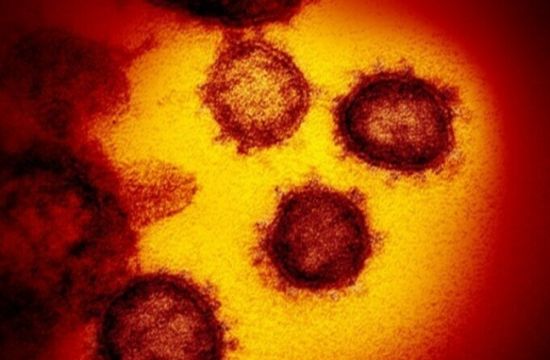 Coronavirus 2019 electronic microscope image. / Photo by the U.S. National Institute of Allergy and Infectious Diseases (NIAID)
[Asia Economy Reporter Na Ye-eun] New subvariants of Omicron (BA.1), called BA.4 and BA.5, have emerged.
On the 11th (local time), the World Health Organization (WHO) announced that it is conducting a risk assessment of two new sublineages of the original Omicron variant 'BA.1.'
According to major foreign media, WHO stated in a report, "We have added two variants named BA.4 and BA.5 to the monitoring list," and "We have started tracking these variants, which require further study regarding immune evasion."
According to WHO, the international influenza data-sharing platform GISAID has reported a total of several dozen cases of BA.4 and BA.5 infections. BA.4 cases were reported from January 10 to the 30th of last month in South Africa, Denmark, Botswana, Scotland, and the United Kingdom. BA.5 was found in South Africa and Botswana.
The Botswana Ministry of Health announced on the 11th that "four cases of BA.4 and BA.5 infections have been identified; all are vaccinated individuals aged 30 to 50, and their symptoms are mild."
Subvariants and recombinant variants of Omicron continue to appear. The recombinant variant XE, a combination of BA.1 and BA.2, has been found in the UK, Taiwan, Thailand, and Japan. Subsequently, suspected cases of the XJ variant, which also combines BA.1 and BA.2 but differs in genetic composition, have been reported in Finland and Thailand.
 Citizens waiting to get tested at the temporary screening clinic set up at Seoul Station Plaza. Photo by Asia Economy
Meanwhile, on the 12th, another recombinant variant of BA.1 and BA.2, XL, was confirmed for the first time in South Korea. According to the UK Department of Health, XL was first discovered in the UK.
According to WHO, XE has a viral replication rate about 10% higher than BA.2, while the transmissibility of XJ and XL has not yet been confirmed. The Korea Disease Control and Prevention Agency stated, "The XL recombinant variant is classified as Omicron by WHO, so it is expected that there will not be significant changes in its characteristics," and added, "Since there is no analysis data on transmissibility or severity, we will continue to strengthen variant monitoring."
Experts caution against excessive concern. According to Newsweek and others, Professor Fran?ois Balloux of University College London explained, "Before the Delta variant was displaced by Omicron, there were more than 200 subvariants, but many of them did not spread further and eventually disappeared."
Infectious disease expert Andrew Friedman said, "So far, the subvariants or recombinant variants of Omicron do not appear to pose risks significantly different from Omicron itself."
However, he added, "There is a possibility that the risk could increase during the recombination process of variants," and "Above all, the emergence of entirely new variants with higher transmissibility and fatality rates than Omicron is a greater concern."
© The Asia Business Daily(www.asiae.co.kr). All rights reserved.


















