[Seoul District News] Seocho-gu to Complete 4,514㎡ Complex Facility with 2 Basement and 6 Floors in Seocho Bogumjari Housing District by 2024, Offering Diverse Cultural and Welfare Services for Residents of Upmyeon and Yangjae Areas... Geumcheon-gu Implements ‘Youth Enterprise Certification System’ to Promote Youth Business Activities... Songpa-gu and Doosan Create ‘Mugunghwa Dongsan’ along Wiryesong-daero... Yeongdeungpo-gu Recruits One Youth or Social Economy Enterprise for Dangsan-gol Move-in Participation... Dongjak-gu Calls for Resident Participatory Budget Project Proposals... Gwanak-gu, Inheritance
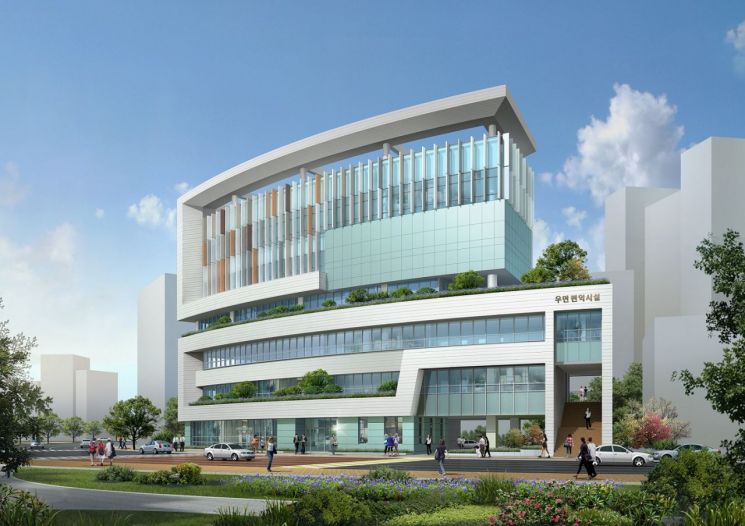
[Asia Economy Reporter Park Jong-il] Seocho-gu announced on the 11th that it will begin construction of the ‘U-myeon Resident Convenience Facility (tentative name),’ a cultural welfare complex facility that can meet the cultural and welfare needs of residents in the Umyeon and Yangjae areas.
The Umyeon Resident Convenience Facility is located within the Seocho Bogumjari Housing District (around 767 Umyeon-dong, Seocho-gu), with a total floor area of 4,514㎡ and a scale of two basement floors to six above-ground floors. The district plans to invest a total of 20.7 billion KRW from its budget and complete the construction by 2024.
The reason for building a cultural welfare facility in the Seocho Bogumjari Housing District, located at the boundary between Seocho-gu and Gwacheon-si, is that the surrounding area is a development-restricted zone, resulting in a relative lack of cultural welfare facilities compared to other regions. Additionally, the large-scale apartment move-in due to the Bogumjari housing project in 2012 caused a rapid population increase, creating a need to establish public infrastructure within the area.
Accordingly, the district plans to create various resident convenience facilities enjoyed by all generations, from children to seniors. First, the exterior applies an eco-friendly design that harmonizes with the natural scenery such as nearby parks and Umyeonsan Mountain through an open structure and the arrangement of natural green spaces.
The facility spaces are separated by floor according to age and purpose to enhance user convenience. Floors 1 to 3 above ground will include resident-tailored welfare spaces such as a toy library and play facilities for infants and toddlers, after-school care facilities for elementary students, and a senior daycare center. Floors 4 to 6 above ground will be cultural spaces including a library and program rooms for activities such as sports classes and language courses.
In particular, the 4th floor above ground will connect the library, caf?, and outdoor rooftop terrace to serve as a diverse cultural open space enjoyed by all residents.
From the early stages of the project, local residents’ opinions were reflected. In 2015, the district conducted a basic survey for construction and surveyed the needs for facilities among nearby residents, completing reviews on appropriate building scale and facility usage.
Furthermore, in 2019, a resident promotion committee consisting of local representatives, district council members, and experts was formed to discuss and gather various opinions on facility space selection, architectural design, and construction from the initial stages of the project.
Ko Dong-sun, chairman of the resident promotion committee, said, “The Umyeon Resident Convenience Facility, promoted through communication with residents, is expected to increase resident satisfaction and contribute to regional development.”
In the future, the district plans to hold a naming contest so that residents can call the facility by a name they desire.
Cheon Jeong-wook, acting mayor of Seocho-gu, said, “We will carefully manage the construction of the Umyeon Resident Convenience Facility to become a precious gift for residents of Umyeon and Yangjae-dong who have longed for cultural and welfare needs.”
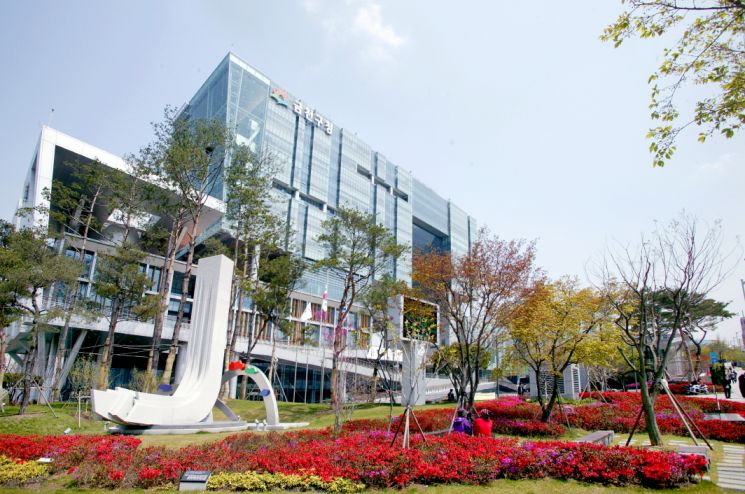
Geumcheon-gu (Mayor Yoo Seong-hoon) will implement the ‘Youth Enterprise Certification System’ to promote entrepreneurial activities among young people.
The certification requirements are that the company must be a small or medium-sized enterprise located in Geumcheon-gu, with a representative aged between 19 and 39 years old. The certification period is three years.
Applications for youth enterprise certification are accepted year-round. Companies wishing to apply can download the application form from the ‘Notices and Announcements’ board on the Geumcheon-gu website, fill it out, and submit it along with the required documents either by visiting the district office’s Regional Economy Division or by mail. Geumcheon-gu plans to issue certificates after document review and on-site inspections.
Geumcheon-gu will provide incentives linked to the certified youth enterprises, including ▲loans from the SME development fund ▲support for participation in advanced industry exhibitions ▲worker welfare support ▲design development support projects, and will post a list of youth enterprises on the district office website.
In September last year, Geumcheon-gu enacted an ordinance on fostering and supporting youth enterprises, establishing the basis for ‘financial and technical support,’ ‘management support such as promotion and marketing,’ and ‘market support’ for youth enterprises.
Yoo Seong-hoon, mayor of Geumcheon-gu, said, “The Youth Enterprise Certification System was implemented to support youth enterprises that have high potential but face difficulties due to lack of capital and experience. Through this first certification system this year, we plan to identify the status of local youth enterprises and continuously discover support measures.”
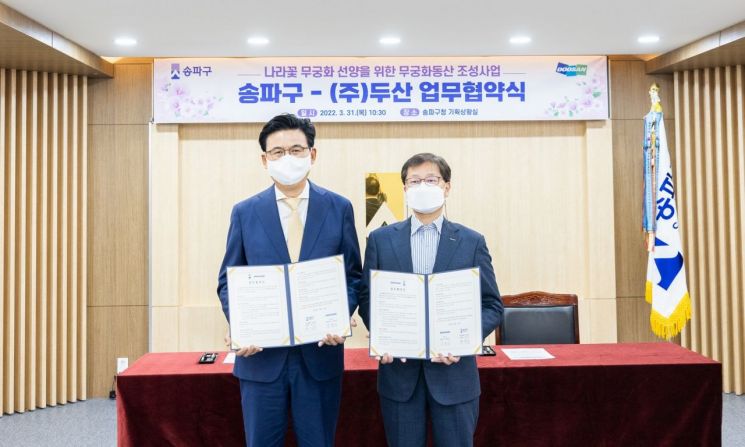
Songpa-gu (Mayor Park Seong-su) signed a business agreement with Doosan at Songpa-gu Office on the 31st of last month to create a ‘Mugunghwa Garden’ along Wiryesong-daero in Bangi-dong.
Songpa-gu was selected for the ‘2022 Mugunghwa Garden Creation Project’ conducted by the Korea Forest Service, securing a total project budget of 100 million KRW, including 50 million KRW each from national and city funds.
The district aims to raise the status of the national flower by providing residents with easy access to Mugunghwa (Rose of Sharon) around their living area in cooperation with Doosan.
According to the agreement, ▲Songpa-gu will comprehensively support administrative tasks such as coordination with related organizations and other matters for smooth project progress, and ▲Doosan will provide technical support necessary for the project.
The project site for the Mugunghwa Garden is the green belt along Wiryesong-daero near 88-17 Bangi-dong (from Olympic Park South Gate 4 to South Gate 3).
This green belt near Hansung Baekje Station on Subway Line 9 covers about 1,600㎡ and is one of the areas with heavy pedestrian and vehicle traffic visiting Olympic Park. The district plans to plant 3,970 Mugunghwa plants of 19 varieties along with various other trees so that anyone passing by can enjoy the scenery of the Mugunghwa Garden.
Kim Yoon-geon, vice president of Doosan, who attended the agreement ceremony, said, “We will spare no technical support to enable many people to easily see Mugunghwa around their living areas.”
Songpa-gu also plans to work together to create urban scenery in harmony with nature. The ongoing construction is expected to be completed by mid-April.
Park Seong-su, mayor of Songpa-gu, said, “The Mugunghwa Garden to be created this time will be a space where residents can reflect on the meaning of the national flower and enjoy leisure. We will continue to improve beautiful scenery and expand spaces where residents can appreciate it to further enhance their quality of life.”
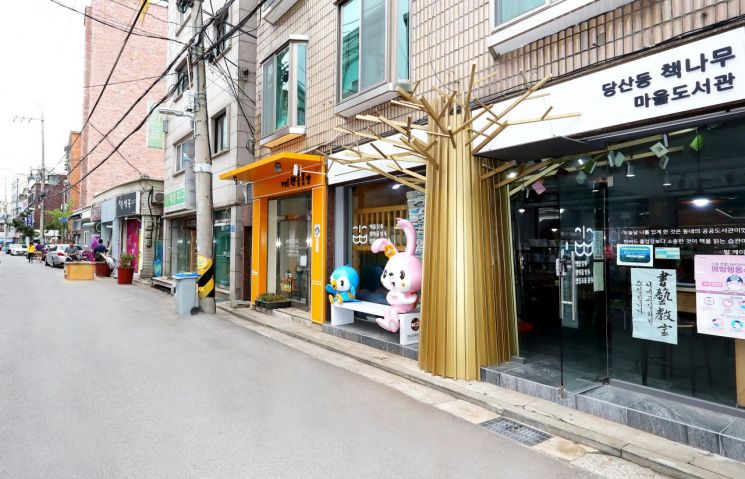
Yeongdeungpo-gu (Mayor Chae Hyun-il) announced that it is recruiting youth and social economy enterprises to participate in the project to create a bright and youthful Dangsan-gol cultural street until April 15.
Dangsan-gol is a residential area around Dangsan-ro 16-gil in Yeongdeungpo-gu. It used to be a somewhat dark alley densely populated with caf?-type general restaurants that were illegal entertainment bars, but after voluntary removal through communication among residents, the district office, and merchants, it has transformed into a bright and lively street with resident community spaces, caf?s, and village libraries.
Currently, various small-scale stores, general restaurants, and caf?s of different industries are located there, making it a popular local attraction.
The district plans to recruit one youth enterprise or social economy organization wishing to move into the alley to make Dangsan-gol a more vibrant and warm space, providing partial support for rental deposits and remodeling costs.
The rental space is located at 102, 15-1 Dangsan-ro 16-gil, with an area of about 16㎡. It was previously used as a gallery exhibiting art works.
Applicants must be (preliminary) social enterprises, self-support enterprises (corporations), village enterprises, or social cooperatives under Yeongdeungpo-gu-related ordinances as of the announcement date (April 4, 2022), or youth entrepreneurs aged 39 or younger. However, participation in various cultural value creation projects including the Dangsan-gol cultural street creation project is required, and a minimum lease contract of two years or more between the tenant and landlord is mandatory.
Those wishing to apply should visit the Yeongdeungpo-gu Office’s Autonomous Administration Division (123 Dangsan-ro, Yeongdeungpo-gu) with identification by April 15.
After the first document screening and second PPT presentation screening, the final tenant will be selected, and the results will be individually notified on April 22.
Once confirmed, the tenant will receive support for rental deposits up to 10 million KRW and remodeling costs up to 5 million KRW. However, the rental deposit must be returned at the end of the support project, and monthly rent is the tenant’s responsibility.
For more details about the recruitment, please check the notices/announcements on the Yeongdeungpo-gu website or contact the Autonomous Administration Division of Yeongdeungpo-gu Office.
Chae Hyun-il, mayor of Yeongdeungpo-gu, said, “We hope many young entrepreneurs and social economy enterprises will show interest and apply to help transform Dangsan-gol into a bright and vibrant space. We will continue to strive to create a Dangsan-gol full of social value and human warmth.”
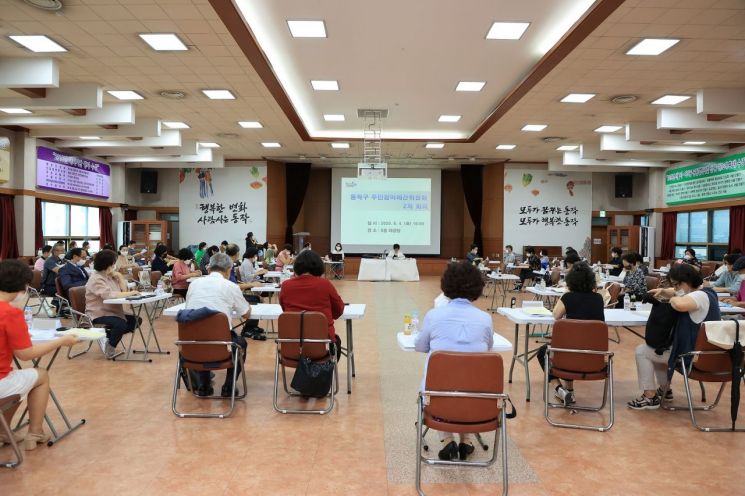
Dongjak-gu (Mayor Lee Chang-woo) announced on the 11th that it is calling for proposals for the 2023 Dongjak-gu Resident Participatory Budget projects.
The resident participatory budget project is a system where residents participate directly in all processes from project proposal to selection and evaluation to enhance transparency, fairness, and democracy of the budget, realizing participatory democracy. Last year, a total of 66 resident-proposed projects were discovered, contributing to improving residents’ quality of life in housing, welfare, education, and more.
In particular, among the projects selected last year and ongoing this year, improvements to the green belt along Nambusunhwan-ro and Dongjak-daero and installation of night lighting on the cherry blossom path in Sadang 2-dong will improve pedestrian environments and brighten Dongjak-gu streets.
This year’s call for proposals has increased by 350 million KRW from last year to a total of 2.85 billion KRW. Eligible projects include those essential to the village such as housing, environment, welfare, and transportation, as well as projects aimed at solving community problems, which will be reflected in next year’s district budget.
Starting this year, the Youth Participatory Budget Committee, composed of youths aged 9 to 24 in Dongjak-gu, will operate a youth participatory budget to discover projects targeting youth and provide opportunities to participate in district administration. Projects that can promote the rights and interests of children and youth will be selected, with a total project scale of 50 million KRW.
Any resident of Dongjak-gu can submit proposals by visiting or mailing to the district office’s Planning and Coordination Division or local community centers, and applications can also be submitted via email or the district website.
Proposals received by June 26 will undergo preliminary review and evaluation by relevant departments and the Resident Participatory Budget Committee based on feasibility, budget appropriateness, and project effectiveness. Final projects will be selected through electronic voting (M-Voting) held from August 16 to 31.
Submitted resident-proposed projects will be reflected in next year’s resident participatory budget project call and proceed accordingly.
Additionally, from April to August, the district will operate an online budget school for residents including workers and students in Dongjak-gu, providing customized education to enable direct participation in the entire budget process, aiming to foster correct understanding and activation of participatory budgeting.
Kim Hyun-ho, head of the Planning and Coordination Division, said, “We hope various projects that resolve residents’ inconveniences and promote balanced regional development will be discovered. We encourage many interested residents to participate.”
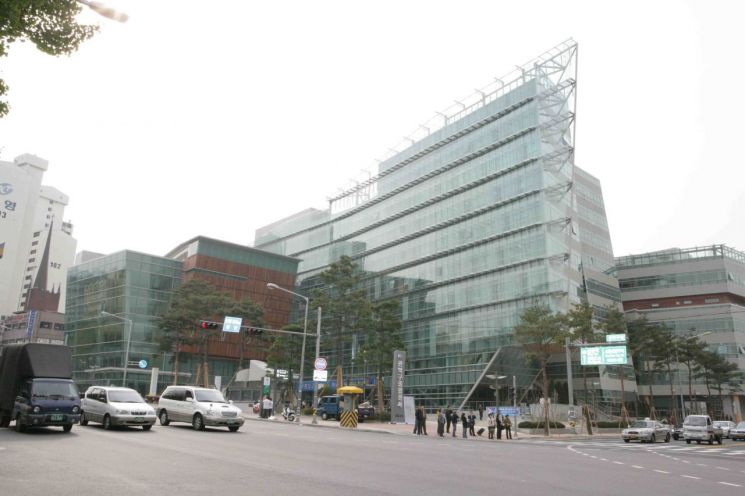
Gwanak-gu is actively informing residents about ‘Inheritance Property Acquisition Tax Reporting and Payment’ to prevent cases where heirs bear additional taxes due to failure to report and pay acquisition tax on inherited property within the deadline.
The ‘inheritance acquisition tax,’ which begins immediately upon death, must be reported and paid to the city or county office with jurisdiction over the real estate location within six months from the end of the month in which the death occurred. Failure to report and pay within the deadline results in additional penalties: a 20% penalty for non-compliance and a late payment penalty of 0.025% of the daily tax amount added to the acquisition tax.
However, cases occur where heirs miss the reporting deadline due to unawareness of the reporting obligation, long-term absence, or living abroad.
Accordingly, the district identifies deceased persons holding property quarterly and sends detailed notices to heirs, including information on taxpayer obligations, reporting deadlines, reporting and payment methods, required documents, tax rate exceptions, and precautions, to prevent additional taxes due to failure to report and pay acquisition tax on inherited real estate.
A district official said, “During these difficult times due to COVID-19, we will actively promote acquisition tax reporting and payment to prevent taxpayers from bearing unnecessary penalties. We will continue to provide taxpayer-tailored services to build trusted tax administration.”
© The Asia Business Daily(www.asiae.co.kr). All rights reserved.
![Clutching a Stolen Dior Bag, Saying "I Hate Being Poor but Real"... The Grotesque Con of a "Human Knockoff" [Slate]](https://cwcontent.asiae.co.kr/asiaresize/183/2026021902243444107_1771435474.jpg)













