Outline of Strengthening the Three-Axis System Including Kill Chain Expected to Emerge
Significant Enhancement of ROK-US Joint Exercises
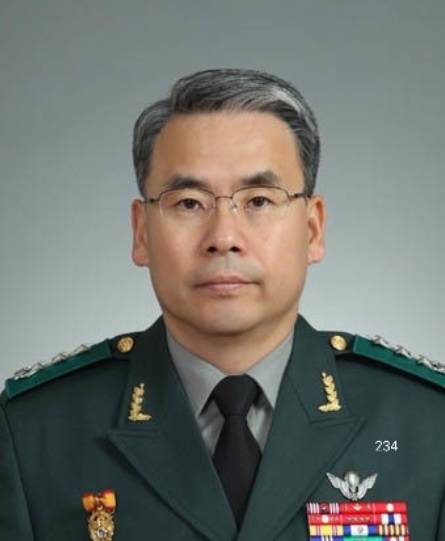
[Asia Economy Yang Nak-gyu, Military Specialist Reporter] The nomination of Lee Jong-seop (62, photo), former Vice Chairman of the Joint Chiefs of Staff (retired Lieutenant General), as the first Minister of National Defense candidate under the Yoon Suk-yeol administration is evaluated as a nomination made with the intention of strengthening ROK-US cooperation in response to North Korea's high-intensity provocations such as nuclear tests.
From the early days of his tenure, the candidate must carry out the mission of establishing policy directions and foundations to promote President-elect Yoon's defense pledges. The outline of strengthening the '3-axis system' composed of Kill Chain, Korean Missile Defense System (KAMD), and Korean Massive Punishment and Retaliation (KMPR), which Yoon promised during his candidacy, is expected to emerge.
However, it remains to be seen whether the additional deployment of the Terminal High Altitude Area Defense (THAAD) system, which Yoon emphasized during his candidacy, will proceed. In particular, as the Long-range Surface-to-Air Missile (L-SAM) system is scheduled for completion by November next year, controversy is expected regarding the necessity of additional THAAD deployment. The L-SAM is a mid- to high-altitude defense weapon system under development to detect distant targets early with radar and accurately intercept them with guided missiles.
ROK-US combined exercises are expected to be significantly strengthened. The dominant view is that if the candidate passes the National Assembly hearing, he will prioritize strengthening ROK-US cooperation in response to North Korea's high-intensity provocations such as nuclear tests expected around his inauguration. Attention is focused on whether the theater-level live exercises between South Korea and the US, which were not conducted since the 2018 inter-Korean and US-North Korea dialogue mood, will be resumed. Theater-level exercises involve combined units at the regiment level or higher.
Since the Singapore North Korea-US summit in June 2018, the ROK and US have adjusted the scale of combined exercises to support diplomatic efforts aimed at denuclearization and peace settlement on the Korean Peninsula. Specifically, large-scale exercises at the regiment level or above have been conducted independently by the ROK and US, while battalion-level or smaller exercises have been conducted jointly and dispersed throughout the year.
ROK-US combined exercises require consultation with the US. If realistically resumed, there is speculation that theater-level live exercises may be restarted during the second half combined exercises, which would be the first conducted after President-elect Yoon's inauguration.
Along with this, the candidate is also expected to seek measures to implement key defense pledges of the Yoon Suk-yeol administration, such as the 'soldier monthly salary of 2 million won,' immediately upon taking office. However, many view it as difficult to achieve immediately after inauguration.
Regarding the issue of wartime operational control (OPCON) transfer, there is a possibility that the stance will differ somewhat from the Moon Jae-in administration, which pursued a prompt transfer.
The ROK and US agreed last year at the Security Consultative Meeting (SCM) to conduct a Full Operational Capability (FOC) evaluation of the future combined command for OPCON transfer this year. However, President-elect Yoon maintained a negative stance on OPCON transfer during his candidacy.
© The Asia Business Daily(www.asiae.co.kr). All rights reserved.

















