Hold Police Accountable for Litigation Costs After Neglecting to Delete Information During Dispute
[Asia Economy Reporter Choi Seok-jin, Legal Affairs Specialist] A court ruling has stated that there is no legal interest in seeking the cancellation of an administrative agency's decision to refuse information disclosure when the retention period prescribed by relevant laws has passed and the information has already been deleted.
However, the court ordered the administrative agency that failed to preserve the information during the ongoing dispute to bear the litigation costs.
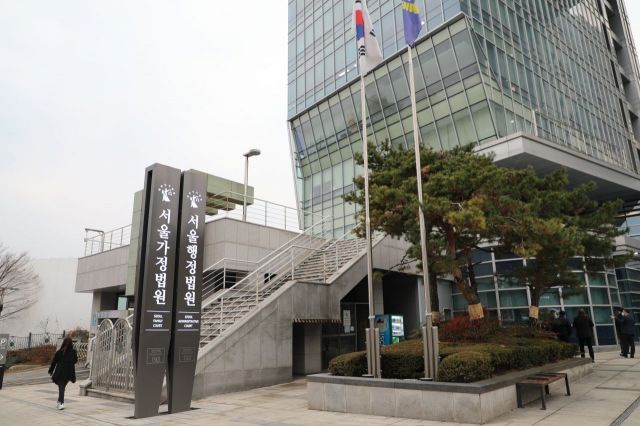
According to the legal community on the 10th, the Seoul Administrative Court, Administrative Division 2 (then presided by Judge Lee Jeong-min) dismissed the lawsuit filed by Mr. A against the chief of Gwanak Police Station seeking cancellation of the refusal to disclose information.
The court stated, "This case is dismissed due to procedural impropriety, and regarding litigation costs, pursuant to Article 8, Paragraph 2 of the Administrative Litigation Act and Article 99 of the Civil Procedure Act, the defendant shall bear the costs."
Dismissing a case means making a decision without ruling on the merits when the lawsuit does not meet procedural requirements.
Mr. A's spouse reported to the police in March 2020 that Mr. A, who was working as a secretary to a member of the National Assembly, had committed domestic violence. When the incident was reported in the media, Mr. A completely denied the allegations and requested the police in August of the same year to disclose the '112 Report Incident Processing Statement.'
However, the police refused to disclose the information, citing reasons such as the case being under investigation, the spouse having received a temporary protection order due to concerns about recurrence of domestic violence, and a strong request for non-disclosure from a third party related to the report.
Mr. A also requested disclosure of the '112 Report Incident Processing Statement' for another date, but was refused for similar reasons and filed a lawsuit in May last year.
The key issue in the trial was how many years the retention period for the '112 Report Incident Processing Statement' requested by Mr. A should be considered.
The police argued that the '112 Report Incident Processing Table' is a situation room document under Article 23, Paragraph 1 of the '112 Comprehensive Situation Room Operation and Report Processing Rules,' a Police Agency regulation, which is retained for one year and then automatically deleted from the system, and does not remain in the electronic document system. Therefore, the information requested by Mr. A does not exist, and there is no legal interest in seeking cancellation of the refusal to disclose information.
Article 23 (Retention Period of Materials), Paragraph 1 of the said rules states, "The retention period of 112 Comprehensive Situation Room materials shall be based on the following criteria," subdividing the retention periods as follows: ▲ 112 report reception processing input data is retained for one year (Item 1) ▲ 112 report reception and wireless command recording materials are recorded for 24 hours and retained for three months (Item 2) ▲ other documents and logs are retained according to the 'Act on the Management of Public Records by Public Institutions' (Item 3).
In response, Mr. A argued that these documents are related to assault or trespassing cases and, according to Article 19, Paragraph 1 of the Public Records Act and Article 26, Paragraph 1 of its Enforcement Decree, are considered "records concerning matters where civil/criminal liability or statute of limitations continue for five years or more but less than ten years, or where evidentiary value continues." Therefore, the retention period should be ten years. Since refusal of information disclosure requests is subject to administrative appeals and lawsuits, the requested information should be considered "records produced in the course of routine work at the processing department level, which need to be referenced for at least one year but less than three years or to prove the agency's work," and thus the minimum retention period under the Public Records Act is three years.
However, the court did not accept Mr. A's argument.
The court reasoned, "The '112 Report Incident Processing Statement' in question records the processing details of a 112 report received with certain content. Such records fall under the Public Records Act's category of 'records concerning matters where civil/criminal liability or statute of limitations continue for five years or more but less than ten years, or where evidentiary value continues' only if the processing details themselves directly constitute civil/criminal liability. The mere fact that the report content constitutes civil/criminal liability does not mean it falls under the case where 'civil/criminal liability or statute of limitations continue for five years or more but less than ten years according to relevant laws' as stated in the law."
However, the court noted, "Due to the non-existence of the information in question, the plaintiff currently has no legal interest in seeking cancellation of the respective decisions. Nevertheless, considering that the information existed at the time the plaintiff made the information disclosure request and during the administrative appeal process against the decisions, and that the plaintiff is contesting the effectiveness of the decisions, it would have been reasonable for the defendant to take separate measures to preserve the information before automatic deletion due to expiration of the retention period. Considering the course of this case, it is appropriate for the defendant to bear the litigation costs," and ordered the chief of Gwanak Police Station to bear the litigation costs.
Article 23, Paragraph 2 of the '112 Comprehensive Situation Room Operation and Report Processing Rules' states, "If the head of a local police agency or police station has special reasons to extend the retention period of documents and recordings, the retention period may be extended and specially managed notwithstanding Paragraph 1." Since Mr. A was contesting the refusal to disclose information through litigation, the police could have extended the retention period to prevent deletion of the information but failed to do so, thereby causing the loss of legal interest in the lawsuit, and must bear responsibility for this.
© The Asia Business Daily(www.asiae.co.kr). All rights reserved.
![Clutching a Stolen Dior Bag, Saying "I Hate Being Poor but Real"... The Grotesque Con of a "Human Knockoff" [Slate]](https://cwcontent.asiae.co.kr/asiaresize/183/2026021902243444107_1771435474.jpg)











