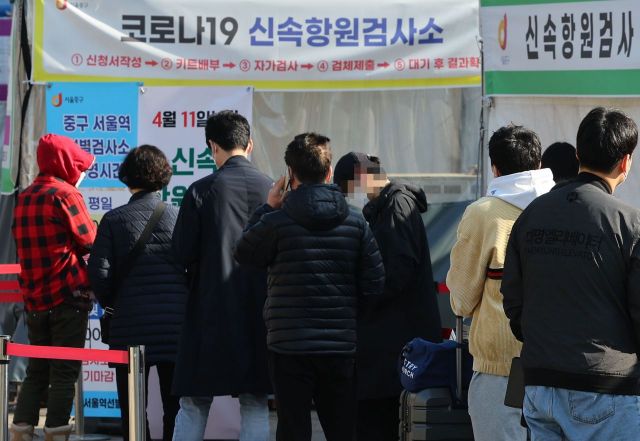
[Asia Economy Reporter Kim Hyung-min] As the domestic Omicron wave continues to decline, the number of new COVID-19 cases remained in the 100,000 range for the second consecutive day on the 10th.
The Central Disease Control Headquarters announced that as of midnight on this day, 164,481 new cases were reported, bringing the cumulative total to 15,333,670.
The number of new cases fell below 200,000 for the first time in five days since the 4th (127,163 cases), with 185,566 cases reported the previous day, and decreased by another 21,085 cases on this day. It is the first time in six weeks since February 27 (163,558 cases) that the number of new cases recorded on a Sunday (Saturday by reporting date) was in the 100,000 range.
However, since the number of tests tends to decrease on weekends, the number of confirmed cases also tends to decrease. If the number of tests recovers to weekday levels in the middle of the week, the number of confirmed cases may increase again.
The number of critically ill patients was 1,114, an increase of 15 from the previous day (1,099), rising back to the 1,100 range after two days. The number of COVID-19 deaths reported the previous day was 329, nine fewer than the day before (338).
Among the 329 deaths, 197 (59.9%) were aged 80 or older, the highest number, followed by 79 in their 70s, 42 in their 60s, 6 in their 50s, 2 in their 40s, and 3 in their 30s. The cumulative death toll is 19,421, with a cumulative fatality rate of 0.13%.
As of midnight on this day, the nationwide intensive care bed occupancy rate was 58.2% (1,644 out of 2,825 beds in use), the same as the previous day (58.2%). The occupancy rate of semi-intensive care beds, used for patients whose condition is improving from critical or who are at high risk of worsening, was 62.0%. The number of home treatment patients staying at home without hospitalization was 1,220,763, a decrease of 19,348 from the previous day (1,240,111).
Regarding the infection routes of new cases, 164,454 were locally transmitted and 27 were imported. Among locally transmitted cases, 42,353 were in Gyeonggi, 28,901 in Seoul, and 8,594 in Incheon, with 79,848 cases (48.6%) coming from the metropolitan area alone.
Including imported cases, the number of cases by region was 42,356 in Gyeonggi, 28,901 in Seoul, 11,180 in Gyeongnam, 8,594 in Incheon, 8,400 in Gyeongbuk, 7,998 in Chungnam, 7,802 in Jeonnam, 7,069 in Daegu, 6,728 in Jeonbuk, 6,319 in Chungbuk, 5,985 in Busan, 5,662 in Gangwon, 5,403 in Daejeon, 5,335 in Gwangju, 3,832 in Ulsan, 2,553 in Jeju, and 1,353 in Sejong.
A total of 121,137 diagnostic tests were conducted at screening clinics in one day.
© The Asia Business Daily(www.asiae.co.kr). All rights reserved.

















