Q2 Imported Grain Price Increase Outlook
Prolonged Rise Could Impact Food and Feed Industries
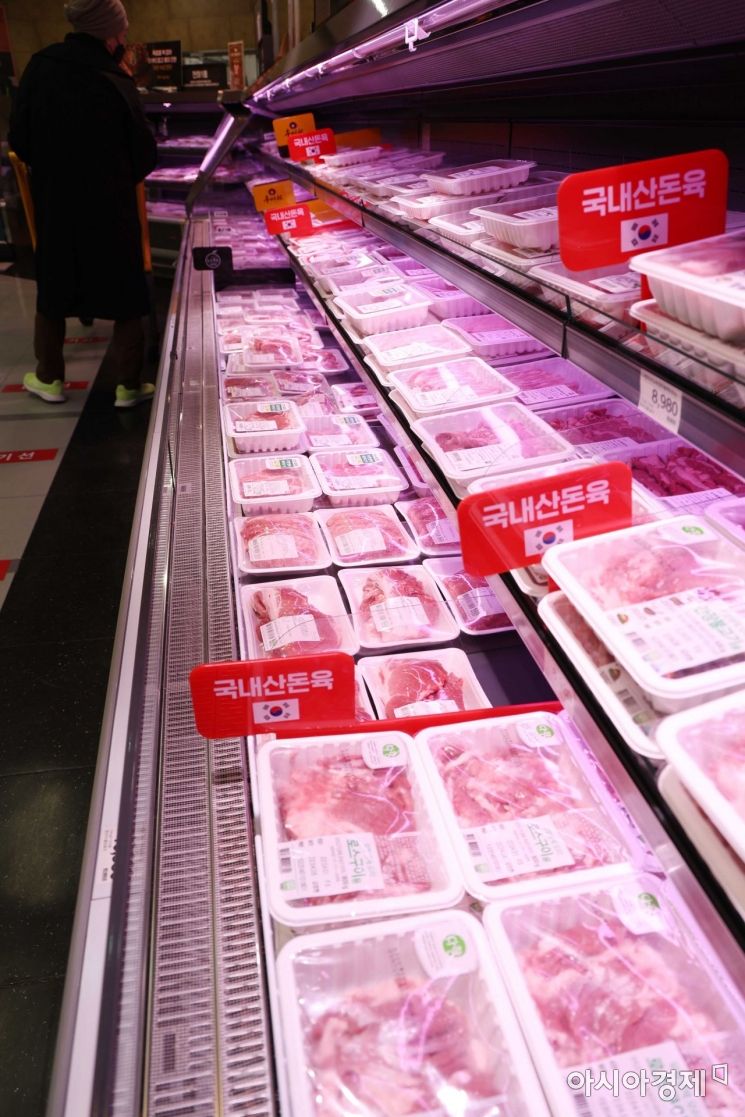 The consumer price inflation rate in March soared to the 4% range for the first time in about 10 years. On the 5th, a citizen shopping at a large supermarket in downtown Seoul is seen doing their grocery shopping. Photo by Mun Honam munonam@
[Asia Economy Reporter Song Seung-yoon] As the prices of imported grains continue to rise, the burden on domestic dining table prices is also increasing.
According to the Ministry of Agriculture, Food and Rural Affairs on the 9th, the Food and Agriculture Organization (FAO) Food Price Index (FFPI) rose 12.6% compared to the previous month to 159.3 points, marking the highest level since the index was introduced in 1996. In particular, the prices of grains and oils showed a significant increase. The grain price index rose 17.1% from 145.3 points last month to 170.1 points.
Wheat produced in Russia and Ukraine accounts for one-third of the world's exports, and corn accounts for one-fifth. However, Russia's invasion of Ukraine has fundamentally blocked grain production and distribution, leading to global supply instability.
The upward trend in grain prices is expected to continue for the time being. The Agricultural Outlook Center of the Korea Rural Economic Institute forecasted in the "International Grain April Report" that the grain import unit price index for the second quarter will rise by 10.4% and 13.6% respectively from the previous quarter, reaching 158.5 for food use and 163.1 for feed use. The rising prices of imported grains are likely to lead to price increases in foods and feeds that use them as raw materials. Ultimately, this will evenly affect all sectors including farms, the food industry, and self-employed businesses.
The domestic feed industry is highly dependent on feed wheat and corn imported from Russia and Ukraine, so it is greatly affected by the rise in grain prices. The increase in feed prices could lead to higher prices for meat such as pork.
In the case of domestic food companies, the industry expects that the short-term impact will not be significant as they have stockpiled several months' worth of grains in advance. However, if this trend continues, an overall price increase will eventually be inevitable. Food companies tend to have a higher ratio of raw material costs compared to other industries.
© The Asia Business Daily(www.asiae.co.kr). All rights reserved.

















