'Free PCR Tests' Provided Only for High-Risk Groups
Central Disaster and Safety Countermeasures Headquarters: "Decision Made Considering Decrease in Confirmed Cases and Increase in Private Testing Institutions"
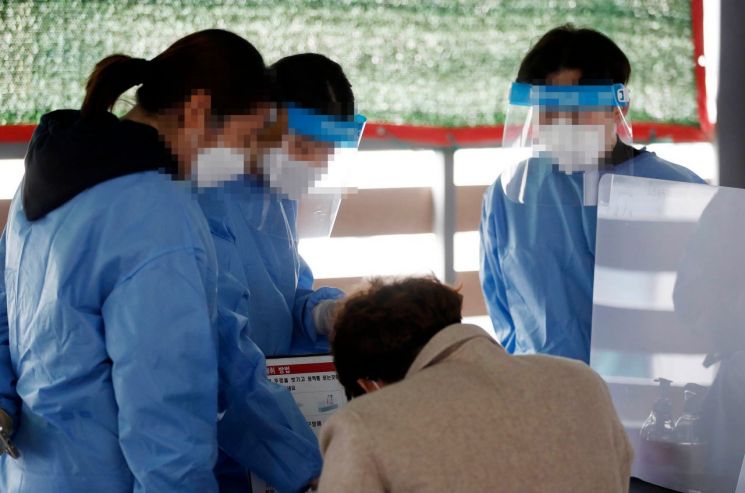 Medical staff at the Gwangju Buk-gu COVID-19 Rapid Antigen Testing Center assisting with COVID-19 diagnostic kit tests [Image source=Yonhap News]
[Asia Economy Intern Reporter Kim Se-eun] Starting from the 11th, free COVID-19 rapid antigen testing provided at public health center screening clinics and temporary screening clinics will be discontinued.
From the 11th, free polymerase chain reaction (PCR) testing will only be available for high-risk groups such as seniors aged 60 and above, individuals with a medical opinion indicating the need for testing, and those aged 0 and above, while rapid antigen tests will no longer be provided for free.
On the 9th, the Central Disease Control Headquarters announced, "As the number of confirmed COVID-19 cases has entered a declining phase and considering the expansion of testing capabilities at local clinics and hospitals, we will transition to a private sector-centered testing system."
In the future, to receive a rapid antigen test, individuals can visit local clinics or hospitals that conduct diagnostic testing (respiratory designated medical institutions) or respiratory specialized clinics.
At clinics and hospitals, doctors will perform tests using professional kits, and users will bear 30% of the consultation fee (5,000 KRW for clinics).
The list of medical institutions capable of conducting rapid antigen tests can be checked on the Health Insurance Review & Assessment Service or the COVID-19 website. It is also possible to determine COVID-19 infection status by purchasing rapid antigen test kits at pharmacies or convenience stores and conducting self-testing.
Additionally, the government plans to prioritize the distribution of self-test kits within the limits held by local governments to vulnerable groups such as low-income households, elderly living alone, and pregnant women.
© The Asia Business Daily(www.asiae.co.kr). All rights reserved.
!["The Woman Who Threw Herself into the Water Clutching a Stolen Dior Bag"...A Grotesque Success Story That Shakes the Korean Psyche [Slate]](https://cwcontent.asiae.co.kr/asiaresize/183/2026021902243444107_1771435474.jpg)
















