Fatigue, Shortness of Breath, Insomnia, Depression, Loss of Smell, Hair Loss, etc.
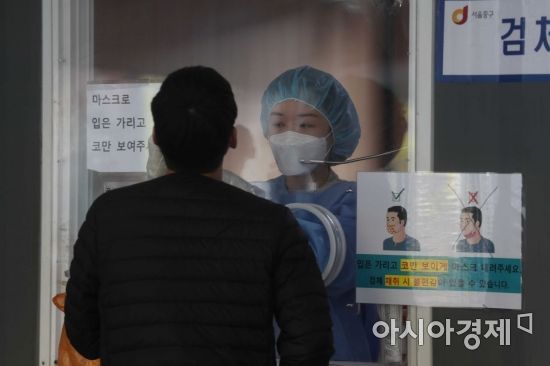 A man is getting tested for COVID-19 at the temporary screening clinic at Seoul Station. Photo by Asia Economy
[Asia Economy Reporter Na Ye-eun] As the number of confirmed COVID-19 cases in South Korea surpassed 15 million, indicating that about one in three citizens has experienced a COVID-19 infection, the battle with 'Long COVID' continues even after isolation.
According to British and American media reports on the 7th, a representative symptom of Long COVID is 'brain fog,' a condition where the brain experiences problems. Other symptoms include severe fatigue, difficulty breathing, insomnia, depression, loss of smell or taste, and hair loss. Brain fog refers to a phenomenon where memory and concentration issues occur as if a fog has settled over the brain.
According to a paper published last month in the journal 'Aging Neuroscience Frontiers' by the University of Cambridge in the UK, a study of 181 Long COVID patients found that 7 out of 10 patients experienced problems with concentration and memory.
Dr. Lucy Cheke, a psychology researcher at the University of Cambridge who conducted the study, said, "Cognitive-related problems are important and should be taken seriously."
In South Korea as well, a significant number of people are experiencing post-COVID symptoms. According to data released by the Health Insurance Review & Assessment Service, 19.1% of confirmed COVID-19 patients visited hospitals after recovery due to one or more sequelae. This refers to symptoms that newly appeared during the 3-month and 6-month follow-up periods after a positive diagnosis, which were not present in medical records over the past three years.
The WHO defined Long COVID in October last year as a condition where 'at least one unexplained symptom' occurs within three months after COVID-19 infection and lasts for at least two months.
The WHO explained that Long COVID symptoms can begin during the COVID-19 infection or appear for the first time after the patient recovers from the acute phase, with the most common persistent symptoms being fatigue, difficulty breathing, and cognitive impairment.
Additionally, symptoms of long-term sequelae such as chest pain, abnormalities in smell or taste, muscle weakness, and heart palpitations have been reported to exceed 200 types.
Meanwhile, the cause of Long COVID is not yet clearly known. However, the general explanation is that the immune system overreacts due to COVID-19 infection, attacking not only the virus but also other organs in the body.
© The Asia Business Daily(www.asiae.co.kr). All rights reserved.

















