Some Polystyrene Containers Are Unsuitable for Fatty Foods
Use Disposable Plastic Containers Only After Checking Material
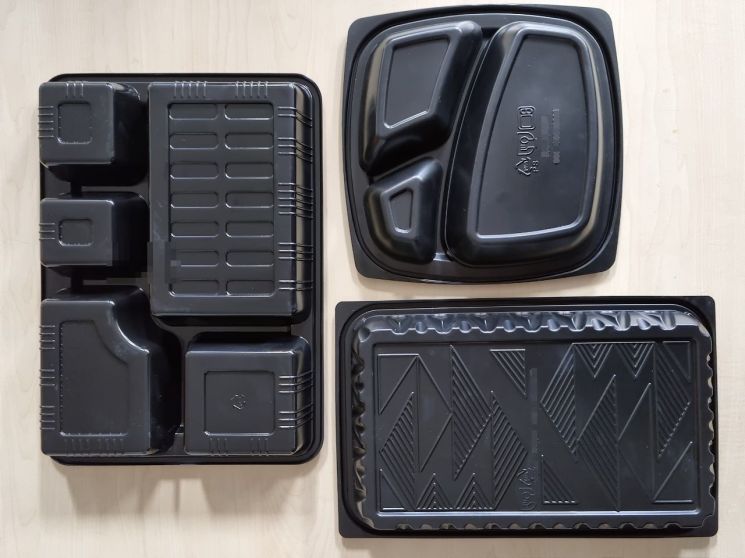
[Asia Economy Reporter Lim Cheol-young] The Seoul Metropolitan Institute of Health and Environment announced on the 8th that it conducted safety inspections on 100 disposable plastic containers, whose usage has surged recently due to the increase in delivery and takeout food, and detected 3 containers made of polystyrene (PS), taking measures to block their distribution.
Plastic materials vary, including polypropylene (PP), polyethylene (PE), polystyrene (PS), and polyethylene terephthalate (PET). Generally, containers made of PP, PS, and PET are mainly used for restaurant delivery. The institute purchased 100 food containers distributed online and in wholesale markets from August last year to March this year and conducted inspections. Among the inspected containers, 64 were polystyrene (PS), 26 polypropylene (PP), and 10 PET.
All 97 disposable plastic containers passed standards for lead, total migration, and volatile substances, making them suitable for typical foods such as rice, soup, and fried dishes. However, 3 containers made of polystyrene (PS) exceeded the total migration limits for fatty foods, indicating they are unsuitable for oily food use. Total migration refers to the amount of non-volatile substances that migrate from the container into the food when used, measured using specific solvents corresponding to the target food.
Polystyrene (PS) containers are known to have a high potential for material migration when used with high-fat foods, and migration increases at high temperatures, so caution is needed when heating fried foods directly in the container using a microwave. PS containers are widely used for delivery due to their insulation and moldability, but the total migration analysis using n-heptane for fatty foods showed an average of 65 mg/L, higher than PP’s 20 mg/L and PET’s 10 mg/L. Among these, 3 cases exceeded the standard limit of 240 mg/L.
Since disposable plastic containers have different characteristics depending on the material, it is especially important to check the material and markings on the plastic container surface when using a microwave. Due to the nature of the materials, PS and PET are vulnerable to heat, and heating food directly in the container in a microwave can cause container deformation, so it is safer to use containers labeled ‘microwave-safe’.
Research Director Shin Yong-seung stated, “With the prolonged COVID-19 pandemic, the use of disposable containers has surged, so we will ensure safety through continuous monitoring,” and urged, “Consumers should check the material indicated on plastic containers before use.”
© The Asia Business Daily(www.asiae.co.kr). All rights reserved.

















