Textbooks Passed in Japan Excluding Descriptions of 'Forced Labor' and Japanese Military 'Comfort Women'
Some Japanese Netizens Baselessly Criticize Drama 'Pachinko' Depicting the Hardships of Korean Residents in Japan
Professor Seo Kyung-deok: "Attempts to Gain Advantage in the Sado Mine Issue... Japan Should Be Pressured by Informing the World About History"
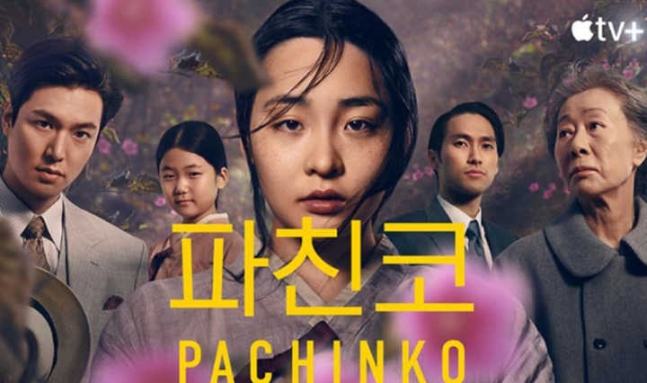
[Asia Economy Reporter Park Hyun-joo] Recently, concerns are growing over the deepening trend of historical distortion within Japan, as a textbook containing content that downplays and conceals war crimes has passed inspection, and baseless criticisms have emerged against the Apple TV+ drama "Pachinko," which deals with the Japanese colonial period. Experts pointed out that as the Japanese government repeatedly engages in historical distortion, this tendency is being directly transmitted to the general public.
Recently, indiscriminate criticism from Japanese netizens has poured in against the drama Pachinko, released on Apple TV+. Pachinko is a work based on the New York Times bestseller of the same name, depicting Japan's atrocities during the Japanese colonial period and the suffering of Korean residents in Japan. It also includes historical facts such as the forced conscription of Koreans, the Japanese military 'comfort women,' and the Kant? Massacre.
Some Japanese netizens claim through domestic portal sites and online communities that Pachinko distorts history. They mainly argue that Pachinko glorifies the perspective of Korean residents in Japan or that Apple TV+ did not fairly reflect the positions of both Korea and Japan. According to Professor Seo Kyung-duk of Sungshin Women's University, major media outlets in Japan are withholding evaluations of Pachinko, and Apple Japan is refraining from promoting the drama by not releasing its trailer domestically, despite investing 100 billion yen in its production.
The trend of historical distortion in Japan appears to be intensifying. On the 29th of last month, Japan disclosed the results of the inspection for social studies textbooks, including Japanese history and geography, which reflected historical distortion. Expressions such as "forced mobilization" of Koreans and "military comfort women" were removed, and the baseless claim that Dokdo is Japanese sovereign territory was strengthened. The term "military comfort women" was used to apologize for the forced mobilization of Japanese military 'comfort women' and to acknowledge military involvement.
Additionally, on the 28th of last month, it was belatedly revealed that Japan's Ministry of Foreign Affairs produced a video advertising the Rising Sun Flag and uploaded it to its official YouTube channel. Released in October last year, this video was produced in 10 languages, including Korean, English, and Chinese, and contained explanations such as "The Rising Sun Flag is part of Japanese culture and a symbol of prosperity and vitality," and "A traditional culture passed down over hundreds of years continues into the modern era." It even made the baseless claim that the lantern-shaped logo of the 2010 Seoul G20 Summit used the Rising Sun Flag pattern. The Rising Sun Flag was used by Japan during World War II and the Pacific War and is a symbol of imperialism and militarism.
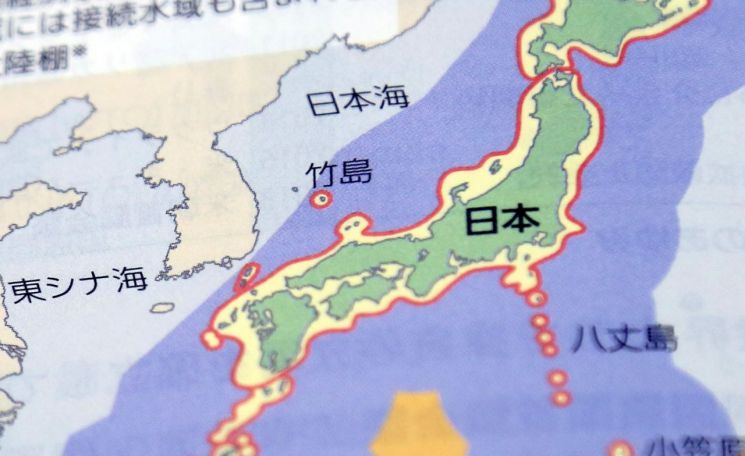 The Japanese high school textbook, for which approval was requested from the Japanese Ministry of Education, Culture, Sports, Science and Technology with the aim of being used in frontline schools next year, labels Dokdo, Korean territory, as "Takeshima" (竹島, the name claimed by Japan).
 [Image source=Yonhap News]
Experts diagnose the Japanese government as the cause of the deepening trend of historical distortion. Professor Seo Kyung-duk said, "Historical distortion has always existed. However, the reason this tendency is becoming stronger among Japanese netizens is because government agencies are actively engaging in (historical distortion)." He pointed out that recent historical distortion trends, such as the approval of textbooks that downplay war crimes and the Rising Sun Flag promotional video by the Japanese government, are directly influencing the public.
He continued, "Especially since the Netflix series 'Squid Game' took the world by storm through online video streaming services (OTT), it seems Japanese netizens have recognized the power of such cultural content. They appear to be afraid that Japan's perpetrator history might be revealed to the world through cultural content."
He criticized the situation where it is not ordinary citizens or far-right groups but the Japanese government that is intensifying historical distortion. Professor Seo said, "Currently, Korea-Japan relations are not good. Regarding the registration of Sado Mine as a World Heritage site, Korea and Japan are in a historical confrontation. In such a situation, there is a strong intention to gain the upper hand and to preempt domestic public opinion." Sado Mine was a site of forced mobilization of Koreans during the Japanese colonial period, and recently, members of Japan's Liberal Democratic Party have been moving to register it as a UNESCO World Cultural Heritage site.
Professor Seo added, "We also need to move global public opinion against Japan's historical distortion. When the Japanese government engages in historical distortion, our government must continuously point out the errors. While it is important to correct them so that they can change (wrong videos, textbooks, etc.), if it goes that way, there is a risk of escalating into an emotional conflict. I think it would be better to inform and promote the correct history to the world and pressure Japan that way."
© The Asia Business Daily(www.asiae.co.kr). All rights reserved.
![Clutching a Stolen Dior Bag, Saying "I Hate Being Poor but Real"... The Grotesque Con of a "Human Knockoff" [Slate]](https://cwcontent.asiae.co.kr/asiaresize/183/2026021902243444107_1771435474.jpg)

















