Long COVID, the Long-Term Sequelae of COVID-19
Estimated to Affect 20-30% of All Infected Individuals
Most Experience Mild Symptoms Like Cough and Fatigue
Serious Conditions Such as 'Brain Fog' Also Reported
Concerns Over Burden on Public Health and Medical Systems
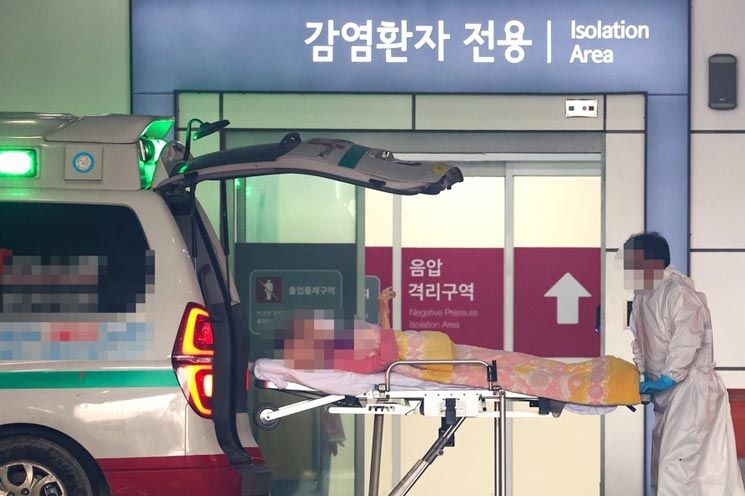 After being infected with COVID-19 and receiving a full recovery diagnosis, the number of people complaining of so-called 'long covid' symptoms, where some aftereffects remain, is increasing. [Image source=Yonhap News]
[Asia Economy Reporter Lim Juhyung] #In early this month, Mr. A, a man in his 30s who recovered from COVID-19, has been experiencing 'aftereffects' for nearly several weeks. Although he has no cold symptoms, he continues to have a persistent cough and feels easily fatigued. He said, "At first, I thought it was just my imagination, but now I can clearly feel my physical strength has significantly declined," adding, "I worry about when I will be able to completely shake off COVID-19 and whether these aftereffects might last forever."
The number of people experiencing aftereffects even after being declared fully recovered from COVID-19 is increasing. The coronavirus, which affects various organs including the respiratory system, is reported to leave some patients with long-term aftereffects known as 'long COVID.' Although the specific side effects of COVID-19 on the human body are not yet clearly understood, given that over 20% of the entire population in Korea has been cumulatively infected with this large-scale infectious disease, there are calls for further research.
Mr. A is not the only one experiencing COVID-19 aftereffects. According to a study conducted last year by the National Medical Center under the Korea Disease Control and Prevention Agency (KDCA), among 47 recovered COVID-19 patients, 87.2% of the total infected reported experiencing aftereffects at least once. Nearly 9 out of 10 people complained of aftereffects.
The most frequently reported aftereffects among patients were fatigue (57.4%), shortness of breath during exercise (40.4%), hair loss (38.3%), and phlegm (21.3%), in that order.
 The World Health Organization (WHO) estimates that about 20-30% of COVID-19 confirmed cases suffer from long COVID. / Photo by Yonhap News
Unlike in Korea, clinical research on aftereffects began early in the United States and Europe, where large-scale cluster infections occurred from the early stages of the COVID-19 pandemic. According to a survey by the UK National Institute for Health Research (NIHR), over 70% of 2,320 adults who had been hospitalized for COVID-19 continued to experience symptoms such as fatigue and memory decline even one year after recovery.
Professor Chris Brightling of the University of Leicester, who led the study, stated in the paper, "The majority of patients involved in the study had not fully recovered even five months after discharge, and symptoms persisted at the one-year mark," expressing concern that "a significant portion of the population is at risk of long-term damage to health and quality of life."
There is no official term for the long-term aftereffects of COVID-19, but overseas, the term 'long COVID' is commonly used. It refers to the prolonged continuation of some COVID-19 symptoms.
The World Health Organization (WHO) defines long COVID as the condition where some symptoms persist for at least two months even when the coronavirus is no longer detectable in the body. WHO estimates that at least 20-30% of COVID-19 patients suffer from such aftereffects.
The reason researchers have not clearly defined long COVID is that COVID-19 itself is a novel infectious disease. Some infectious diseases that infect the human body carry risks of long-term aftereffects or complications. These risks are measured by long-term tracking and monitoring of patients, but since the COVID-19 pandemic began just over two years ago, there is still insufficient data.
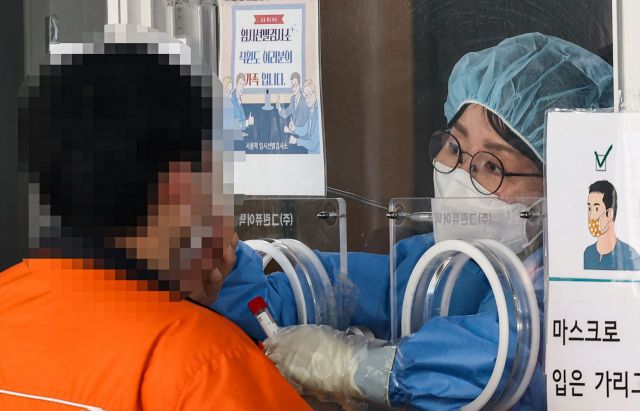 On the 29th, an official is conducting a polymerase chain reaction (PCR) test at the Seoul Station screening clinic in Jung-gu, Seoul. On that day, the number of new COVID-19 confirmed cases was 347,554, an increase of about 160,000 compared to the previous day. / Photo by Yonhap News
However, the causes of aftereffects occurring even after COVID-19 recovery are gradually becoming clearer. According to a study published on the 16th by the Department of Life Sciences at Gwangju Institute of Science and Technology in the international journal Briefings in Bioinformatics, a significant increase in autoantibodies was observed in some tissues such as the lungs and kidneys of COVID-19 patients and recovered individuals.
In other words, after the coronavirus invades the human body and affects various organs, the body's production of antibodies in response may trigger an excessive immune reaction, which could be the cause of long COVID.
So far, most aftereffects reported in domestic and international studies are mild, such as persistent cough or decreased physical strength. However, some patients complain of severe symptoms that make daily life impossible, including hair loss, brain fog (decline in thinking, concentration, and memory), and breathing difficulties.
The biggest problem is the sheer number of cumulative COVID-19 patients. Since the early pandemic, the number of confirmed cases has surged rapidly, requiring lockdown policies not only in Western countries but also in Korea. After the emergence of the Omicron variant, nearly 25% of the entire population (about 12 million people) have been cumulatively infected.
Even if only 20% of the total infected develop long-term aftereffects, the number of patients would already reach 2.4 million. Such a large number of patients with various complications could have a significant negative impact on the long-term healthcare system and public health.
Citizens point out that the lack of clear information about long COVID only increases anxiety. Mr. B, a 31-year-old office worker, said, "Just looking at social media, all kinds of cases of COVID-19 aftereffects pop up," adding, "It's frustrating and worrying because no one knows exactly what aftereffects exist or how to deal with them if they actually occur."
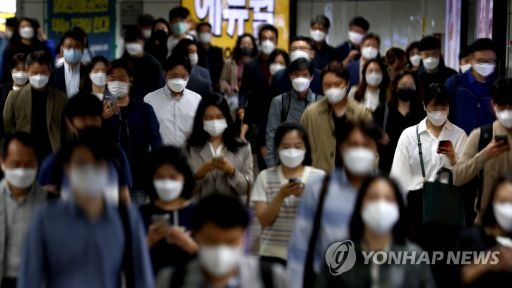 Citizens expressed that their anxiety is increasing due to a lack of information about Long COVID. / Photo by Yonhap News
Another office worker, Mr. C, 27, emphasized, "The scariest thing is not knowing which symptoms are aftereffects and which are not," adding, "Since there is so little information, even if you suffer from aftereffects, you might be treated as malingering at work. It would be very unfair if that actually happened."
Meanwhile, the government announced on the 29th that it will conduct a large-scale investigation into aftereffects among COVID-19 patients under 50 years old in Korea.
At a briefing that day, KDCA Commissioner Jung Eun-kyung explained, "With over 20% of the population infected due to the recent Omicron wave, a thorough investigation and analysis of the health impacts after Omicron infection are necessary."
Previously, the KDCA had commissioned the National Medical Center to conduct aftereffect investigations on some confirmed cases. However, the sample size was too small to collect detailed data.
Commissioner Jung said, "If symptoms persist for at least two months after COVID-19 diagnosis and cannot be explained by other diagnoses, it is defined as COVID-19 aftereffects. The most commonly reported symptoms currently are fatigue, shortness of breath, cognitive dysfunction, and mental symptoms such as depression and anxiety."
She added, "In Korea, most information about confirmed cases and vaccinated individuals is registered, so by linking this information with health insurance and medical examination data, it will be possible to investigate what complications and aftereffects occur after a certain period."
© The Asia Business Daily(www.asiae.co.kr). All rights reserved.
![Clutching a Stolen Dior Bag, Saying "I Hate Being Poor but Real"... The Grotesque Con of a "Human Knockoff" [Slate]](https://cwcontent.asiae.co.kr/asiaresize/183/2026021902243444107_1771435474.jpg)













