Child Abuse Homicide, Possible 'Life Imprisonment' Sentence... Sexual Abuse Up to 5 Years Imprisonment
Fine Sentencing Guidelines Established... 'Traffic Crime Group' Selected for the First Time Considering Frequency of Fines
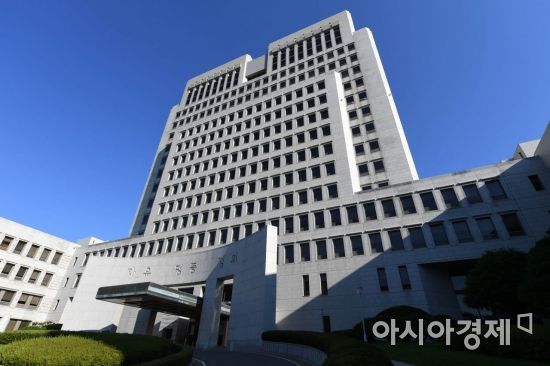
[Asia Economy Reporter Heo Kyung-jun] When a child dies due to abuse, the court can now impose a maximum sentence of up to 22 years and 6 months in prison, according to newly established sentencing guidelines.
The Sentencing Commission announced on the 29th that at its 115th meeting held the previous day, it reviewed and concluded on the recommended sentencing range for child abuse crimes.
The Commission raised the upper limit of the basic sentencing range for child abuse causing death under the Child Abuse Punishment Act to 4 to 8 years in prison, and significantly increased the aggravated sentencing range for severe cases to 7 to 15 years in prison. The current sentencing guidelines set the basic range at 4 to 7 years (mitigated 2 years 6 months to 5 years, aggravated 6 to 10 years).
In particular, the sentencing range was adjusted so that if the number of special aggravating factors considered by the court exceeds the number of special mitigating factors by two or more, the maximum sentence can be up to 22 years and 6 months in prison.
Additionally, sentencing recommendation ranges were newly established for child abuse homicide crimes under the Child Abuse Punishment Act, and for child sexual abuse and child trafficking crimes under the Child Welfare Act, which were not previously included in the sentencing guidelines. For child abuse homicide, the basic range is set at 17 to 22 years in prison, the mitigated range at 12 to 18 years, and the aggravated range at 20 years or more, including life imprisonment.
For sexual abuse crimes under the Child Welfare Act, the recommended sentence is 8 months to 2 years and 6 months in prison (mitigated 4 months to 1 year 6 months, aggravated 2 to 5 years). For child trafficking crimes conducted for adoption or profit, the recommended sentence is 1 to 3 years in prison (mitigated 6 months to 2 years, aggravated 2 years 6 months to 6 years).
The aggravated sentencing range for physical and mental child abuse, abandonment, and neglect crimes under the Child Welfare Act will increase from the current 1 to 2 years in prison to 1 year 2 months to 3 years 6 months. If the crime is severe, the recommended sentencing range extends up to the statutory maximum of 5 years in prison.
However, considering the diverse types of conduct by defendants in physical and mental abuse, abandonment, and neglect cases, as well as the varying growth environments of the victimized children, the Commission decided to maintain the current basic sentencing range (6 months to 1 year 6 months) and mitigated range (2 months to 1 year). The Commission plans to finalize the sentencing guidelines in March next year after gathering opinions and holding public hearings.
Furthermore, regarding the establishment of sentencing guidelines for fines, the Commission reflected criticism that uniform sentencing guidelines across all crime categories do not adequately reflect the characteristics of each crime group. Therefore, it decided to adopt individualized sentencing guidelines similar to those for imprisonment. The plan is to set fine sentencing guidelines based on statistical analysis tailored to the characteristics of each crime group.
The Commission selected the "traffic crime group" as the first crime category for which fine sentencing guidelines will be established, considering the frequency of fines, statutory penalties, and the social importance of the crimes. The fine sentencing guidelines will be set at a later date.
Summary judgment cases, which deal only with minor offenses punishable by fines up to 200,000 won, detention, or minor fines, were excluded from the application of fine sentencing guidelines as it is difficult to see an urgent need for such guidelines. Also, simplified order cases were excluded due to the procedural characteristics that make sentencing deliberation and evidence investigation difficult, and the challenge of ensuring the effectiveness of sentencing guidelines.
Cases referred to trial procedures and formal trial requests for simplified order cases proceed through trial procedures and conclude with a judgment, making their procedural aspects similar to old trial cases. Therefore, these cases are included within the scope of application for fine sentencing guidelines.
© The Asia Business Daily(www.asiae.co.kr). All rights reserved.

















