KCDC '1st Climate Health Impact Assessment Report'
Gastrointestinal Infections Increased 1.7 Times in 10 Years
Further Analysis Needed for Mosquito- and Tick-Borne Diseases
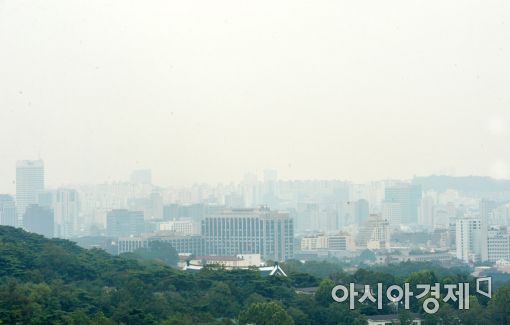
[Asia Economy Reporter Ki Ha-young] As ozone concentration in the atmosphere rises, the number of 'excess deaths' due to ozone exposure has more than doubled over the past decade.
According to the "1st Climate Health Impact Assessment Report" released by the Korea Disease Control and Prevention Agency (KDCA) on the 26th, excess deaths caused by the increase in atmospheric ozone concentration rose from 1,248 in 2010 to 2,890 in 2019, an increase of about 2.3 times. Excess deaths refer to deaths occurring beyond what is normally expected.
This report analyzed emergency room surveillance systems, health insurance data, and other sources across three areas: temperature, air quality, and infectious diseases, to evaluate health impacts over the past 10 years. This is the first time the KDCA has published a report on the impact of climate change on public health.
The annual average ozone concentration in the atmosphere increased from 35.8 ppb in 2010 to 45.0 ppb in 2019. Excessively high ozone levels irritate mucous membranes, skin, and corneas, causing various health problems such as chest pain, coughing, difficulty breathing, bronchitis, emphysema, and asthma.
Temperature extremes such as heatwaves and cold spells also affect health. In 2018, which had the highest average number of heatwave days over the past decade (2011?2020), emergency room visits, hospitalizations, and deaths due to heat-related illnesses were the highest. The number of heatwave days in 2018 was 31, more than double the 10-year average of 14 days. The number of heat-related emergency room patients recorded that year was 4,526, about three times the 10-year average of 1,537. Heat-related hospitalizations numbered 4,035, 2.7 times the average of 1,487, and heat-related deaths were 170, 2.8 times the average of 61. The elderly aged 65 and over and males were most affected by heatwave damage. Among heat-related hospitalizations, 38% were aged 65 or older, and 68.5% of heat-related deaths were in this age group. Males accounted for 61.2% of hospitalizations and 61.9% of deaths.
There were also many cold-related patients in 2018. The number of cold days in 2018 was 12, more than double the recent 8-year average (2013?2020) of 5.8 days. Emergency room visits due to cold-related illnesses numbered 2,247, 162 more than the recent 6-year average (2014?2019) of 2,085, and hospitalizations were 1,066, 282 more than the recent 10-year average (2010?2019) of 784. Cold-related illnesses were found to occur more frequently when exposed to moderate cold temperatures between -5°C and -12°C rather than severe cold below -12°C.
Gastrointestinal infections have also increased. The number of gastrointestinal infection hospitalizations per 1,000 people rose from 6.1 in 2010 to 10.1 in 2019, a 1.7-fold increase. In particular, over the past five years (2015?2019), reports of norovirus infections, Campylobacter infections, and Salmonella infections surged 3 to 5 times. The report also noted ongoing increases in mosquito-borne infectious diseases such as dengue fever and tick-borne diseases such as tsutsugamushi disease, but stated that further analysis is needed to determine the impact of climate change.
Jung Eun-kyung, Commissioner of the KDCA, said, "This report is the first systematic summary of the impact of climate change on the health of our citizens," adding, "We will strengthen in-depth research on vulnerable groups' health impacts and expand the production of evidence-based data related to national climate health policies."
© The Asia Business Daily(www.asiae.co.kr). All rights reserved.
















