Deteriorating Fertilizer Supply During Sowing Season
"All Grain-Related Prices Are Rising"
Emergency Measures and Strengthened Food Security Worldwide
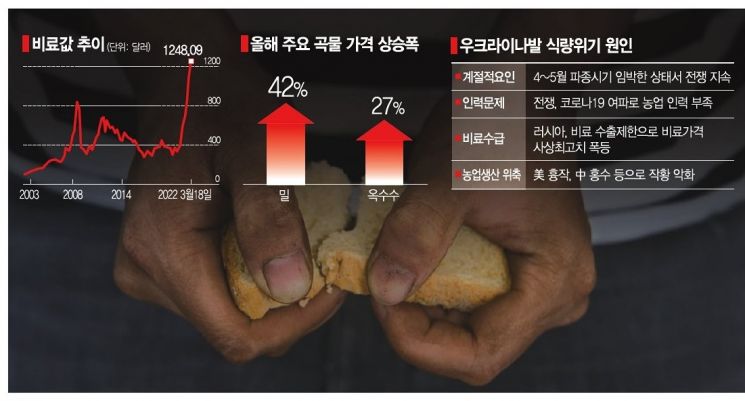
[Asia Economy Reporter Hyunwoo Lee] The fear of a food crisis originating from Ukraine is showing signs of expanding beyond neighboring regions to the entire world. Not only grain but also fertilizer supply is deteriorating, leading to a worsening shortage of fertilizers during the planting season across most parts of the Northern Hemisphere.
Accordingly, countries in the Asia region have also strongly banned the export of grains and fertilizers in preparation for the food crisis. As abnormal weather conditions have worsened crop yields in major global food-producing countries such as the United States and China, concerns are rising that competition for food supply among countries will intensify. Nations have begun to prepare emergency measures.
◆ "Everything related to grains is rising"
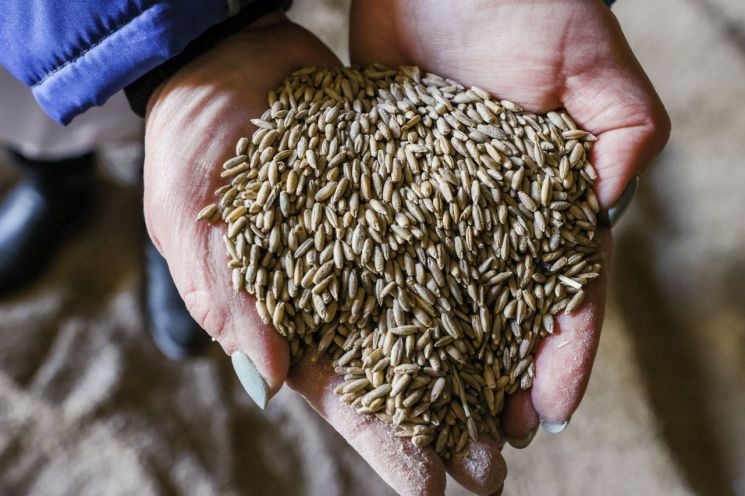
According to Bloomberg News on the 20th (local time), as of the 18th, the Green Market North America Fertilizer Price Index recorded $1,248.09 per short ton, a sharp increase of 30.47% compared to the beginning of the year. With the full-scale implementation of U.S. and Western sanctions against Russia, fertilizer exports from Russia, the world's second-largest potash fertilizer producer after Canada, have sharply declined, causing fertilizer prices to soar.
Bloomberg News stated, "Russia accounted for more than 20% of the global fertilizer market last year and is currently restricted in exports due to sanctions against Russia," adding, "If fertilizer supply is limited, prices of all agricultural products will surge, further fueling the rise in food prices." The news agency warned, "Prices of everything related to grains, including international oil and fertilizers, are rising," forecasting continued increases in food prices.
In particular, Black Sea coastal ports, which are concentrated with major grain and fertilizer export-import harbors, have been blockaded, and key railway networks have been destroyed, completely cutting off export routes for grains and fertilizers from Russia, Belarus, and Ukraine. According to the British BBC, the Ukrainian military destroyed most of the railway networks connected to the Russian and Belarus borders shortly after the outbreak of war on the 24th of last month to slow the advance of Russian forces.
As a result, fertilizer supply issues are worsening not only in Ukraine and Russia but also in major food-producing countries such as the United States, Latin America, China, and India. The European Union (EU) imports half of its corn from Ukraine and one-third of its fertilizers from Russia. EU agriculture and forestry ministers are scheduled to meet on the 21st to discuss food security issues.
◆ Emergency in Asian countries including China
Asia is not free from the food crisis either. Singapore's daily The Straits Times reported on the same day, "In Asia, fears of food security caused by the Ukraine war are sweeping through, and major countries are taking measures to control prices and supply."
China, which heavily depends on Russian fertilizers, is also highly tense. According to Hong Kong's South China Morning Post (SCMP), China imports 53% of its major potash fertilizers from Russia and Belarus, putting fertilizer procurement on high alert. China has already restricted fertilizer raw material exports since October last year.
Crop yield deterioration due to abnormal weather is also deepening concerns about the food crisis. According to CNN, drought continues in Kansas, the largest wheat-producing state in the U.S., forecasting a poor wheat harvest. The U.S. National Drought Mitigation Center (NDMC) reports that more than half of Kansas is experiencing severe drought, while over 75% of Oklahoma and nearly 60% of Texas, other wheat-producing states, are also suffering from drought.
Conversely, China is expected to significantly increase imports due to a sharp decline in wheat production caused by flooding last year. According to The New York Times (NYT), over 30% of China's wheat harvest is delayed, and the yield is expected to drop significantly.
◆ Countries locking down grain exports
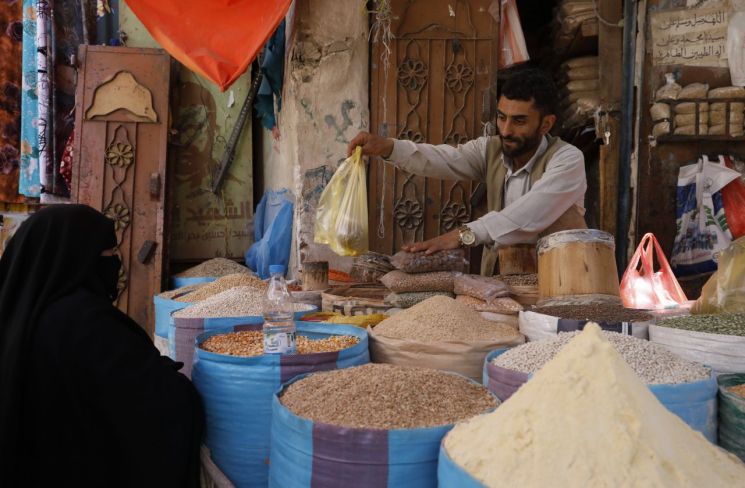
Signs of worsening hunger are emerging, especially in extremely poor countries in the Middle East and Africa. According to the World Food Programme (WFP), the global hunger population has increased by more than 18% since 2020 due to supply chain issues and soaring prices caused by COVID-19.
As concerns over food supply grow, countries have started to lock down food exports. According to the Associated Press (AP), Egypt recently banned the export of grains such as wheat, flour, and soybeans, while Hungary announced a halt to all grain exports. Moldova has also temporarily suspended exports of wheat, corn, and sugar.
© The Asia Business Daily(www.asiae.co.kr). All rights reserved.
![Clutching a Stolen Dior Bag, Saying "I Hate Being Poor but Real"... The Grotesque Con of a "Human Knockoff" [Slate]](https://cwcontent.asiae.co.kr/asiaresize/183/2026021902243444107_1771435474.jpg)


















