Kim Eye Hospital Awareness Survey Results
Frequent Eye Blinking and Need for Rest
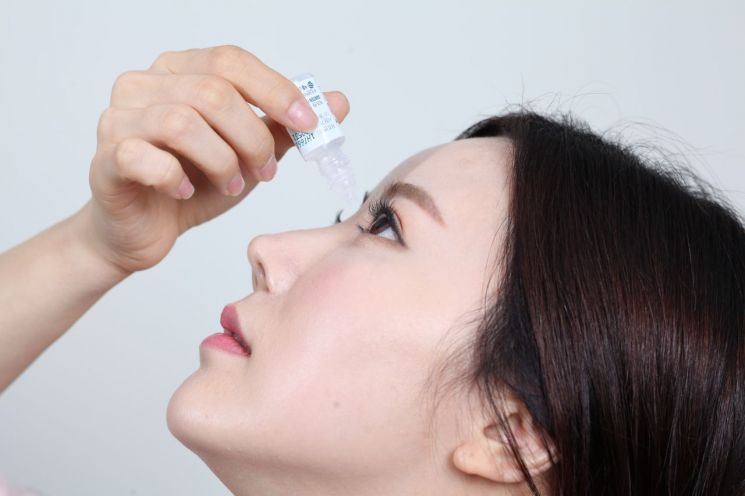
[Asia Economy Reporter Lee Gwan-ju] It has been found that 7 out of 10 people in the nation have experienced 'dry eye syndrome.' A significant number felt dry eye symptoms while using electronic devices such as smartphones and PCs.
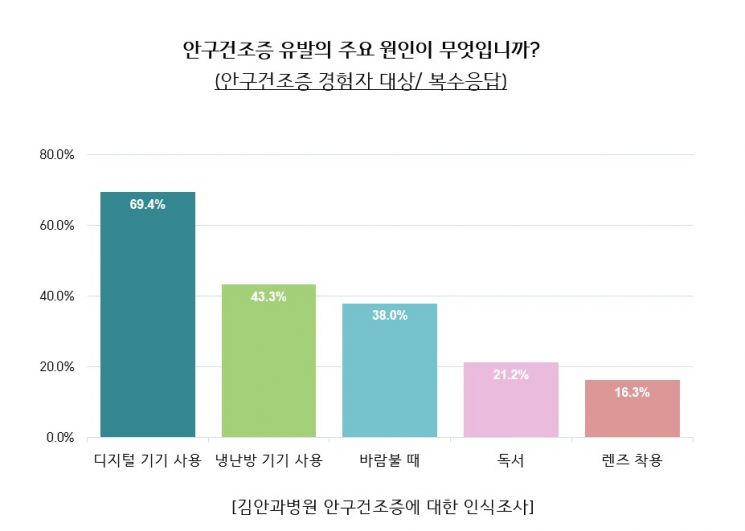
According to a survey conducted by Kim Eye Hospital on 1,000 adults nationwide on the 21st, 74.1% of respondents answered that they have experienced dry eye syndrome.
Among them, 514 people (69.4%, multiple responses allowed) reported feeling dry eye symptoms when using devices such as smartphones, tablets, and PCs. Following that, the rates of experiencing dry eye were high when using heating and cooling devices (43.3%), when the wind blows (38%), during reading (21.2%), and when wearing contact lenses (16.3%).
Dry eye syndrome is one of the six major diseases related to smartphones. According to data from the Health Insurance Review & Assessment Service, the total medical expenses for smartphone-related diseases amounted to 587.1 billion KRW in 2020, an increase of 51.7% compared to five years ago. Among these, the number one disease is dry eye syndrome (12.82 million people).
When using smartphones and PCs for long periods and frequently, the number of times one blinks while focusing on the screen decreases. Reduced blinking affects the tear film and causes tears to evaporate easily. Normally, our eyes blink about 15 to 20 times per minute, but while using a smartphone, this number decreases to about one-third.
To prevent and manage dry eye syndrome, it is necessary to reflect on and actively correct your usual smartphone usage habits. When using digital devices, you should intentionally give your eyes a rest by blinking regularly and looking away from the screen to focus on distant objects. Also, it is best to avoid looking at your smartphone immediately after waking up in the morning, as this can further dry out eyes that have already become dry overnight. Regular warm compresses and eyelid cleaning can remove waste from the eyelids and restore the lipid layer, thereby alleviating dry eye syndrome.
If symptoms do not improve, it is advisable to visit an ophthalmologist for appropriate treatment. Especially if you have other eye diseases such as conjunctivitis, diabetic retinopathy, or thyroid eye disease, neglecting dry eye syndrome can worsen these conditions, so extra caution is needed. Treatment methods for dry eye syndrome include artificial tears prescriptions and medication, as well as infrared therapy to treat eyelid inflammation and IPL laser treatment that uses light to penetrate the eyelids and melt hardened oil layers.
Ko Kyung-min, Director of the Cornea Center at Kim Eye Hospital (ophthalmologist), said, “With the recent COVID-19 pandemic increasing time spent at home instead of outdoor activities, the use of digital devices has surged, leading to a significant rise in patients visiting ophthalmology clinics for dry eye syndrome. Correcting smartphone usage habits, which have become an essential part of modern life and occupy a large portion of daily activities, can greatly help improve dry eye syndrome,” he emphasized.
© The Asia Business Daily(www.asiae.co.kr). All rights reserved.


















