[Seoul District News] Seongdong-gu Issues Isolation Notices Instantly via PC and Mobile for Home Treatment Patients with Simple Authentication, Enhancing Resident Convenience and Work Efficiency... Dongjak-gu Strengthens Monitoring by Checking Welfare Recipients in General Management Group at Least Once Daily... Seocho-gu Smartly Supports Elderly Living Alone with ‘Seoripul AI Safety Call’... Gangbuk-gu Provides 100 Computers Free to Socially Vulnerable Groups
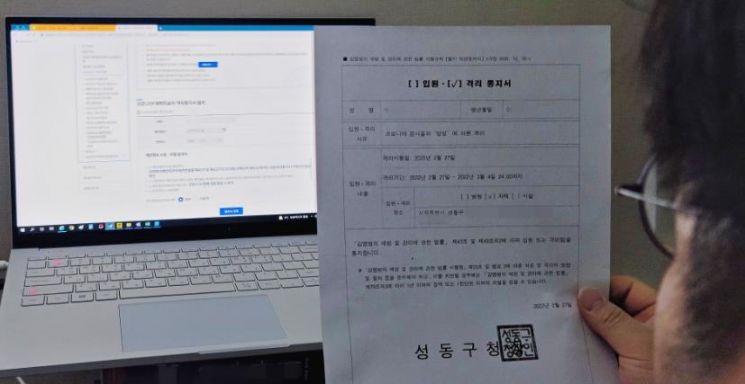
[Asia Economy Reporter Jongil Park] Seongdong-gu (Mayor Jeong Wono) is launching an ‘Isolation Notice Online Service.’ COVID-19 home treatment patients can now print and receive their isolation notices online.
The district has significantly reduced the issuance period of isolation notices, which previously took 5 to 7 days. COVID-19 home treatment patients who have completed epidemiological investigations can check their isolation notices on the Seongdong-gu Office website and, after simple identity verification such as name and phone number, immediately print and receive the isolation notice easily at home.
This service, which is also accessible via mobile for viewing and issuance, is provided even to infants and young children who cannot verify their identity and COVID-19 confirmed patients isolating in hospitals and facilities. They can easily obtain the notice using the isolation notice correction and guardian issuance menu separately prepared on the district website.
Due to the rapid increase in home treatment patients caused by the spread of Omicron, on the 10th alone, about 926 complaints were received in approximately one day (from 8 a.m. on the 10th to 6 a.m. on the 11th) at the 24-hour call center (02-2286-6800) for general management of home treatment patients.
Although isolation notices are basically sent via text messages to COVID-19 home treatment patients, more than 51% of related complaints, totaling 474 cases, were about the issuance (printout) of isolation notices.
In response, the district quickly established an online service that allows easy issuance of isolation notices at home. The district official explained that the online service, targeting home treatment patients confirmed since the 21st of last month, will enhance convenience for residents and reduce the workload of responsible officials, thereby increasing administrative efficiency.
Since the 28th of last month, through a full contract with ‘KT-CS,’ 30 professional counseling personnel have been deployed to provide higher-quality counseling services to residents. General management group home treatment patients can consult 24/7 through a dedicated call center.
The call center provides not only administrative support such as re-sending isolation notice texts but also information on local medical institutions capable of non-face-to-face treatment and designated pharmacies. For the general management group of home treatment patients, the ‘On-site Response Team’ also operates, assisting patients who live alone in purchasing daily necessities (such as water), those who have difficulty receiving prescribed medicine due to lack of guardians, and handling various living complaints of confirmed patients and cohabiting family members, minimizing inconvenience for residents.
Jeong Wono, Mayor of Seongdong-gu, said, “We have established an online issuance service for isolation notices to enhance convenience for residents. Along with operating a dedicated call center, we will actively support the treatment and recovery of home treatment patients and do our best to ensure residents safely overcome COVID-19.”
Dongjak-gu (Mayor Lee Changwoo) has strengthened monitoring of welfare target households among the general management group of home treatment patients who are vulnerable to information and may have difficulty responding in emergencies starting this month.
Since the general management group of home treatment patients was excluded from monitoring targets last month, the number of confirmed cases and isolated individuals has surged daily, gradually revealing blind spots in the treatment of the general management group.
Accordingly, since the 2nd, the district has strengthened monitoring management for welfare recipients (basic livelihood security recipients, near-poverty class, single-parent families), and as of the 11th, the cumulative number of managed targets reached 232 (an average of 25.8 per day).
First, by checking in at least once a day, psychological stability was provided to the managed individuals to help alleviate fears related to the disease. If calls were not answered more than twice a day, the welfare planner at the local community service center was linked to visit the home directly to check for any abnormalities.
Also, for single-person households or families where all members are confirmed positive, information on non-face-to-face treatment guidance and medicine delivery was provided in advance to prevent accidents in emergencies.
The majority of inquiries from the strengthened management group were about quarantine rules and living support funds rather than additional welfare services. Among these, the most frequent questions concerned whether attending school or going to work was possible and the PCR test dates for cohabiting family members.
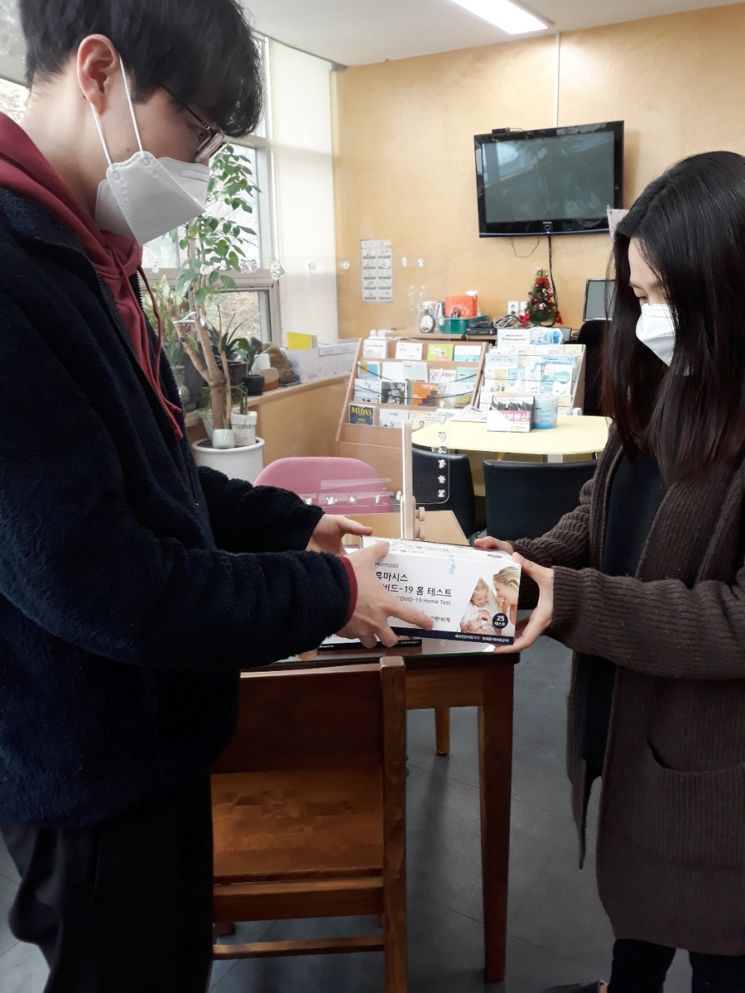
Additionally, the district is sequentially distributing rapid antigen test kits to about 32,000 vulnerable groups, including daycare infants and toddlers, teachers, pregnant women, and disabled persons. By the end of this month, approximately 200,000 kits will be provided free of charge to alleviate the purchasing burden on vulnerable groups and support voluntary preemptive testing.
Meanwhile, from the 11th, the district introduced a call-specialized smart solution and started operating the ‘COVID-19 Administrative Information Center,’ which integrates COVID-19-related call centers.
By introducing the call-specialized smart solution, simple guidance is automated, and counseling personnel are expanded for emergencies and administrative guidance to ensure no inconvenience in connecting calls and timely counseling for isolated individuals.
The integrated information center operates from 9 a.m. to 9 p.m.
Lee Changwoo, Mayor of Dongjak-gu, emphasized, “We will do our best to prevent blind spots in home treatment for the general management group and welfare recipients according to the restructured home treatment system. We will continue to prioritize the safety of residents from COVID-19 and fulfill the district’s role and responsibility.”
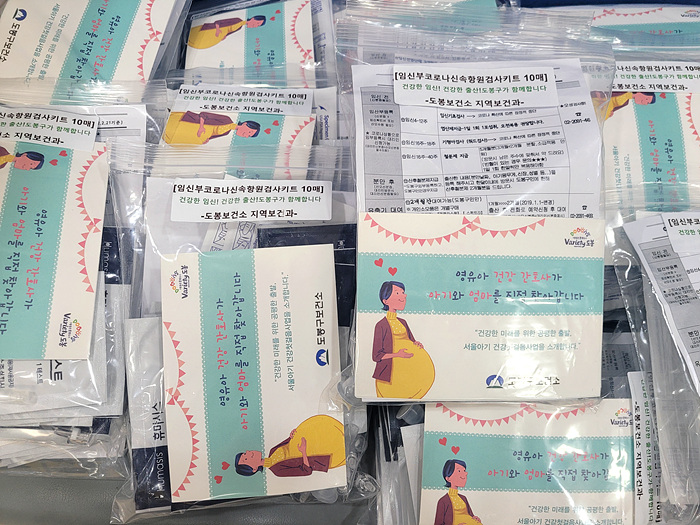
Dobong-gu (Mayor Lee Dongjin) will provide rapid antigen test kits free of charge to pregnant women vulnerable to Omicron infection starting March 14.
The district plans to first provide a total of 14,460 kits, 10 per person, to 1,446 pregnant women. Testing twice a week allows usage for five weeks.
Pregnant residents of Dobong-gu can visit their local community service center with ID and pregnancy verification documents (pregnancy confirmation, maternal and child health handbook, ultrasound images, or app, etc.) by March 31 to receive the kits. Spouses, direct descendants, or siblings can also collect kits on their behalf by presenting a family relationship certificate.
Lee Dongjin, Mayor of Dobong-gu, stated, “We are prioritizing the provision of self-diagnostic kits to safely protect the health of fetuses and pregnant women vulnerable to infection. We will continue to do our best to prevent the spread of COVID-19 among vulnerable groups.”
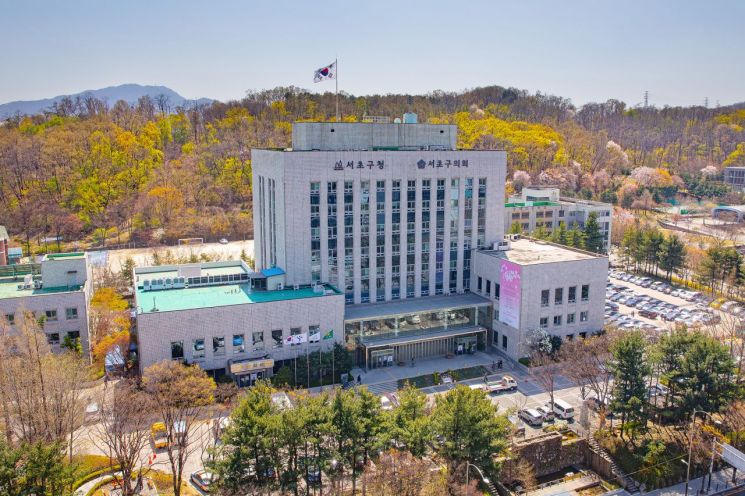
Seocho-gu announced that it will pilot the ‘Seoripul AI Safety Call’ from the end of March to check on and provide emotional support to elderly people living alone, strengthening the local care safety net.
‘Seoripul AI Safety Call’ is a service where an ‘AI Welfare Worker’ equipped with artificial intelligence (AI) conversation technology regularly calls elderly individuals and checks their psychological and health status through conversations on topics such as health, meals, and sleep.
The AI Welfare Worker analyzes these conversations to assess the elderly’s condition and, if abnormalities are detected, reports to the community service center. Subsequently, welfare staff will visit the elderly in person to check their condition. By managing once through the AI Safety Call and again through direct visits by welfare staff, a more thorough care safety net is established.
This ‘Seoripul AI Safety Call’ is an advancement from the existing ‘Automatic Safety Call Service for Elderly Living Alone,’ which only confirmed the elderly’s status by whether they answered the phone.
Since 2019, the district has operated the ‘Automatic Safety Call Service for Elderly Living Alone,’ sending voice messages once a week to 350 elderly individuals living alone and confirming their status by whether they answered the call.
For example, if the AI Welfare Worker asks, “Do you often go for walks?” and the elderly person replies, “It’s too cold, so I don’t,” the AI responds, “Yes, but when the weather warms up, try walking for your health,” continuing a customized conversation.
The AI Welfare Worker appropriately responds like a friend, providing emotional support to socially isolated or lonely elderly individuals living alone.
It also facilitates monitoring and management of elderly living alone. It can effectively manage many welfare recipients, reducing the increasing workload of frontline social workers and providing timely and effective care services tailored to the elderly’s situation.
The district plans to initially provide the AI Safety Call service to 50 vulnerable elderly living alone aged 65 or older in March and later expand it to all elderly currently receiving the safety call service.
Meanwhile, the district is promoting various projects for elderly living alone. It provides AI care robots called ‘Seoripul Bokdong-i’ to 120 elderly individuals with high loneliness for companionship and emotional support and uses IoT devices that detect movement, temperature, and illumination in 380 homes to monitor safety in real time.
Cheon Jeonguk, Acting Mayor of Seocho-gu, said, “We will continue to minimize care gaps for elderly living alone in blind spots through smart technology-based care services and carefully manage their safety and health.”
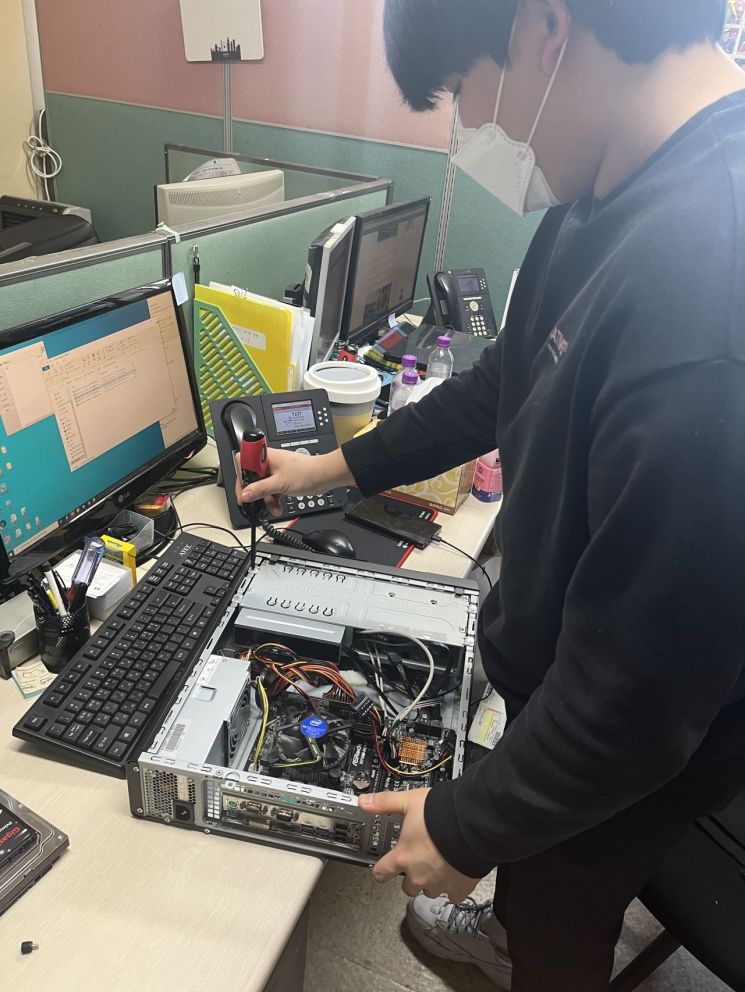
Gangbuk-gu (Mayor Park Kyumsu) is promoting the ‘Gangbuk IT Hope Sharing Project,’ which provides computers free of charge to socially vulnerable groups.
The ‘Gangbuk IT Hope Sharing Project’ refurbishes and upgrades computers that were used for administrative work and then collected, distributing them to information-disadvantaged groups.
The distribution targets include local basic livelihood security recipients, disabled persons, single-parent families, multicultural families, national merit recipients, and social welfare facilities. However, those who have received computers from Gangbuk-gu or Seoul City within the past two years are excluded.
The district plans to distribute 100 computers this year: 60 to individuals and 40 to social welfare facilities. The computers will have specifications of CPU Intel Core i5 (3.2GHz), 4GB memory, and 500GB HDD or higher. The package includes the computer body, monitor, keyboard, and mouse, provided on a first-come, first-served basis.
Applicants can apply online from 9 a.m. on April 1 via the Gangbuk-gu website (Citizen Participation → IT Hope Sharing → Apply for Computer) or visit their local community service center. Social welfare facilities can apply through the welfare department.
Free on-site repair services will also be provided for computers that break down after distribution. Repair requests can be made by calling the number on the sticker attached to the computer, and the maintenance team will provide A/S within Gangbuk-gu.
Last year, the district distributed a total of 98 computers to information-vulnerable groups.
Park Kyumsu, Mayor of Gangbuk-gu, said, “If there are office supplies that can be reused and shared with residents at the district level, we will actively take action. We will continue to do our best to bridge the information gap among residents.”
© The Asia Business Daily(www.asiae.co.kr). All rights reserved.



















