On the 28th of last month, the value of the yuan rose to 6.30 yuan per dollar
The share of yuan self-settlement remains minimal, and issues of currency sovereignty in various countries remain challenges
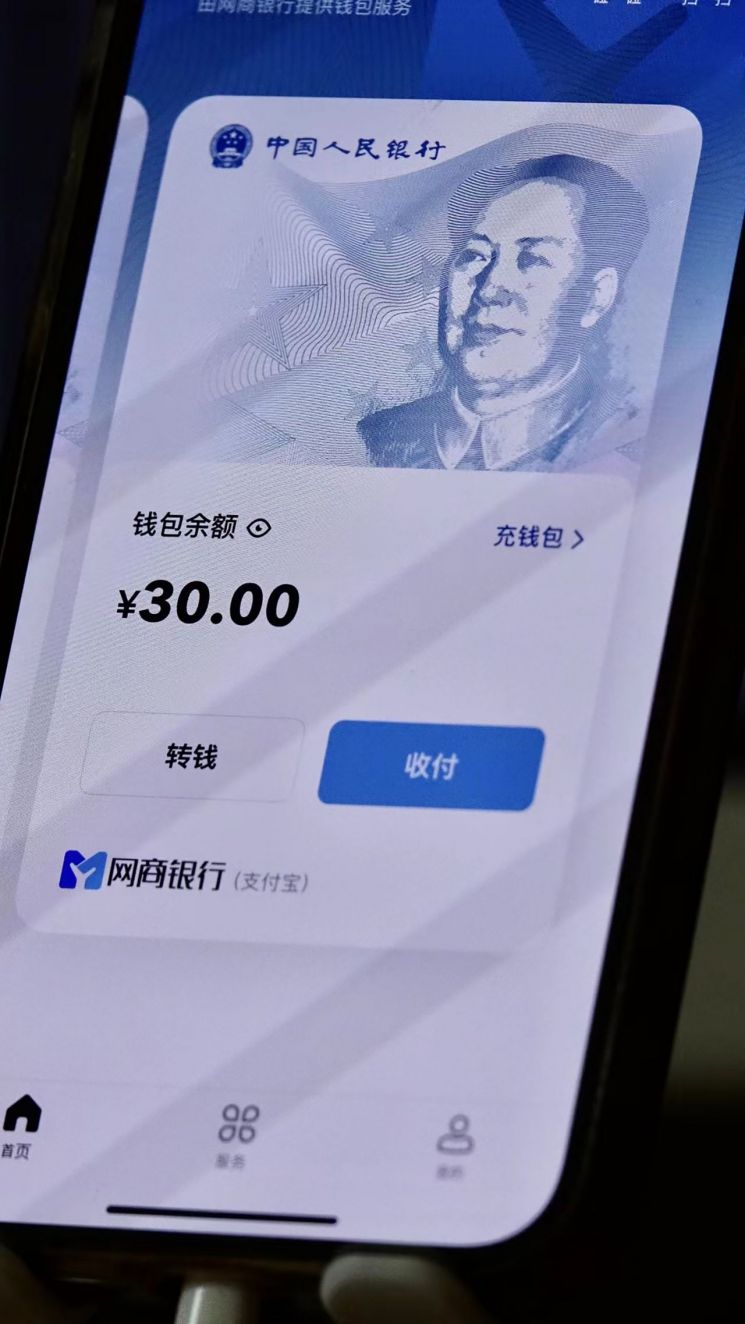
[Asia Economy Reporter Kim Hyun-jung] Following Western financial sanctions against Russia, expectations are growing that the 'digital yuan' could emerge in the global currency market within China. However, there are also forecasts that the yuan itself still holds a minimal share in the global settlement market, making it difficult to establish a position in the short term.
Hong Kong's South China Morning Post (SCMP) reported on the 3rd, citing explanations from mainland Chinese researchers, that with Russia's exclusion from the Society for Worldwide Interbank Financial Telecommunication (SWIFT) blocking dollar transactions, the yuan, especially the 'digital yuan,' has the potential for rapid rise.
The digital yuan is a legal digital currency issued by the People's Bank of China and has been piloted in 10 Chinese cities including Beijing, Shanghai, Hainan, Suzhou, and Chengdu. According to reports, the digital yuan app ranked first in downloads on Apple and Xiaomi app stores immediately after its release in early January, recording 17 million downloads, with 5 million active users. SCMP described this as "already penetrating the daily lives of Chinese people." The app supports English as well as Chinese, targeting the global market.
According to official government announcements, by the end of last year, 261 million digital wallets had been opened, with transactions amounting to 87.6 billion yuan (approximately 16.79 trillion won). Mu Changchun, head of the digital currency research institute at the People's Bank of China, stated, "Authorities will closely monitor user experience, security, and efficiency."
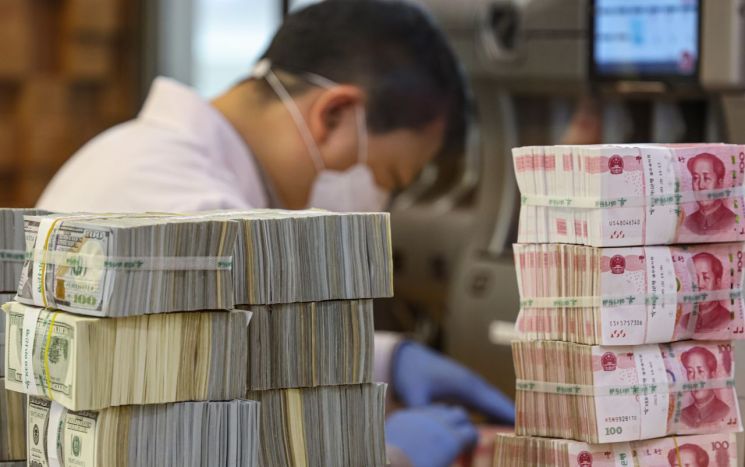
The yuan began to show risk-averse characteristics following Russia's invasion of Ukraine. On the 28th of last month, the value of the Chinese yuan rose intraday to 6.30 yuan per dollar, marking the highest level since April 2018. As of the morning of the 3rd, it was recorded at 6.32 yuan.
The People's Bank of China is also pursuing cooperation with banks in Hong Kong, Thailand, and the United Arab Emirates to expand the use of the digital yuan in international transactions. However, issues such as currency sovereignty of each country, foreign exchange control regulations, and the potential for money laundering and terrorist financing need to be resolved.
Moreover, the yuan's share in the global currency market remains far behind the economic scale of the world's second-largest GDP. According to SWIFT, as of January, the yuan accounted for 3.2% of global payment amounts, which is less than one-tenth of the US dollar (39.92%) or the euro (36.56%).
© The Asia Business Daily(www.asiae.co.kr). All rights reserved.
![Clutching a Stolen Dior Bag, Saying "I Hate Being Poor but Real"... The Grotesque Con of a "Human Knockoff" [Slate]](https://cwcontent.asiae.co.kr/asiaresize/183/2026021902243444107_1771435474.jpg)

















