[Seoul District News] Gangdong-gu Invests 84.2 Billion KRW in 59 Projects Across 3 Areas for Birth and Childcare Support This Year; Gangdong-gu Ranks 2nd in Seoul Districts for Total Fertility Rate After 4 Years in Lower Ranks... Gangseo-gu Recruits 13th Children's Reporters for Children's Newsletter Gangseo Kkumdongsan... Yongsan-gu Promotes 2022 Resident Informatization Education... Seongbuk-gu Residents' Autonomy Association Accepts Proposals for Resident Agenda Projects to Establish District-by-District Resident Autonomy Plans
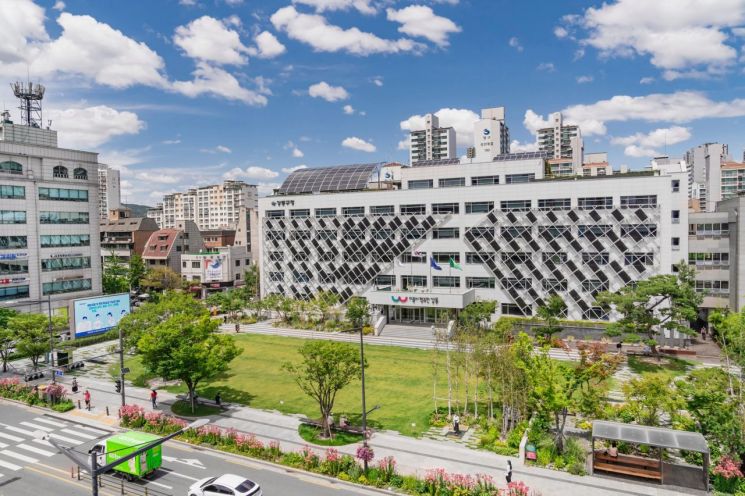
[Asia Economy Reporter Park Jong-il] Gangdong-gu (District Mayor Lee Jeong-hoon) has established a comprehensive promotion plan for responding to low birth rates in 2022.
So far, Gangdong-gu has implemented various childbirth encouragement policies to solve the low birth rate problem, resulting in an increase in the number of births in Gangdong-gu, recording a total fertility rate of 0.748 in 2020. This is the second highest among Seoul's autonomous districts.
In 2016, Gangdong-gu's total fertility rate ranked 14th among autonomous districts, placing it in the lower tier, but rising to 2nd place in just four years is believed to be mainly due to the district's proactive childbirth and child-rearing friendly policies.
While strengthening childbirth support services such as integrated health management for pregnant women and the I-mom taxi service, the district also expanded childcare allowances and child allowances to reduce the economic burden on parents, and expanded care infrastructure by region for each age group, including I-mom Gangdong, Our Neighborhood Care Center, and Kkum Miso.
Comprehensive measures covering all age groups have alleviated the burden of childbirth and child-rearing for Gangdong residents, greatly influencing the increase in birth rates.
This year, the district plans to invest a budget of 84.2 billion KRW in a total of 59 projects across three areas according to the 4th Basic Plan for Low Birth Rate and Aging Society: ▲ a society where people work and care together ▲ a society where everyone's capabilities are evenly demonstrated ▲ adaptation to demographic structural changes, to continuously sustain the increase in births.
Lee Jeong-hoon, Mayor of Gangdong-gu, said, "We expect Gangdong-gu's various childbirth and child-rearing friendly policies to significantly reduce the childcare burden on families raising children," adding, "We will continue to expand childbirth encouragement policies and child-rearing support that practically help families to create a happy city Gangdong where all generations live together."
Moon Seo-hyun, a 6th grader at Sumyeong Elementary School who served as a reporter in the 12th Children's Reporters, said with a bright smile, "I still remember the day my first article was published. At that time, I really thought it was great to be a children's reporter. Through reporter activities, I was able to have fun experiences like interviews and debates, and I think I gained more confidence and courage."
The gateway for aspiring young reporters has opened.
Gangseo-gu, Seoul (District Mayor Noh Hyun-song) announced that it is recruiting the 13th Children's Reporters who will create 'Gangseo Dream Hill,' a customized district information service for elementary school students and parents.
The purpose is to create a rich newsletter tailored to children's perspectives based on their participation.
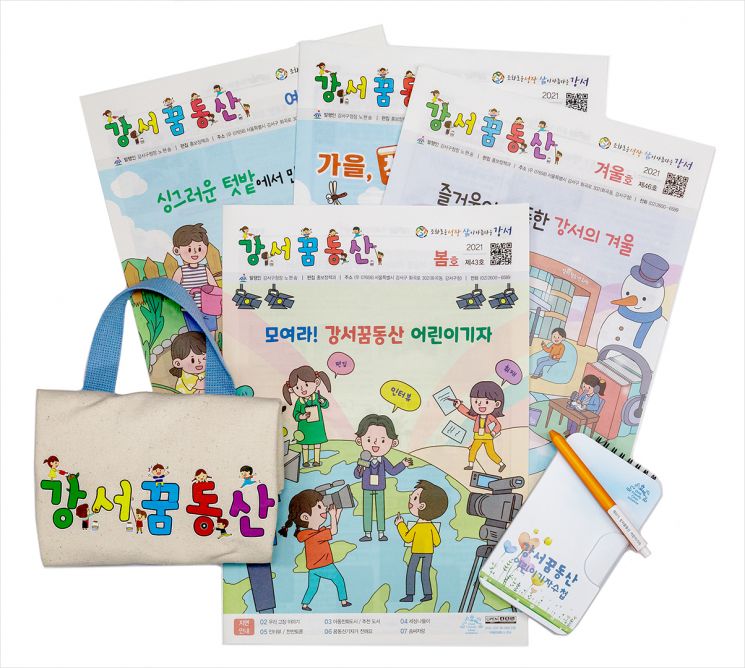
'Gangseo Dream Hill' is a children's newsletter created by children reporters who directly participate in news gathering, writing, and editing. It includes Gangseo's history, culture, information, children's experiential activities available in Gangseo, and learning information, and is published quarterly.
The recruitment target for the children's reporters is children in grades 4 to 6 attending elementary schools located in Gangseo-gu. Children residing in Gangseo-gu who attend Gangsin, Singang, and Yangdong Elementary Schools adjacent to the district can also participate.
Children who wish to participate in reporter activities must submit an application form along with one article on a designated topic by the 24th. The designated topics are 'Introducing Our Neighborhood Attractions' and 'The World I Dream Of.' Applicants choose one and write an article of about 600 characters to submit.
Applications can be made through 'Gangseo-gu website - Children - Gangseo Dream Hill - Children's Reporters - Reporter Application.'
The district plans to select 60 children reporters based on the articles written by the children and announce the results on March 30 on the district website.
Selected children reporters will receive reporter IDs from the district and will deliver various news from all over Gangseo-gu, including district-hosted events, local explorations, and school news, for one year starting April 1.
A district official said, "Every time we publish the newspaper, we are often surprised by the children's writing skills and diverse talents," adding, "Since this is a great opportunity to nurture the dream of becoming a reporter and to learn more about our region, we hope many children will show interest and participate."
The Gangseo Dream Hill newsletter is distributed mainly to elementary schools and libraries frequently used by children in the region and can also be accessed online and via mobile through the Gangseo-gu website. For detailed inquiries, contact the Gangseo-gu Public Relations Policy Division.
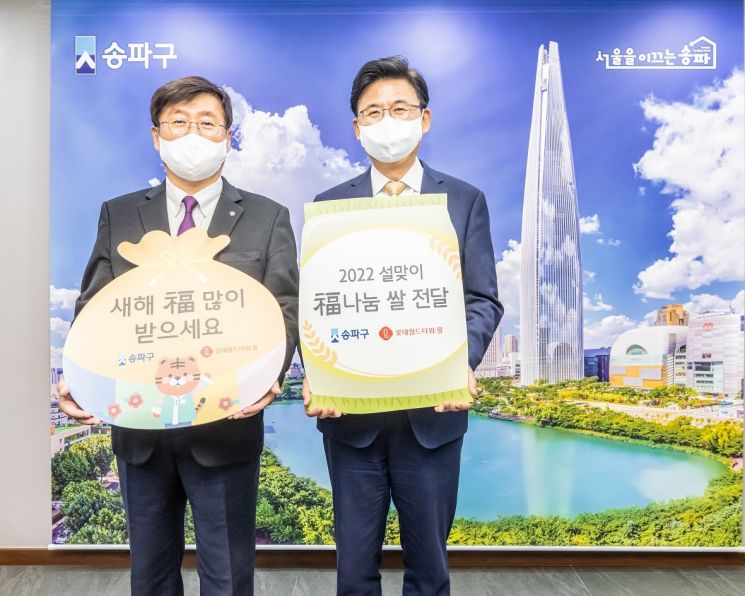
Songpa-gu (District Mayor Park Sung-soo) announced on the 2nd that it raised a total of 2.33 billion KRW, which is 111% of the fundraising goal, through the '2022 Hope Ondol Warm Winter Campaign.'
'Hope Ondol Warm Winter' is a representative winter neighbor-helping project conducted annually by the district and the Community Chest of Korea to assist vulnerable groups.
Songpa-gu conducted the fundraising campaign for three months from November last year to February 14 this year. The district encouraged active participation from residents, professional organizations, companies, and religious groups in the community. Despite concerns that fundraising might shrink due to the prolonged COVID-19 pandemic and economic downturn, the district exceeded the initial target, confirming the warmth and love of the community.
Various forms of support continued from all walks of life, including residents, professional organizations, companies, religious groups, and medical institutions.
In particular, warm stories were shared, such as ▲ a basic livelihood security recipient elderly person who donated 1 million KRW asking to be used for neighbors in more difficult situations ▲ taekwondo students who donated 23 boxes of food packages containing ramen, rice, and seaweed ▲ daycare children who donated money collected from allowance earned by gathering praise stickers ▲ a company that generously donated 10 million KRW for elderly living alone.
As a result, 1.07 billion KRW in cash and 1.26 billion KRW worth of goods such as rice and kimchi were collected.
The donated money and goods were primarily provided to about 14,000 low-income households and 316 social welfare facilities. The remaining funds will be used for various local welfare enhancement projects such as livelihood, medical, and housing support.
Park Sung-soo, Mayor of Songpa-gu, said, "I am grateful for the warm interest and love for neighbors in need despite the difficult circumstances for everyone," adding, "We will build a more solid welfare safety net to create a happy city Songpa where no one is left out."
According to the '2020 Digital Information Gap Survey' by the National Information Society Agency (2021), the digital informatization level of information-vulnerable groups (elderly, low-income, disabled, etc.) was about 72.7% compared to the general public average. Accessibility was 93.7%, but digital capability and utilization remained at 60-70%.
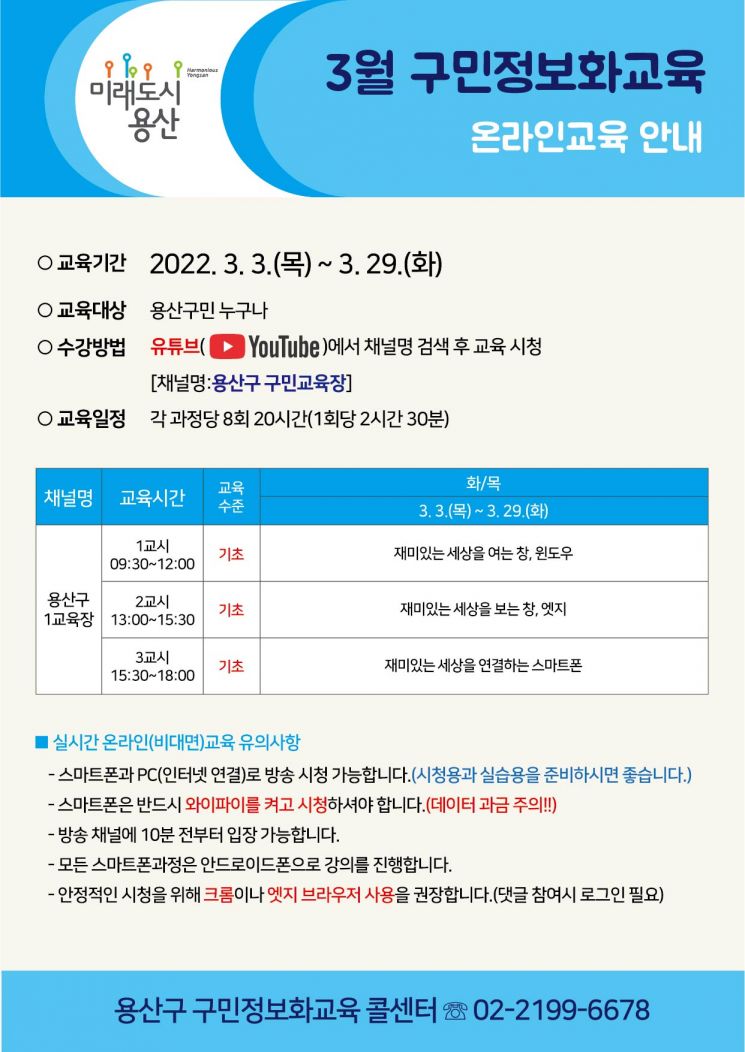
Yongsan-gu (District Mayor Seong Jang-hyun) is promoting the '2022 Citizen Informatization Education' to bridge the informatization gap. A total of 70 courses will be operated from March to December.
The education is conducted at different levels: ▲ beginner classes (basic computer and internet, getting familiar with smartphones) ▲ intermediate classes (internet use, Hangul, Excel, PowerPoint use, image editing, etc.) ▲ advanced classes (smartphone use, social networks, UCC video editing, etc.).
In March, classes will be held online in real-time every Tuesday and Thursday. Three beginner classes are organized: ▲ "A Window Opening to an Interesting World," Windows (9:30 AM to 12:00 PM) ▲ "A Window to See an Interesting World," Edge (1:00 PM to 3:30 PM) ▲ "Connecting to an Interesting World," Smartphone (3:30 PM to 6:00 PM).
Citizens who wish to take the courses can search for 'Yongsan-gu Citizen Education Center' on YouTube, verify the channel name, and access it.
A district official said, "Although in-person education is the principle, since most students are over 50 years old, considering the spread of COVID-19, the first lecture this year will be conducted online," adding, "Detailed information can be found on the Yongsan-gu Citizen Informatization Education community (https://cafe.naver.com/comyongsan)."
Education courses after April will gradually expand according to the COVID-19 situation.
Last year, the district conducted informatization education through a YouTube live channel. The total number of video viewers was 15,714. Among them, 1,908 participated in a survey, and 95% responded that they were satisfied with the courses.
Jang Gyeong-rye (62), who took the district's informatization education, won the silver prize in the middle-aged category in the information search and internet utilization field at the '2021 National Happiness IT Competition' hosted by the Ministry of Science and ICT in September 2021.
Seong Jang-hyun, Mayor of Yongsan-gu, said, "The situation of facing digital devices has increased due to COVID-19," adding, "We will take the lead in informatization education so that everyone can equally enjoy the benefits of technology without discrimination."
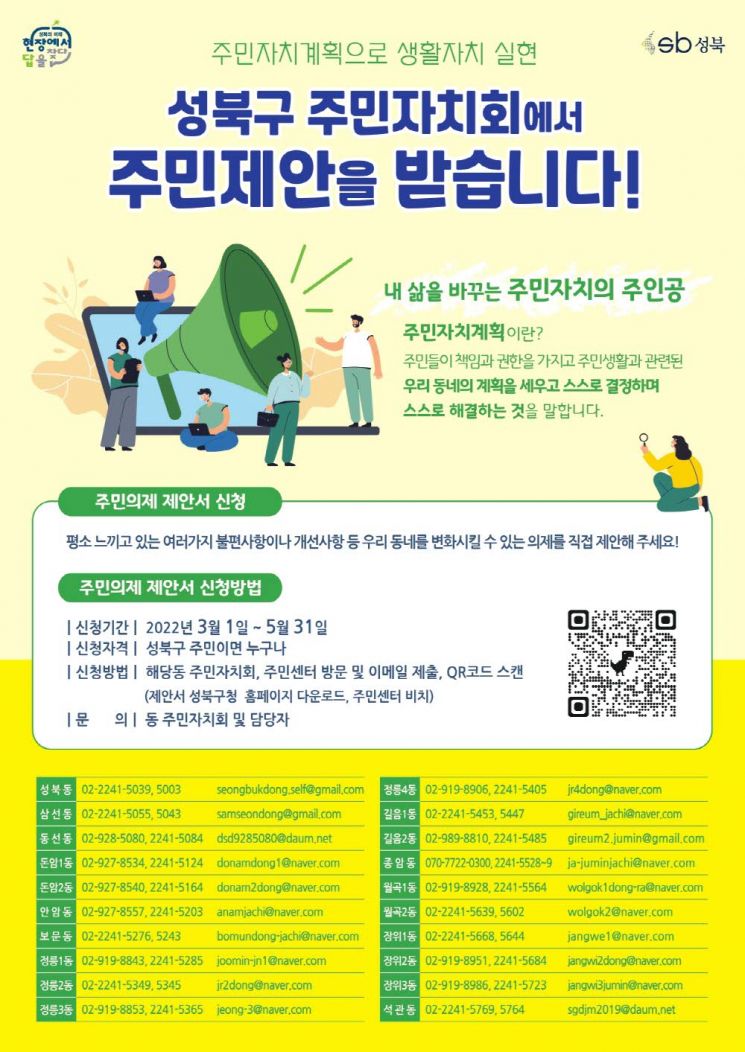
Seongbuk-gu (District Mayor Lee Seung-ro) is accepting residents' agenda project proposals for the establishment of resident-led self-governing plans until May 31.
A resident self-governing plan is a business plan set by the resident self-governing committee, where local residents directly discover various inconveniences or improvements they feel in daily life that can change the neighborhood. It is a process where residents propose projects themselves, participate in decision-making, and deliberate together on-site to solve local problems.
Any resident of Seongbuk-gu can apply for a project proposal, and the submission period is from March 1 to May 31. Applicants can download the form from the Seongbuk-gu website, fill out the application, and submit it by visiting the resident self-governing committee office of the respective neighborhood or the community service center, or by email.
The agendas received by neighborhood will be sufficiently discussed and deliberated within the resident self-governing committee, concretized, reviewed for project feasibility by related departments, and finally decided as a consented self-governing plan through a residents' general meeting.
A district official said, "In the era of resident self-governance where residents discover problems themselves, plan, and execute, we ask for active participation and interest from residents so that various resident-proposed projects can be discovered, and the district will also spare no effort to actively support the realization of resident-led living autonomy."
© The Asia Business Daily(www.asiae.co.kr). All rights reserved.
![Clutching a Stolen Dior Bag, Saying "I Hate Being Poor but Real"... The Grotesque Con of a "Human Knockoff" [Slate]](https://cwcontent.asiae.co.kr/asiaresize/183/2026021902243444107_1771435474.jpg)


















