Government's '2022 Traffic Accident Fatality Reduction Measures'
Mandatory Stop When Turning Right at Intersections Introduced
Insurance Companies to Claim Subrogation Rights for Drunk Driving and Hit-and-Run Cases
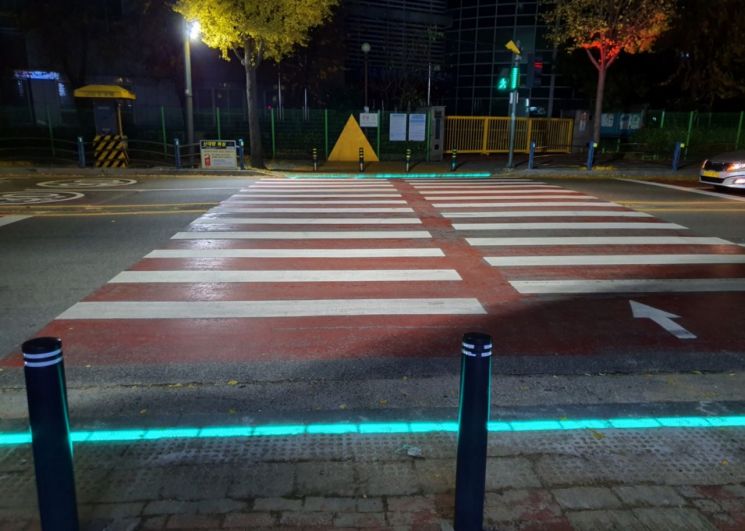
Starting this year, drivers must come to a complete stop at crosswalks regardless of whether pedestrians are present. There is also a new obligation to stop when making right turns at intersections. Enforcement against offenses such as drunk driving and signal violations will be expanded, and penalties will be strengthened.
On the 23rd, the Ministry of Land, Infrastructure and Transport announced that it has established the "2022 Traffic Accident Fatality Reduction Measures" in collaboration with related agencies including the Ministry of the Interior and Safety and the National Police Agency, aiming to prevent traffic accidents and advance Korea into a traffic safety leading country.
This plan is part of a government-wide project to protect citizens' lives, designed to reinforce a pedestrian-first traffic safety system and to focus on improving vulnerable areas such as the elderly and two-wheeled vehicles.
First, to establish a "pedestrian-first traffic safety system," speed limits have been lowered and the obligation to stop has been strengthened.
The concept of "pedestrian priority roads" will be introduced in residential areas and other daily-life roads (such as alleys) where pedestrian traffic is heavy and mixed frequently with vehicles, and speed limits can be set at 20 km/h or below.
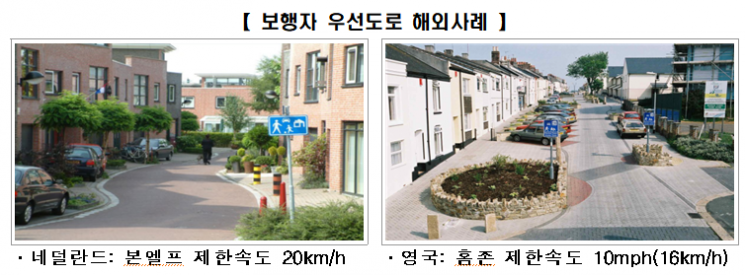
For rural areas along national and provincial roads, a "village resident protection zone" will be institutionalized. Through this, speed limits currently operated at 70?80 km/h will be adjusted to 50?60 km/h to ensure pedestrian safety for elderly residents in rural areas.
Additionally, because the obligation to stop to protect pedestrians will be strengthened at crosswalks, intersections, and narrow roads without clear separation between sidewalks and roadways, drivers are required to exercise extra caution.
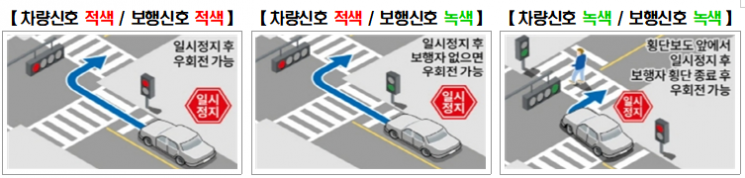
At crosswalks, drivers must stop not only when pedestrians are crossing but also when they are about to cross. Furthermore, considering the high frequency and risk of accidents caused by blind spots when turning right at intersections, a new obligation to stop before making right turns has been introduced. Violations of these rules will result in fines of approximately 50,000 KRW and 10 penalty points.
Moreover, on narrow roads without sidewalks, pedestrians will be granted priority to use the entire roadway, and drivers will be required to slow down and stop as necessary to avoid obstructing pedestrian passage.
The enforcement system to prevent pedestrian accidents will also be strengthened.
For high-risk drivers who threaten pedestrians, such as those violating speed limits or traffic signals, a progressive fine system will be introduced, and the license reacquisition period will be extended for those caught driving under the influence.
The insurance system for safe driving will also be reformed. In cases of traffic accidents caused by drunk driving, unlicensed driving, or hit-and-run, insurance companies will be able to claim the full amount of insurance payments from the drivers. Additionally, insurance premiums will be increased by up to 10% for violations such as failing to stop at crosswalks.
Customized measures considering the physical abilities of elderly people have also been prepared.
To enhance the effectiveness of the "elderly protection zone" system, the criteria for designating protection zones will be expanded. Previously, protection zones were limited to certain facilities used by the elderly, such as welfare centers, but this will be improved to allow designation of locations with frequent elderly pedestrian traffic and high accident risk.
Furthermore, smart crosswalks that detect when elderly pedestrians cannot cross within the allotted time due to slow walking speed and automatically extend the green signal will be increasingly installed.
For elderly drivers, a conditional licensing system will be introduced in the mid to long term. This system will consider restrictions on driving times (such as nighttime) and locations (such as highways), or allow licenses on the condition of installing safe driving assistance devices.
Safety management for delivery two-wheelers and commercial vehicles will also be strengthened.
Currently, the two-wheeler delivery industry, operated as a free business, generally suffers from weak safety management. This year, a certification system will be implemented for companies with excellent safety management and service quality, and the possibility of transitioning to a registration system will be reviewed in the future.
At the same time, to alleviate the high insurance premium burden on delivery two-wheelers and increase insurance subscription rates, the establishment of a delivery industry mutual aid association will be pursued.
To strengthen enforcement on two-wheelers, the license plate system will be reorganized to improve visibility, and joint crackdowns by the Ministry of Land, Infrastructure and Transport and the National Police Agency will be expanded on offenses such as missing license plates, illegal tuning, and traffic violations.

Regarding freight vehicles, the government plans to steadily implement the "Commercial Vehicle Traffic Safety Enhancement Measures" jointly prepared in January. In particular, continuous and mobile enforcement personnel will be secured to crack down on drowsy driving (rest time) monitoring devices and improper loading at regional hubs.
© The Asia Business Daily(www.asiae.co.kr). All rights reserved.
![Clutching a Stolen Dior Bag, Saying "I Hate Being Poor but Real"... The Grotesque Con of a "Human Knockoff" [Slate]](https://cwcontent.asiae.co.kr/asiaresize/183/2026021902243444107_1771435474.jpg)


















