Profitability Declines Due to Interest Rate Hikes
Concerns Over Price Increases and Supply Disruptions of Key Materials Such as Rebar and Cement
[Asia Economy Reporter Kim Min-young] Domestic construction companies are facing a crisis as soaring raw material prices combine with increased interest burdens from rising interest rates.
A representative from the Korea Construction Industry Research Institute expressed concern on the 23rd, stating, "Interest rate hikes can lead to a decline in corporate profitability and stability," adding, "This results in a decrease in the interest coverage ratio, a key profitability indicator." The Bank of Korea's base interest rate, which had been maintained at 0.50% until July last year, rose to 0.75% in August, then to 1% in November, and further increased to 1.25% in January this year. There are also forecasts that the Bank of Korea's base rate could rise to 1.75% this year as the U.S. tightens its monetary policy.
The construction industry is sensitive to interest rate changes due to project financing (PF) and guarantees for interim payment loans in pre-sale projects. The interest coverage ratio, a representative indicator of a company's debt repayment ability, is calculated by dividing operating profit by interest expenses. When interest rates rise sharply as they are now, even if operating profits increase, interest expenses also rise, which can cause the interest coverage ratio to decline.
A representative from Company A Construction said, "Especially companies with high debt ratios and reliance on borrowings are vulnerable to the burdens caused by interest rate hikes, raising concerns about negative impacts on corporate management stability."
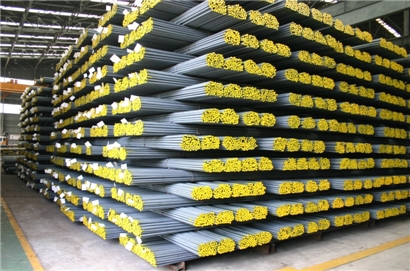
Recently, the steep rise in raw material prices has also become a concern. The benchmark price for rebar, a representative construction raw material (Hyundai Steel), was about 700,000 KRW per ton in the first quarter of last year but surged to 962,000 KRW per ton (SD400 10mm cash basis) in January this year and further to 991,000 KRW per ton this month. Cement prices have also continued to rise due to increases in the price of bituminous coal, a key fuel. Cement, which was 75,000 KRW per ton last year, increased to 78,800 KRW and jumped about 18% to 93,000 KRW per ton starting this month. If materials are not supplied on time due to supply shortages, delays in construction schedules are expected, causing setbacks in project progress.
The problem is that the possibility of Russia invading Ukraine is increasing, which could worsen raw material supply shortages. Due to the Ukraine crisis, aluminum prices have risen, causing a sharp increase in the price of aluminum formwork, a type of formwork. According to Bloomberg, aluminum prices surged from 1,600?1,800 USD per ton last year to over 3,300 USD per ton recently. There are significant concerns that if the West imposes economic sanctions on Russia, aluminum supply could be disrupted, pushing prices even higher.
A representative from Company B Construction said, "Linking construction costs to the increased expenses is currently the only survival strategy."
© The Asia Business Daily(www.asiae.co.kr). All rights reserved.
![Clutching a Stolen Dior Bag, Saying "I Hate Being Poor but Real"... The Grotesque Con of a "Human Knockoff" [Slate]](https://cwcontent.asiae.co.kr/asiaresize/183/2026021902243444107_1771435474.jpg)















