[Seoul Autonomous District News] Seongdong-gu Shows Rent Increase Suppression Effects in All Indicators for Sustainable Development Zone Coexistence Agreement Companies: Rent Increase Rate 0.36%p Lower, Rent per Pyeong 2,700 KRW Lower, Converted Deposit 51.89 Million KRW Lower, Business Period 27 Months Longer... Nowon-gu Provides Customized Education Expense Support for North Korean Defectors' Settlement... Gangdong-gu Wins 10th Korea Festival Content Award for Gangdong Seonsa Cultural Festival 2022... Seongbuk-gu Offers Support Funds to Small Business Owners in Closed or Restricted Industries... Gwanak-gu Supports Disabled Persons

[Asia Economy Reporter Park Jong-il] Seongdong-gu (Mayor Jung Won-oh) announced the results of a survey on the actual conditions of commercial lease contracts in the Sustainable Development Zone, revealing that companies that signed coexistence agreements in the zone showed a significant effect in curbing rent increases compared to those that did not sign.
According to the survey conducted over about three months last year (September to December 2021) by visiting 767 commercial establishments in the target zone, the overall rent increase rate in the Sustainable Development Zone was 2.72% compared to the previous year, with rent per square meter at 31,900 KRW and the converted deposit (the sum of deposit and monthly rent converted amount under the Commercial Lease Protection Act) at 229.29 million KRW.
Among these, companies that signed coexistence agreements showed lower figures in all indicators including rent increase rate, rent per pyeong, and converted deposit.
The rent increase rate for companies with coexistence agreements was 2.49%, which is 0.36 percentage points lower than the 2.85% for those without agreements. The rent per pyeong was 103,900 KRW and 106,600 KRW respectively, with the agreement companies paying 2,700 KRW less.
The converted deposit, an indicator defining the scope of application of the Commercial Lease Protection Act, was also on average about 51.89 million KRW lower for companies with coexistence agreements (20.338 billion KRW) compared to those without (25.527 billion KRW).
Furthermore, while the average business period for all companies in the Sustainable Development Zone was about 63 months (5 years and 3 months), companies with coexistence agreements operated for 79 months (6 years and 7 months), which is 27 months longer than the 52 months (4 years and 4 months) average for those without agreements.
This is interpreted as the fruit of efforts made since the enactment of the nation’s first ordinance to prevent gentrification (displacement), the amendment of the Commercial Lease Protection Act (2018), and the establishment of the Local Commercial District Act, aimed at protecting and revitalizing commercial districts.
The Sustainable Development Zone is an area designated and announced by the district to prevent gentrification phenomena and protect the local community ecosystem and commercial districts. Previously, the district designated Seoul Forest Road, Bangsongdae Road, and Sangwon Road in Seongsu 1-ga 2-dong as Sustainable Development Zones to prevent gentrification.
Since 2015, the coexistence agreement has been continuously promoted, and as of the end of last year, 73.3% of building owners in the Sustainable Development Zone participated in the agreement. Companies that signed the agreement showed stable figures in average rent, average increase rate, and converted deposit, positively influencing the stabilization of rent increase rates across the region.
The district has expanded the target areas to include Seongsu-dong expansion zone, Majang Livestock Market, Songjeong-dong Urban Regeneration Activation Area, Sageun-dong Urban Regeneration Activation Area, Yongdap Commercial Market, and has signed coexistence agreements with 501 buildings to date.
Policies to prevent gentrification will continue actively through programs such as ‘Seongdong Safe Commercial Area’ supporting tenants, small business owners, and young entrepreneurs, and the ‘Rent Stability Implementation Agreement’ signed among building owners, tenants, and Seongdong-gu, which relaxes floor area ratio upon new construction or extension of buildings to stabilize rent.
Jung Won-oh, Mayor of Seongdong-gu, said, “As a proactive policy to prevent gentrification, changes in awareness among building owners and tenants and the spread of consensus for regional coexistence have led to these results. We will continue to do our best to ensure sustainable development in all areas of Seongdong-gu.”
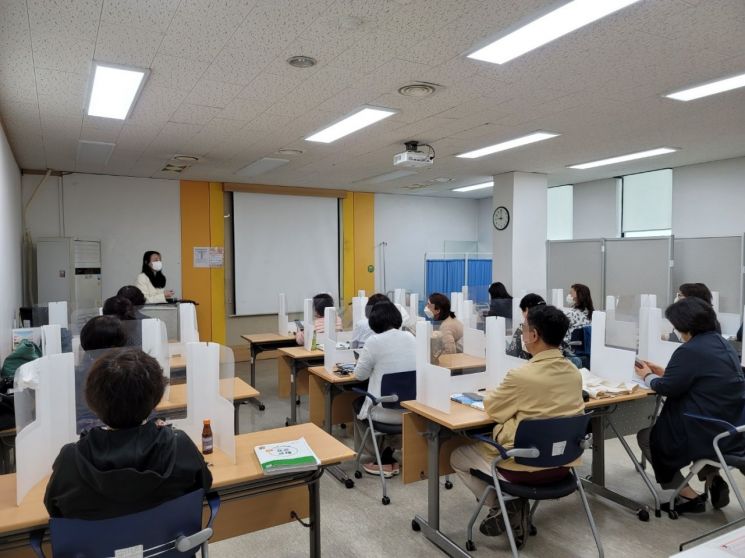
Nowon-gu (Mayor Oh Seung-rok) announced that starting from March, it will operate the 2022 customized education expense support project to help North Korean defectors settle in the region.
As of February 1, 2022, Nowon-gu is home to 1,049 defectors, accounting for 16% of all defectors in Seoul, with 77% of them being young and middle-aged adults who urgently need vocational education and employment support.
Accordingly, the district has been cooperating with the Seoul Northern Hana Center and Nowon Women's Human Resources Development Center since last year to provide vocational training and educational support to help defectors settle stably and build a local social safety net.
This year, reflecting the opinions of defectors, the district newly added a ‘Barista Level 2 Certification Course’ to the existing ‘Caregiver Qualification Course.’ The 12-week course includes theory and practical training, with full support for tuition and exam fees.
Residents who obtain certifications through this project will be continuously connected to employment opportunities through related organizations such as the district’s Job and Economy Division and Employment Support Center.
In the first year of the project last year, 8 out of 10 trainees who participated in the caregiver education successfully obtained certifications, with some working as caregivers.
Additionally, the district will provide education expense support for children of defectors to prevent difficulties caused by learning gaps among preschool and elementary school children. They can choose one subject among Korean, English, or Math and receive one-on-one customized home visits once a week.
Those wishing to receive vocational training and child education expense support can apply through the Seoul Northern Hana Center, and inquiries can be made to the Welfare Policy Division.
Since 2019, Nowon-gu has proactively identified the welfare needs of defectors and conducted annual surveys to monitor difficulties experienced in daily life.
The 2022 survey will proceed in three stages: a full survey of living conditions, home visits and face-to-face counseling, and customized welfare linkage, continuing until March. The district plans to establish more systematic support measures based on the survey results.
Oh Seung-rok, Mayor of Nowon-gu, said, “The role of the local community is crucial for the stable settlement of North Korean defectors. We will identify the practical difficulties they face and actively reflect them in projects to prepare various support measures.”

Gangdong-gu (Mayor Lee Jung-hoon)’s representative festival, the ‘Gangdong Prehistoric Culture Festival,’ won the ‘2022 10th Korea Festival Contents Award’ at the Baekbeom Kim Koo Memorial Hall on the 22nd.
The ‘Korea Festival Contents Award’ is hosted by the Korea Festival Contents Association, organized by the Korea Festival Contents Award Promotion Committee and the Korea Festival Contents Research Institute, and supported by Seoul Metropolitan Government and Korea Tourism Organization.
Established in 2012 to encourage and commend local festivals in Korea that have greatly contributed to regional economic development, tourism industry growth, and national image improvement, the award celebrated its 10th anniversary this year.
The upcoming 27th ‘Gangdong Prehistoric Culture Festival’ to be held in October boasts the historical significance and identity as Seoul’s only Neolithic culture festival, attracting hundreds of thousands of visitors annually as the largest local festival.
Last year, it also won three awards at the Korean competition of the ‘Pinnacle Awards’ hosted by the World Festival Association, solidifying its status as a representative festival of Korea.
Lee Jung-hoon, Mayor of Gangdong-gu, said, “We are honored that the 26th Gangdong Prehistoric Culture Festival held last year was selected for the ‘Korea Festival Contents Award.’ We will continue to prepare rich content and do our best to establish the festival as a representative event where people can enjoy history and culture.”
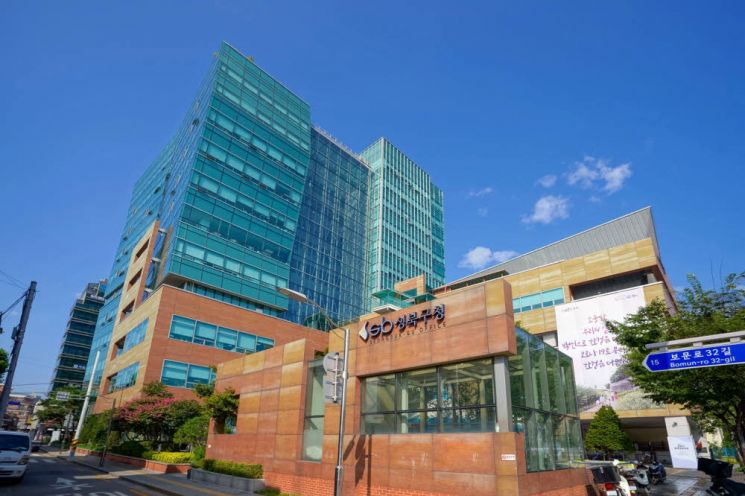
Seongbuk-gu (Mayor Lee Seung-ro) will continue to support the ‘Closure Support Fund for Small Business Owners in Restricted Business Sectors’ (hereafter Closure Support Fund) this year, following last year, for small business owners in sectors restricted or prohibited from operating due to the spread of COVID-19.
The support targets small business owners in Seongbuk-gu who closed their businesses from March 22, 2020, when strengthened social distancing measures were implemented, until the application date, in sectors subject to closure or operation restrictions due to COVID-19. If the business was operated for more than 90 days before closure, 500,000 KRW in cash will be provided to the representative. Even if multiple business locations were closed, up to four locations can apply if eligibility is met. However, businesses that received support last year are excluded from this round.
Online applications start from February 28, and in-person applications at the district office begin on March 14, with the deadline on April 29.
For online applications, applicants must authenticate their mobile phone on the Seongbuk-gu website and attach documents such as a certificate of business closure, small business verification documents, and a copy of the bankbook. For in-person applications, submit the application form, ID, certificate of business closure, small business verification documents, and bankbook copy to the Job and Economy Division on the 8th floor of Seongbuk-gu Office. Proxy applications are allowed with a power of attorney if the applicant cannot visit in person.
Detailed information can be found in the announcement on the Seongbuk-gu website.
Lee Seung-ro, Mayor of Seongbuk-gu, said, “We hope this support will provide some strength and help to small business owners who closed due to prolonged COVID-19-related business difficulties. We will continue to do our best at the district level to support their recovery.”
Gwanak-gu (Mayor Park Jun-hee) is receiving great responses by operating various non-face-to-face home healing programs for people with disabilities during the prolonged COVID-19 pandemic.
The district is running various programs such as Nanta classes, group exercise classes, and horticultural therapy programs online to relieve stress caused by strengthened social distancing and disabilities and to invigorate life.
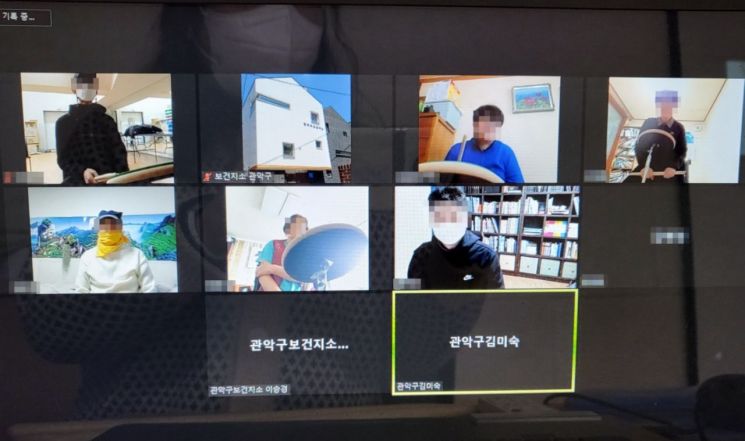
First, the ‘Home Nanta Class’ distributes practice drum pads to homes in advance and is conducted online via ZOOM every Tuesday and Thursday at 10 a.m. for one hour. It plays a significant role in improving exercise ability and relieving stress for people with disabilities who suffer from depression and need appropriate physical activity.
Currently, various performances are posted on social media, and offline performances will be held by related organizations once social distancing measures are eased.
The district reported that it held a total of 101 online Nanta classes last year with 970 participants, receiving enthusiastic responses from students who eagerly awaited practice days.
To address reduced physical activity among people with disabilities staying at home longer due to COVID-19, the district also conducts a ‘Non-face-to-face Group Exercise Class’ once a week in cooperation with the Seoul Disabled Sports Association.
If preparation for non-face-to-face classes is difficult or posture assistance is needed, physical or occupational therapists visit directly to provide guidance and posture correction, maximizing the effect of group exercise. Last year, 41 classes were held with 280 participants.
A non-face-to-face horticultural therapy program will also be operated. To support people with disabilities and their families who have been staying home longer due to COVID-19, horticultural kits are distributed the day before the class, which is held online once a month.
Participants experience the strong vitality of nature by smelling plants and soil and touching them with their hands, watching their own creations grow, helping to relax body and mind that had been contracted due to stress.
The non-face-to-face programs operate year-round, and the district plans to expand these home healing programs in preparation for the post-COVID-19 era.
Residents wishing to apply can contact the Rehabilitation Treatment Room at the Gwanak-gu Health Center.
A district official said, “Amid the prolonged COVID-19 pandemic, many residents are physically and mentally exhausted. We hope these various non-face-to-face programs provide some comfort and solace. We will continue to do our best to provide various programs for residents’ health and safety while thoroughly preventing COVID-19.”
© The Asia Business Daily(www.asiae.co.kr). All rights reserved.
![A Woman Who Jumps Holding a Stolen Dior Bag... The Mind-Shaking, Bizarre Con of a "Human Knockoff" [Slate]](https://cwcontent.asiae.co.kr/asiaresize/183/2026021902243444107_1771435474.jpg)


















