6th Youth Policy Coordination Committee on the 14th, Establishment of 2022 Youth Policy Implementation Plan
54,000 Youth Rental Housing Units to be Supplied This Year... Priority for Housing-Vulnerable Youth in 'Jiokgo'
Introduction of Public Sale Housing (Public Owner-Occupied Housing with Equity Accumulation) to Ease Housing Costs Over 20-30 Years
Expansion of Cash Installment and Card Payment for Dormitory Fees at University Dormitories for 6,000 Students
Introduction of 'Youth Temporary Special Monthly Rent Support' Providing Up to 200,000 KRW per Month for 12 Months
Low-Interest Loans at Minimum 1.2% for Jeonse and Monthly Rent Provided to Over 80,000 Youth Households
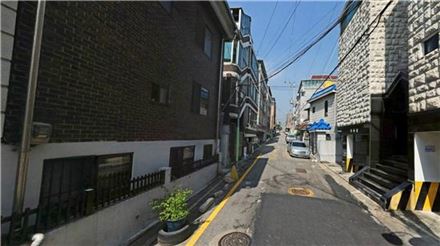 A view of a densely populated multi-family housing area in Seoul
This year, 54,000 public rental housing units will be prioritized for young people vulnerable to housing, living in so-called ‘Jiokgo’ conditions such as semi-basements, rooftop rooms, and goshiwon. The ‘Youth Temporary Monthly Rent Special Support Project’ will be promoted, providing up to 200,000 KRW per month in rent support for low-income youth for one year, and low-interest rental deposit and monthly rent loans will be offered to more than 80,000 young households.
On the 14th, the government announced that it held the 6th Youth Policy Coordination Committee chaired by Prime Minister Kim Boo-kyum at the Government Seoul Office and established the ‘2022 Youth Policy Implementation Plan’ in the housing sector with these details.
According to the plan, 54,000 youth rental housing units, including Happy Housing, will be supplied this year, the same scale as last year. Rental housing will introduce medium-sized units alongside existing small units, and the quality of major finishing materials will be improved to the level of sale housing. To assist youth lacking lump-sum funds, a public sale housing model (public owner-occupied housing with equity accumulation) allowing payment of house prices over 20 to 30 years will also be introduced. University dormitories will be expanded by 6,000 beds, and the rates of cash installment and card payments for dormitory fees will increase from 23.8% and 16.6% last year to 30.5% and 22.5% this year, respectively.
To reduce rental costs, the ‘Youth Temporary Monthly Rent Support’ project will be introduced, providing up to 200,000 KRW per month for 12 months to low-income and homeless youth. Additionally, the eligibility criteria for youth housing benefits, which are paid separately to unmarried youth in their 20s living apart from their parents among housing benefit recipients, will be expanded from 45% to 46% of median income (31,000 people in 2021 → 33,000 people in 2022), and the standard rent realization rate will be raised from 95% to 100%.
Low-interest rental deposit and monthly rent loans will be provided to more than 80,000 young households. Interest rates for youth-exclusive loan products are about 1.2?2.1% for jeonse (key money deposit) loans and 1.3% for deposit and 1% for monthly rent loans. The subscription period for the youth preferential subscription savings account will be extended until next year to achieve a cumulative subscriber count of 598,000.
Public rental housing will be prioritized for young people vulnerable to housing living in so-called ‘Jiokgo’ (semi-basements, rooftop rooms, goshiwon, etc.). To assist relocation to public rental housing, the number of leading local governments supporting housing upgrades by providing deposits and moving expenses will be expanded from 12 to more than 15. To crack down on illegal buildings such as ‘room splitting,’ illegal building inspectors will be added to regional building safety centers, and online false real estate listings will be intensively investigated, focusing on university areas and one-room districts at the start of the semester. A Jeonse fraud prevention center will be established to provide information and support policies for youth vulnerable to rental scams.
The ‘Good Youth Housing Creation Special Meeting’ aimed at spreading youth-friendly housing models will be held four times a year, up from twice.
To revitalize the public and private shared housing market in response to the increase in single-person households, a ‘Shared Housing Mother Fund (25.1 billion KRW)’ will be operated as seed money to support shared housing startups and social economy entities. Additionally, to promote shared housing, a communal dormitory type will be newly established in March under building use categories, and institutional support such as establishing ‘Dormitory Building Standards’ for comfortable and safe dormitory environments will be implemented.
To create conditions for youth to settle in regions, support will be provided for the establishment of basic and implementation plans in four urban convergence special zones designated in Daegu, Gwangju, Daejeon, and Busan, and a special law will be promoted to support commercialization. To attract population to local areas and promote regional balanced development, a housing platform project combining housing, jobs, and living SOC will also be carried out.
© The Asia Business Daily(www.asiae.co.kr). All rights reserved.