KDCA Announces Detailed Plan Today... Priority for 'Immunocompromised and Nursing Facilities'
Experts: "Frequent Vaccinations Are Excessive... Caution Needed for Expansion to General Public"
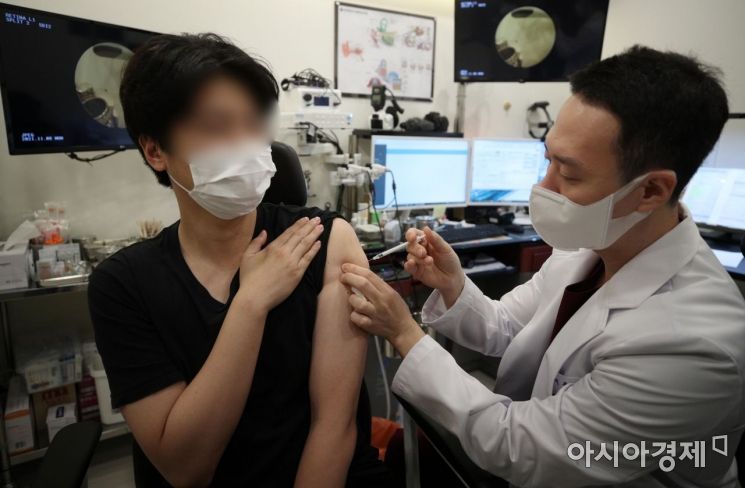
As the number of new COVID-19 cases has exceeded 50,000 for five consecutive days, the fourth vaccine dose will begin at the end of this month, focusing on high-risk groups.
According to the Central Disease Control Headquarters on the 14th, as of midnight, the number of new COVID-19 cases increased by 54,619 from the previous day, bringing the total to 1,405,246. Although the increase in new cases was about 1,800 fewer than the day before, the number of new cases remained above 50,000 for the fifth consecutive day. The number of patients receiving home treatment also rose, totaling 232,086.
The health authorities have decided to proceed with the fourth COVID-19 vaccination primarily for high-risk groups to reduce the risk of infection and lower the severity rate in case of infection. Kwon Deok-cheol, the first deputy head of the Central Disaster and Safety Countermeasures Headquarters (Minister of Health and Welfare), stated at the Central Disaster and Safety Countermeasures Headquarters meeting that "As infections among the elderly aged 60 and over are increasing again, we plan to start the fourth dose for immunocompromised individuals and residents of nursing hospitals and facilities from the end of February."
The fourth dose will also prioritize immunocompromised individuals and residents of nursing facilities. Previously, high-risk groups such as those aged 75 and older, residents of elderly and nursing facilities, and immunocompromised patients (patients with acute leukemia, lymphoma, multiple myeloma) began their third dose vaccinations between late October and November last year. Health authorities and infectious disease experts expect the vaccine's effectiveness to decline three months after vaccination, so they anticipate a decrease in vaccine effectiveness starting next month among these high-risk groups who received their third dose last year. Recent outbreaks and cluster infections in nursing hospitals and other medical institutions have also led to analyses suggesting that neutralizing antibodies generated by the third dose are decreasing.
However, there is skepticism about including the general public, who are not in high-risk groups, in the fourth dose vaccination sequentially as was done for the first to third doses. Considering foreign cases, the fourth dose's preventive effect against the Omicron variant?which has higher transmissibility but lower severity compared to previous COVID-19 and variants?is unclear, so caution is advised regarding expanding the target population.
Professor Jung Jae-hoon of Gachon University College of Medicine's Department of Preventive Medicine said, "I think the fourth dose may provide some benefit to ultra-high-risk groups such as residents of nursing hospitals and nursing homes," but added, "There is not much evidence to recommend it for the general population."
Professor Chun Eun-mi of the Respiratory Medicine Department at Ewha Mokdong Hospital advised, "Since the vaccine's effectiveness lasts only about three months, frequent vaccinations may strain the immune system, so vaccinations should be limited to high-risk groups deemed necessary by doctors." She also recommended, "Since vaccines cannot be the sole solution, expanding the administration and distribution of long-acting antibody treatments like 'Evusheld' would be more effective."
Meanwhile, Novavax vaccine administration will also begin today. Health authorities will vaccinate high-risk groups such as inpatients at nursing hospitals through medical institutions' own vaccination programs and medical staff visits. Unvaccinated individuals aged 18 and over can receive the Novavax vaccine at public health centers and designated entrusted medical institutions through same-day vaccination services on Kakao and Naver or via medical institutions' standby lists. Pre-scheduled Novavax vaccinations will start on the 7th of next month.
Deputy Head Kwon urged, "Since the Novavax vaccine uses a synthetic antigen method similar to hepatitis B and flu vaccines, which our people are familiar with, I hope this will encourage more unvaccinated individuals to actively participate in vaccination."
© The Asia Business Daily(www.asiae.co.kr). All rights reserved.

















