[Asia Economy Reporters Inho Yoo and Jieun Lee] The 6th session of the 14th Supreme People's Assembly was held on June 6-7 at the Mansudae Assembly Hall in Pyongyang, without the attendance of Kim Jong-un, General Secretary of the Workers' Party of Korea.
With General Secretary Kim, who was expected to deliver an external message at this session, absent, attention is focused on what changes might occur in North Korea's future external strategy.
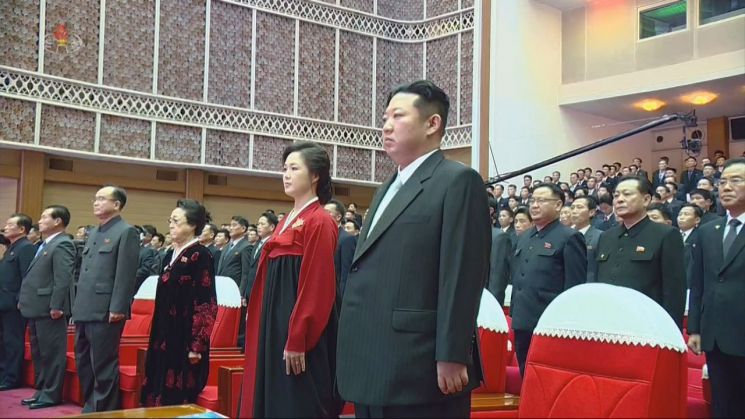
On the 8th, the Korean Central News Agency (KCNA) reported that North Korea held the 6th session of the 14th Supreme People's Assembly on June 6-7 at the Mansudae Assembly Hall in Pyongyang.
General Secretary Kim did not attend the meeting, and Choe Ryong-hae, Chairman of the Standing Committee of the Supreme People's Assembly, delivered the opening and closing remarks.
While General Secretary Kim had previously attended sessions and delivered external messages in the form of policy speeches, this time he was absent, and no message was issued.
In particular, since General Secretary Kim recently hinted at resuming nuclear tests and withdrawing the moratorium on intercontinental ballistic missiles (ICBM), raising the level of external policy, there was keen interest in what message he would deliver at this Supreme People's Assembly session.
In response, diplomatic circles believe that General Secretary Kim will review the results of the upcoming trilateral foreign ministers' meeting of South Korea, the United States, and Japan scheduled for June 12 in Hawaii, as well as the trilateral meeting of North Korea nuclear chief negotiators on June 10, and then decide on the external strategic direction, including confirming the withdrawal of the ICBM moratorium.
U.S. Secretary of State Antony Blinken will hold a trilateral meeting with South Korean Foreign Minister Chung Eui-yong and Japanese Foreign Minister Hayashi Yoshimasa on June 12 in Hawaii. Prior to that, the three countries' chief negotiators on North Korea's nuclear issue will meet directly in Hawaii on June 10 to discuss responses to North Korea and then attend the foreign ministers' meeting on June 12.
In this context, there is speculation that General Secretary Kim may deliver a message at a military parade likely to be held around June 16, the 80th birthday of Kim Jong-il, or April 15, the 110th birthday of Kim Il-sung.
An expert in diplomatic circles said, "The possibility of a message from General Secretary Kim during this Gwangmyeongjeol (Day of Brightness) is low, but it is true that the time is approaching for him to make a decision on lifting or postponing the moratorium," adding, "It depends on what stance the United States takes."
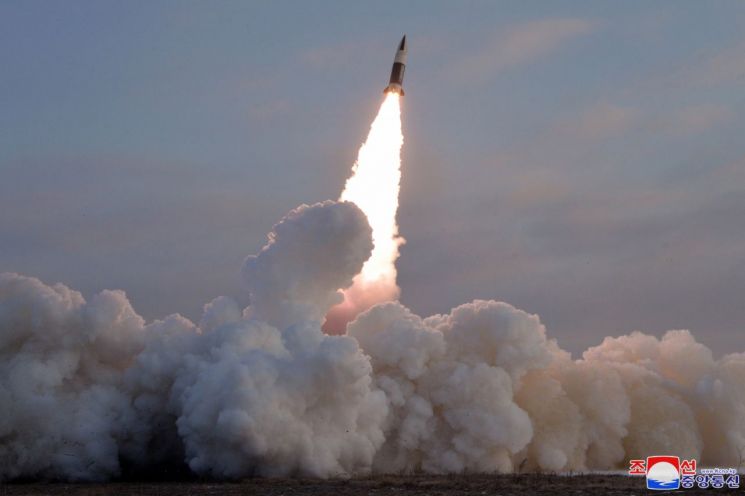
However, some believe that since North Korea has already launched a series of missiles this year as a de facto external message, there may be no external message from General Secretary Kim. They express skepticism about expectations for the trilateral North Korea nuclear discussions among South Korea, the United States, and Japan.
Professor Yang Moo-jin of the University of North Korean Studies said, "The answer is obvious when South Korea, the U.S., and Japan meet to talk," and added, "They will likely showcase strategic weapons during Gwangmyeongseongjeol, but it seems unlikely that there will be an external message then."
He further added, "For the time being, considering China's position during the Olympics, I think North Korea will refrain from actual actions such as missile launches."
Meanwhile, the U.S. State Department stated on June 7, ahead of the trilateral foreign ministers' meeting of South Korea, the U.S., and Japan scheduled for June 12 in Hawaii, that trilateral cooperation is essential for denuclearization of the Korean Peninsula.
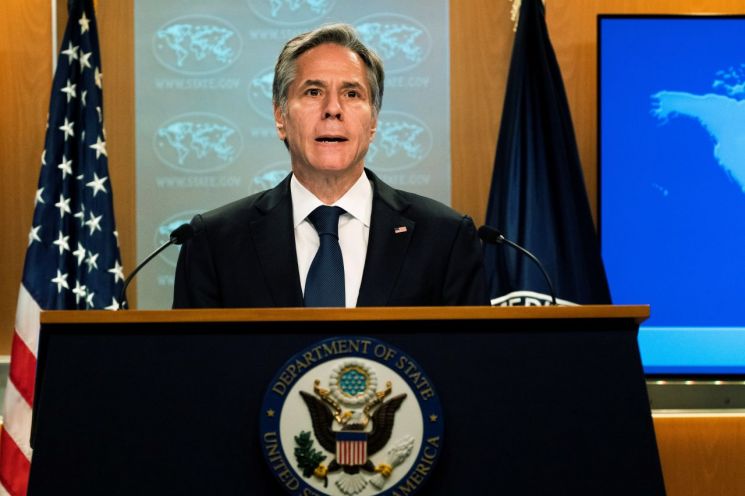
Ned Price, spokesperson for the U.S. State Department, said at a press briefing that one of the essential elements for progress toward the goal of denuclearizing the Korean Peninsula is close coordination with South Korea and Japan.
Spokesperson Price emphasized that at the trilateral foreign ministers' meeting, "North Korea's recent missile provocations will be one of the top issues," and added, "While bilateral coordination is important, we know that trilateral coordination is truly important and essential."
© The Asia Business Daily(www.asiae.co.kr). All rights reserved.



















