Professor Oh Byung-ha's Research Team at KAIST
[Asia Economy Reporter Kim Bong-su] A Korean research team has developed a therapeutic antibody effective against all COVID-19 variant viruses, including Omicron.
The Korea Advanced Institute of Science and Technology (KAIST) announced on the 4th that Professor Oh Byung-ha's research team in the Department of Life Sciences developed a computational antibody design and applied it to create a neutralizing antibody that shows excellent efficacy against all currently circulating COVID-19 variant viruses, including Omicron.
A neutralizing antibody is a therapeutic antibody that biochemically neutralizes the effects of a pathogen invading the body to protect cells. The SARS-CoV-2 virus, known to cause COVID-19 infection, invades cells by binding the receptor-binding domain (antigen) on the spike glycoprotein to the hACE2 (human Angiotensin Converting Enzyme 2) receptor attached to the human cell membrane.
Inspired by this mechanism, research teams from leading global pharmaceutical companies developed neutralizing antibodies such as Etesevimab and Bamlanivimab that bind to the receptor-binding domain. The problem is that these antibodies, effective against the initially prevalent coronavirus, have little or reduced neutralizing ability against variants like Alpha, Beta, and Delta. The reason for the reduced neutralizing ability of existing antibodies against variant viruses is that mutations occur in the antibody recognition sites of the virus, preventing the antibodies from binding properly.
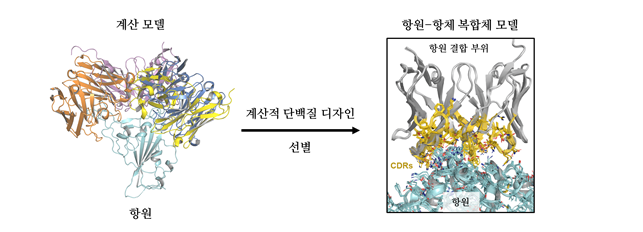
The research team developed antibodies that strongly bind to parts of the viral antigen that do not mutate using computational protein design methods. The antibodies developed this time showed strong binding affinity and excellent neutralizing ability not only against all known SARS-CoV-2 variant viruses, including Omicron, but also against SARS-CoV-1 and pangolin coronaviruses.
The antibodies developed by the research team are expected to be universal COVID therapeutic antibody candidates capable of responding to new severe respiratory syndrome-causing coronaviruses that may emerge in the future. Additionally, the computational antibody design technology developed this time is a new method for discovering antibodies that bind to specific parts of antigens, with broad applicability and high technical value.
Professor Oh Byung-ha said, "The antibodies developed this time bind to surfaces where the amino acid sequence hardly changes, so they have great significance as therapeutic agents that can immediately respond to new and variant coronaviruses that may emerge in the future," and added, "The computational antibody design method developed through this research is expected to be widely used to develop antibodies that are difficult to obtain experimentally."
The research results were published in the antibody-specialized academic journal ‘mAbs’.
© The Asia Business Daily(www.asiae.co.kr). All rights reserved.

















