391 Respiratory Clinics + 343 Hospitals and Clinics Start... Expected to Expand to Over 1,000 Locations
Home Treatment Patients Expected to Surge to 110,000 Next Week
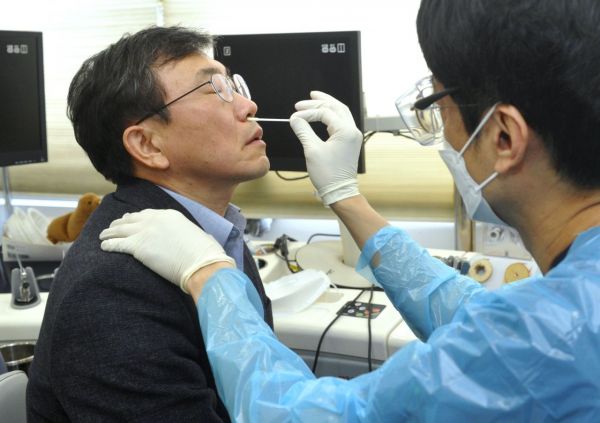 Health and Welfare Minister Kwon Deok-cheol (left) visited Banpo Kids Pediatrics Clinic, a designated respiratory treatment medical institution located in Seocho-gu, Seoul, on the afternoon of the 2nd, and underwent a professional rapid antigen test.
[Asia Economy Reporter Jo In-kyung] Starting from the 3rd, COVID-19 patient diagnostic testing and treatment will be conducted at about 700 locations nationwide, including respiratory-specialized clinics and local hospitals and clinics.
According to the Central Disaster and Safety Countermeasures Headquarters, from this day forward, the nationwide testing and treatment system will shift to focus on high-risk groups. Among the 428 respiratory-specialized clinics equipped with negative pressure facilities, 391 will begin diagnosis and treatment of COVID-19 patients. Among the 1,004 local hospitals and clinics (designated respiratory treatment medical institutions) that have expressed willingness to participate in COVID-19 treatment, 343 will also join the new treatment system starting today.
The remaining respiratory-specialized clinics and hospitals/clinics will sequentially transition to the new treatment system by the third week of February as they complete preparations.
The government plans to announce the list of respiratory treatment designated medical institutions capable of providing COVID-19 treatment and their operation schedules on the Health Insurance Review & Assessment Service website on the morning of the 3rd, and from the 4th onward via the COVID-19 website and various portal sites.
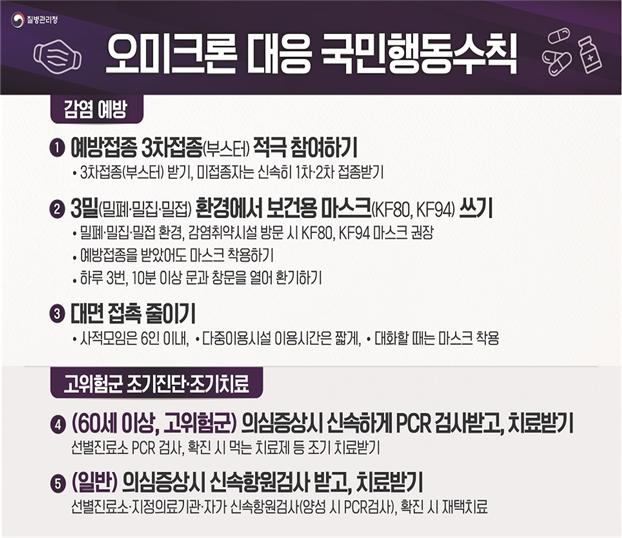
With the transition of the treatment system, general individuals who are not subject to priority PCR (polymerase chain reaction) testing can receive rapid antigen tests at respiratory-specialized clinics or designated local hospitals and clinics.
Those who have epidemiological links to confirmed cases or have a doctor's opinion, those aged 60 or older, or those who tested positive on self-test kits or professional rapid antigen tests, as well as workers in vulnerable facilities such as nursing hospitals, are considered priority testing subjects and can continue to receive PCR tests directly at screening clinics as before.
Son Young-rae, head of the Social Strategy Division at the Central Accident Response Headquarters, said, "The transition in testing and treatment systems may cause some inconvenience to the general public who are not in high-risk groups. We ask for your understanding that this unavoidable transition aims to quickly diagnose and treat high-risk groups through selective and focused use of limited resources to reduce severe cases and deaths."
Already 90,000 Under Home Treatment... Patient Management at Saturation
With the implementation of the new testing and treatment system, general individuals diagnosed positive at hospitals and clinics from this day will be assigned to hospital/clinic-level care and receive home treatment. However, concerns have been raised about whether the number of hospitals and clinics participating in COVID-19 treatment can adequately handle the rapidly increasing daily confirmed cases due to the swift spread of Omicron.
Due to the recent surge in confirmed cases, the number of home treatment patients reached 89,420 as of midnight on the 2nd, an increase of 52,349 from 37,071 on the 26th of last month, one week earlier. Compared to two weeks ago on the 19th of last month (17,283), it has increased more than fivefold.
As a result, the capacity of medical institutions responsible for home treatment patient management is nearing saturation. Currently, there are 439 medical institutions managing home treatment, capable of overseeing a total of 106,000 patients. Approximately 84% of the maximum management capacity is already occupied.
In particular, with predictions that daily confirmed cases could reach 100,000 as early as this month or at the latest next month, the government is securing additional management medical institutions such as hospitals and clinics to respond to the surge in confirmed cases. The plan is to be able to manage up to 110,000 home treatment patients by the end of this month.
Son explained, "We expect the number of home treatment patients to reach about 110,000 by around next week. Efforts are underway to increase the number of confirmed cases that can be managed by expanding management medical institutions and adjusting monitoring frequency and other factors."
© The Asia Business Daily(www.asiae.co.kr). All rights reserved.


















