Easing of Restrictions Worldwide Amid COVID-19 Spread
South Korea Takes New Steps in Early Stage
Medical Community Opposes... Social Consensus Needed
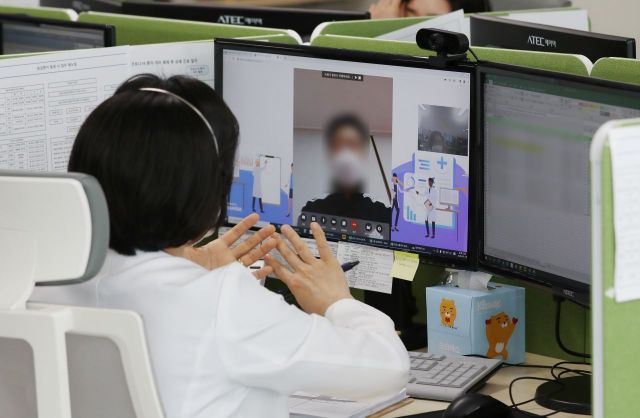 On the 19th, an official at the Home Treatment Situation Room of Seongnam City Medical Center in Gyeonggi Province is checking the symptoms of a patient undergoing home treatment while taking Paxlovid via a video call.
[Asia Economy Reporter Lee Gwan-ju] The advancement of Fourth Industrial Revolution technologies such as the metaverse and blockchain is gradually changing the paradigm of healthcare. Attempts at new forms of medical services mediated through online platforms are steadily increasing, moving away from traditional in-person consultations. In particular, the non-face-to-face era brought about by COVID-19 is expected to accelerate this medical revolution.
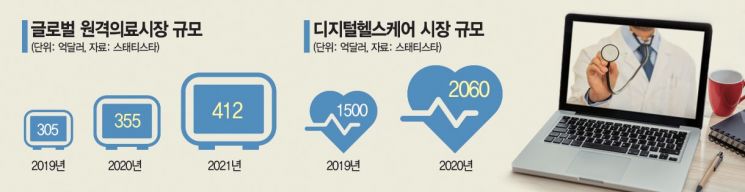
According to the industry on the 1st, the telemedicine market is rapidly growing every year. According to market research firm Fortune Business Insights, the global telemedicine market size is projected to grow from $61.2 billion in 2019 at an average annual growth rate of 25.2%, reaching $559.5 billion by 2027. The spread of COVID-19 has notably increased consumer demand for online consultations and remote consultation and monitoring services, as people seek safer medical care. According to the Korea International Trade Association’s overseas market trend analysis report, since 2020, major countries such as the UK, the US, Germany, and Japan have relaxed regulations on video consultations and revised personal information regulations to lower barriers to telemedicine and support its activation.
Telemedicine in South Korea is still in its infancy. First, telemedicine is generally illegal under the Medical Service Act. After the spread of COVID-19, non-face-to-face consultations such as phone consultations and prescriptions were temporarily allowed as part of infectious disease response measures. Given the relatively high level of medical accessibility, the utility of telemedicine is considered low, and there are concerns about the accuracy of remote diagnoses. The medical community currently voices more opposition, citing various reasons such as concentration of patients in specific hospitals, rising medical costs, and liability issues in case of misdiagnosis.
Despite this, attempts to create new medical environments continue domestically. Blockchain-based medical platform MISBLOC announced plans for a non-face-to-face medical consultation project using the metaverse in the third to fourth quarter of this year. The plan is to open a virtual clinic in the metaverse and provide remote medical consultation experiences to patients. MISBLOC is a startup launched with the aim of enabling individuals to manage and utilize medical information and medical records scattered across large hospitals using blockchain technology, thereby allowing all stakeholders in the medical ecosystem to enjoy various benefits. Kim Do-hee, CEO of MISBLOC, said, "Our lives are moving in a direction where we cannot separate ourselves from the metaverse," adding, "We plan to implement medical services in the metaverse in line with technological advancements and the flow of the times."
There is already a telemedicine platform with nearly 1 million cumulative users. DoctorNow operates non-face-to-face consultations and prescription drug delivery services normally even during the Lunar New Year holiday period, while also providing a hospital and pharmacy search service for facilities operating during the holiday. This enhances convenience for patients who find it difficult to visit medical institutions during the holiday and strengthens access to medical services. Jang Ji-ho, CEO of DoctorNow, said, "DoctorNow will provide the benefits of non-face-to-face consultations as much as possible even during holiday periods when medical gaps are expected and help with COVID-19 self-treatment," adding, "We will also add services to quickly search for accessible medical institutions to help citizens have a healthier and safer holiday by strengthening medical infrastructure."
A revised bill allowing some telemedicine has been submitted to the National Assembly. However, there are still many social considerations regarding full implementation. The Korean Medical Association issued a statement on telemedicine in December last year, stating, "It is obvious that if the 'patient face-to-face principle,' which is essential to the nature of medical care, is violated, it will cause great harm to public health," and pointed out, "Telemedicine is premature in the absence of sufficient legal, institutional, and technical infrastructure."
However, there is no disagreement that the telemedicine market will continue to grow steadily. Accordingly, there is a clear need for society to discuss how to view telemedicine. The Korea Academy of Science and Technology, a statutory organization, presented consensus measures necessary for telemedicine in its report published last year titled 'Current Status and Challenges of Domestic Science and Technology for Realizing Telemedicine,' including ▲development and application of patient examination devices and testing technologies ▲remote monitoring cooperation ▲development and standardization of medical record systems suitable for telemedicine ▲social consensus on technology application ▲and legal and institutional improvements.
© The Asia Business Daily(www.asiae.co.kr). All rights reserved.


















