[Asia Economy Reporter Song Seung-seop] Retirement pension products from savings banks are gaining attention among young workers starting their careers. This is because they offer the highest interest rates among principal-guaranteed products. Since they provide relatively high fixed interest rates, experts advise that these products are advantageous for the 2030 generation who have not yet accumulated a large sum of money.
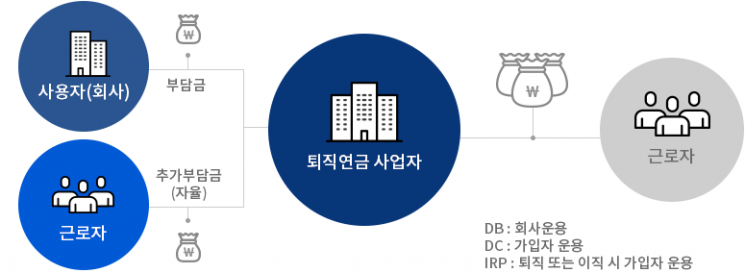
According to the Financial Supervisory Service's Integrated Pension Portal on the 1st, as of the end of last month, there were a total of 295 retirement pension products sold by savings banks. The fixed deposit interest rates for savings bank retirement pensions were averaged between 2.18% and 2.37%, depending on the subscription type. The Defined Contribution (DC) plan, where the retirement benefit is predetermined, had an interest rate of 2.20%, while the Defined Benefit (DB) plan, where the employer's contribution is predetermined, was 2.37%. The Individual Retirement Pension (IRP), which employees voluntarily subscribe to, was 2.18%.
Institutions selling principal-guaranteed retirement pensions include commercial banks, savings banks, and insurance companies. Insurance companies offer products divided into interest rate-linked and guaranteed interest types. Savings banks cannot directly sell retirement pensions, but consumers can subscribe to savings bank-specific retirement pension fixed deposits through retirement pension management service providers. Principal protection is only available for DC and IRP accounts under the Depositor Protection Act.
The fixed deposit interest rates for savings bank retirement pensions are higher than those of other sectors. Commercial banks offered only 1.61% for DC plans. For other subscription types, DB was 1.61% and IRP was 1.70%. Insurance companies' interest rate-linked products were 1.73% for DC, 1.77% for DB, and 1.75% for IRP. Guaranteed interest products were also lower than savings banks at 2.15%, 2.16%, and 2.07%, respectively.
The savings bank offering the highest interest rate was Accuon Savings Bank. Accuon's DC-type retirement pension fixed deposit product had an annual interest rate of 2.7% (36-month maturity). Welcome Savings Bank recorded 2.45% (12 months), and OK Savings Bank recorded 2.2% (12 months).
How to Switch to 'Performance-Based Products' After Accumulating a Lump Sum
Representatives from savings banks say that since DC-type interest rates are high, they are advantageous for early retirement pension accumulation. A savings bank official explained, “Right now, the accumulated retirement pension amounts between colleagues sitting next to each other may not differ much, but in a few years, the results will vary greatly depending on how the funds were managed. For beginners just starting their retirement pensions, we recommend accumulating a lump sum first with savings bank retirement pension fixed deposit products that allow steady savings for the time being.”
For IRP accounts, if a lump sum has been accumulated, switching to performance-based products is also an option. Actively managing funds over a long period can result in higher retirement benefits after several years. According to the '2020 Pension Savings Status Analysis' published by the Financial Supervisory Service last year, the fund yield for pension savings was 17.25% annually, about six times higher than the fixed interest rate of savings bank retirement pension fixed deposits.
Another advantage is the tax credit of up to 7 million KRW per year. The IRP deduction rate ranges from 13.2% to 16.55% depending on annual salary. However, if the pension savings are withdrawn early before the maturity period or not received in pension form, other income tax (16.5% separate taxation) may be imposed.
If you want to change your retirement pension product, you must do so through the management service provider designated by your company. You can also check and change it via smartphone financial applications (apps).
© The Asia Business Daily(www.asiae.co.kr). All rights reserved.

















