[Asia Economy Reporter Donghyun Choi] The Japanese government decided on the 28th to recommend Sado Mine in Niigata Prefecture, a site of forced labor of Koreans during the Japanese colonial period, as a UNESCO World Cultural Heritage site.
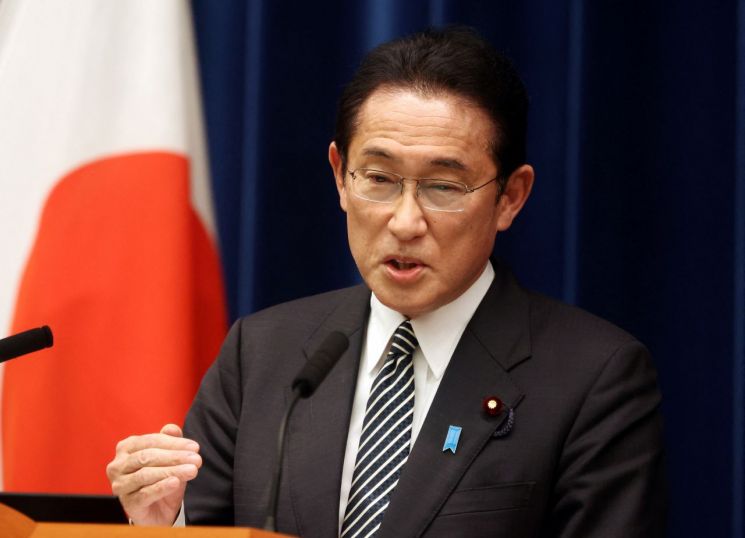
Japanese Prime Minister Fumio Kishida stated in the afternoon, "We have decided to recommend Sado Mine as a UNESCO cultural heritage candidate," adding, "We concluded that applying this year and starting discussions early is the shortcut to achieving registration." After consultations with the Foreign Minister and the Minister of Education, Culture, Sports, Science and Technology, Prime Minister Kishida made the final decision on the recommendation.
The Japanese government plans to hold a Cabinet meeting on the deadline of next month 1st, go through the approval process, and submit the recommendation letter for Sado Mine's World Heritage registration to UNESCO.
The International Council on Monuments and Sites (ICOMOS), UNESCO's advisory body, will conduct about a year and a half of review including on-site investigations and decide on the registration of Sado Mine in June to July 2023.
The South Korean government strongly opposes the registration of Sado Mine as a World Heritage site, as it is a site of forced labor of Koreans, raising the possibility of diplomatic conflicts between the two countries in the future.
Sado Mine was famous as a gold mine during the Edo period (1603?1867). During the Pacific War (1941?1945), it was used as a mine to secure war materials such as iron, zinc, and copper.
The forced labor of Koreans took place during the Pacific War. According to data disclosed last year by Professor Teizo Hirose, an emeritus professor at Fukuoka University in Japan who researched Koreans mobilized to Sado Mine, it is estimated that about 2,000 Koreans were forced to work there. The Japanese government, fearing that the issue of forced labor of Koreans would become problematic, limited the target period in the Sado Mine World Heritage recommendation to the Edo period.
© The Asia Business Daily(www.asiae.co.kr). All rights reserved.
![User Who Sold Erroneously Deposited Bitcoins to Repay Debt and Fund Entertainment... What Did the Supreme Court Decide in 2021? [Legal Issue Check]](https://cwcontent.asiae.co.kr/asiaresize/183/2026020910431234020_1770601391.png)















