PCR Tests Focused on High-Risk Groups
From the 3rd, Local Clinics Nationwide Join COVID-19 Diagnosis and Testing
Health Authorities Aim for 1,000 Participants
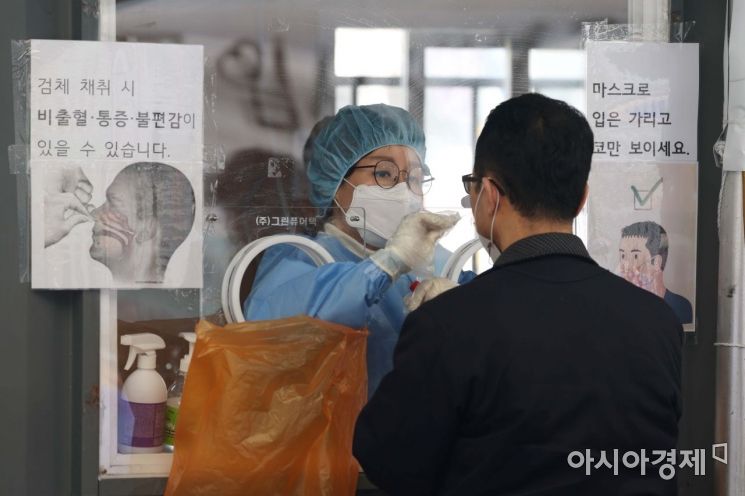
[Asia Economy Reporter Ki Ha-young] After the Lunar New Year holiday, a testing and treatment system involving local clinics and hospitals will be fully implemented nationwide. This is a shift in the quarantine system in preparation for the rapid increase in confirmed cases due to the highly transmissible Omicron variant.
The Central Disaster and Safety Countermeasures Headquarters announced on the 28th that it held a video conference at the Government Seoul Office to discuss ▲ the implementation plan for transitioning to a testing and treatment system involving local clinics and hospitals ▲ the current status and measures related to COVID-19 in major local governments.
The biggest change is the transition to a testing and treatment system involving local clinics and hospitals. Starting February 3, testing will be prioritized for high-risk groups, and local clinics and hospitals will participate in COVID-19 diagnosis and treatment, beginning with respiratory clinics nationwide.
From the 3rd, about 1,000 local clinics and hospitals aim to participate in COVID-19 treatment
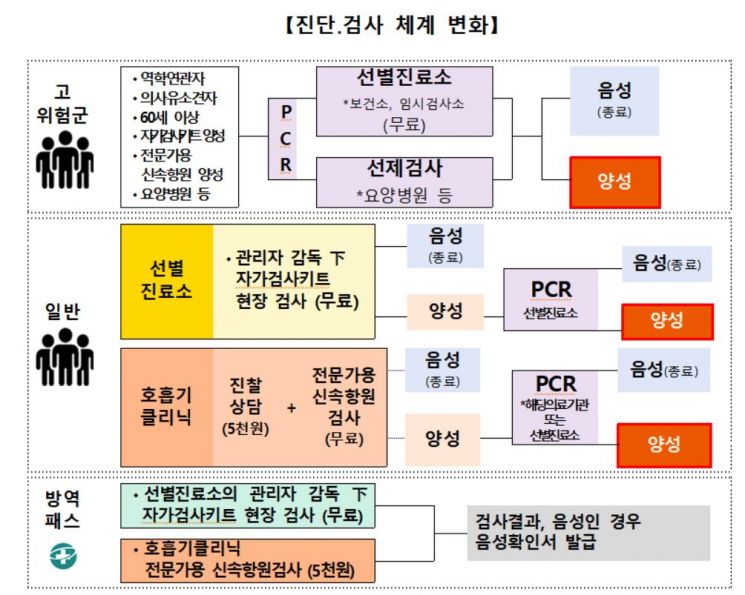
Going forward, PCR tests at public health center screening clinics and temporary screening clinics will be conducted if ▲ there is an epidemiological link, ▲ a doctor's opinion is present, ▲ the individual is aged 60 or older, ▲ the self-test kit or professional rapid antigen test result is positive, or ▲ the person works at vulnerable facilities such as nursing hospitals.
If the general public visits a screening clinic, under the supervision of the clinic manager, a rapid antigen test using a self-test kit will be conducted free of charge, and if positive, a PCR test will be performed. From the 29th, self-test kit testing will be available at 256 public health center screening clinics, and from the 29th to February 2, the current testing system will operate concurrently.
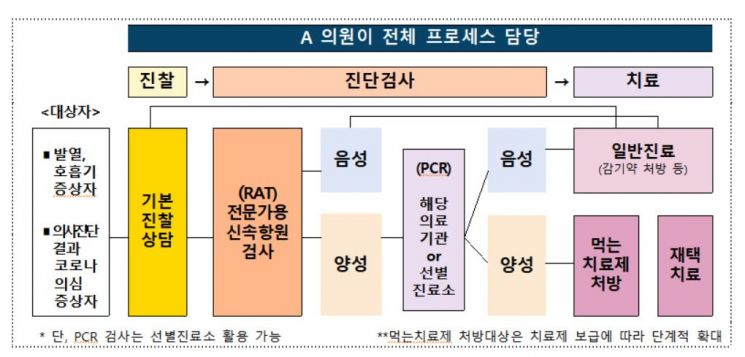
From February 3, if respiratory symptoms such as fever or cough are present, COVID-19 diagnosis and testing can be done at designated local clinics and hospitals such as respiratory clinics. There are 431 respiratory clinics nationwide (115 clinics, 150 hospitals, 166 general hospitals). These clinics conduct basic examinations including respiratory symptoms and underlying conditions, perform professional rapid antigen tests first, and if positive, proceed to PCR testing.
When using designated clinics and hospitals, a consultation fee of 5,000 KRW (based on clinics) is charged, but testing is free. If confirmed positive at a designated clinic or hospital, COVID-19 home treatment can be provided seamlessly at the same facility. Lists of available clinics and hospitals can be checked on the Health Insurance Review and Assessment Service, COVID-19, and public health center websites, as well as various portal sites.
The quarantine authorities have been accepting applications from local clinics and hospitals wishing to participate since the 27th and plan to prepare for implementation after the Lunar New Year holiday. To this end, the government plans to encourage early participation of 1,000 local clinics and hospitals through consultations with medical associations and the healthcare sector.
Initially, the system will be fully applied to respiratory clinics and then gradually expanded to local clinics and hospitals such as otolaryngology clinics that mainly treat respiratory patients and wish to participate.
Capacity to respond to 30,000?50,000 confirmed cases secured in February
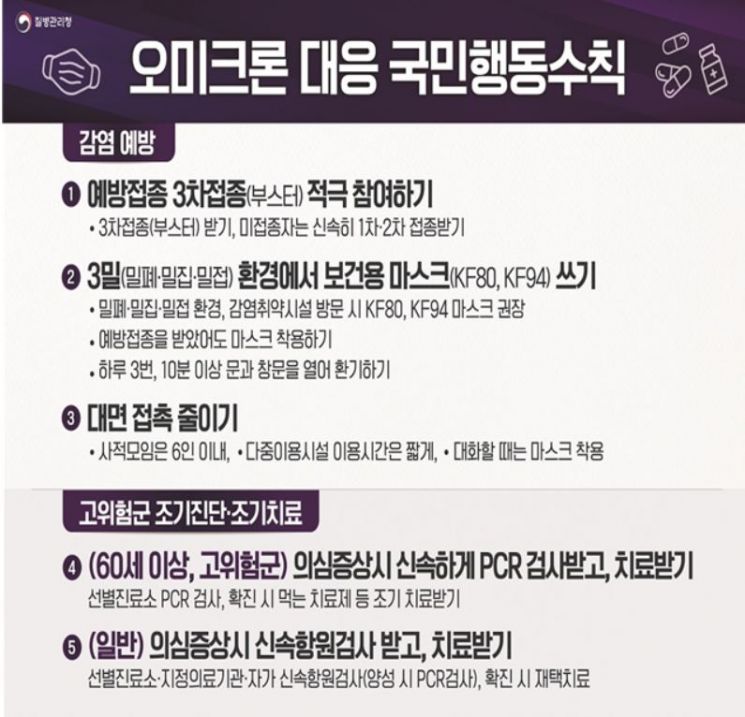
To prepare for the surge in home treatment patients due to the spread of Omicron, participation at the clinic level will also be activated. According to the quarantine authorities, as of the 27th, there were about 12,600 new home treatment patients, with a total of 50,000 currently under management. There are 402 medical institutions managing home treatment, with an operating rate of about 60%.
Kwon Deok-cheol, First Deputy Head of the Central Disaster and Safety Countermeasures Headquarters (Minister of Health and Welfare), stated, "By the end of January, we are expanding capacity to manage up to 20,000 new confirmed cases per day and a total of 110,000 home treatment patients," adding, "We are securing medical institutions in advance to be able to respond even if the number of confirmed cases reaches 30,000 to 50,000 in February."
He also said, "On February 3, as we implement the revised home treatment plan in response to the surge in Omicron patients, we plan to relax the frequency of health management and personnel requirements for managing medical institutions," adding, "This will expand the capacity of managing medical institutions by about 1.5 times the current level, enabling us to respond to the surge in confirmed cases."
© The Asia Business Daily(www.asiae.co.kr). All rights reserved.
![User Who Sold Erroneously Deposited Bitcoins to Repay Debt and Fund Entertainment... What Did the Supreme Court Decide in 2021? [Legal Issue Check]](https://cwcontent.asiae.co.kr/asiaresize/183/2026020910431234020_1770601391.png)


















